Tofino Vs Ucluelet: Which One Should You Stay In?
Two small towns, forty kilometres of the same highway between them, and a decision that shapes an entire trip. One is a surf town at the end of a peninsula; the other is a working harbour on the edge of Barkley Sound. Here is what actually separates them.
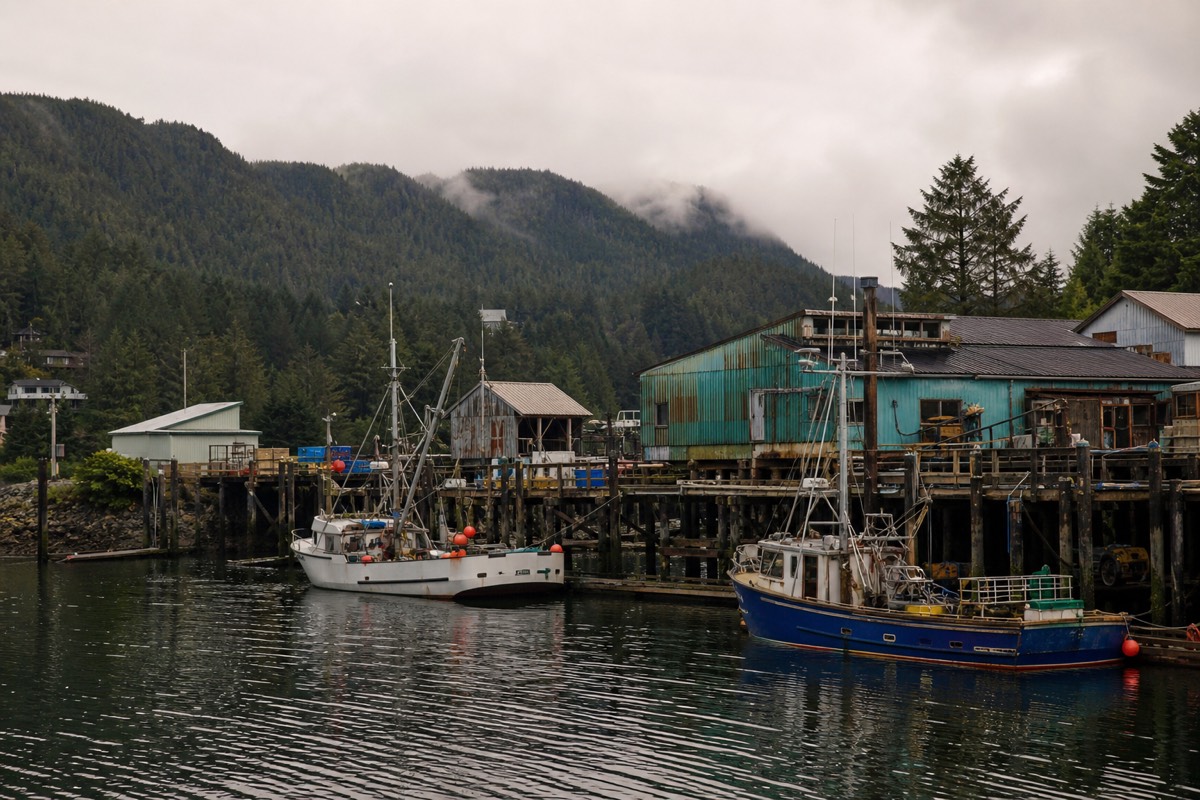
This is one of the most-asked questions about this coast, and it barely registers in keyword tools. Almost nobody types it into a search box. A great many people ask an AI assistant some version of it, phrased eight different ways, which tells you it is a real decision people agonise over privately rather than a search term with a tidy answer waiting.
So here is the answer with numbers attached, rather than the usual shrug about how both towns are lovely. They are 40 kilometres apart on Highway 4, which is a 40 to 45 minute drive. At the junction where the highway splits, it is 8 km south to one town and 36 km north to the other. Neither is a suburb of the other. Where you sleep determines which half of this coastline you see easily and which half becomes a project.
Tofino and Ucluelet side by side
Population figures are the 2021 Census of Canada counts for each municipality. Distances are road distances along Highway 4 from the junction where it splits. Room rates are peak-summer planning ranges from our own accommodation research and move a long way outside high season.
Choose the departure town before booking an activity. Ucluelet harbour trips and Tofino’s Clayoquot Sound trips require different mornings and ground transport.
Affiliate links: we may earn a commission from qualifying bookings.
Tofino Or Ucluelet: Which Should You Actually Pick?
Pick Tofino if you are here to surf, to go whale or bear watching, or to reach Hot Springs Cove, and you accept paying a premium. Pick Ucluelet if you want the same coastline for meaningfully less money, easier parking, a quieter evening, and the shortest access to the Wild Pacific Trail and the Broken Group Islands.
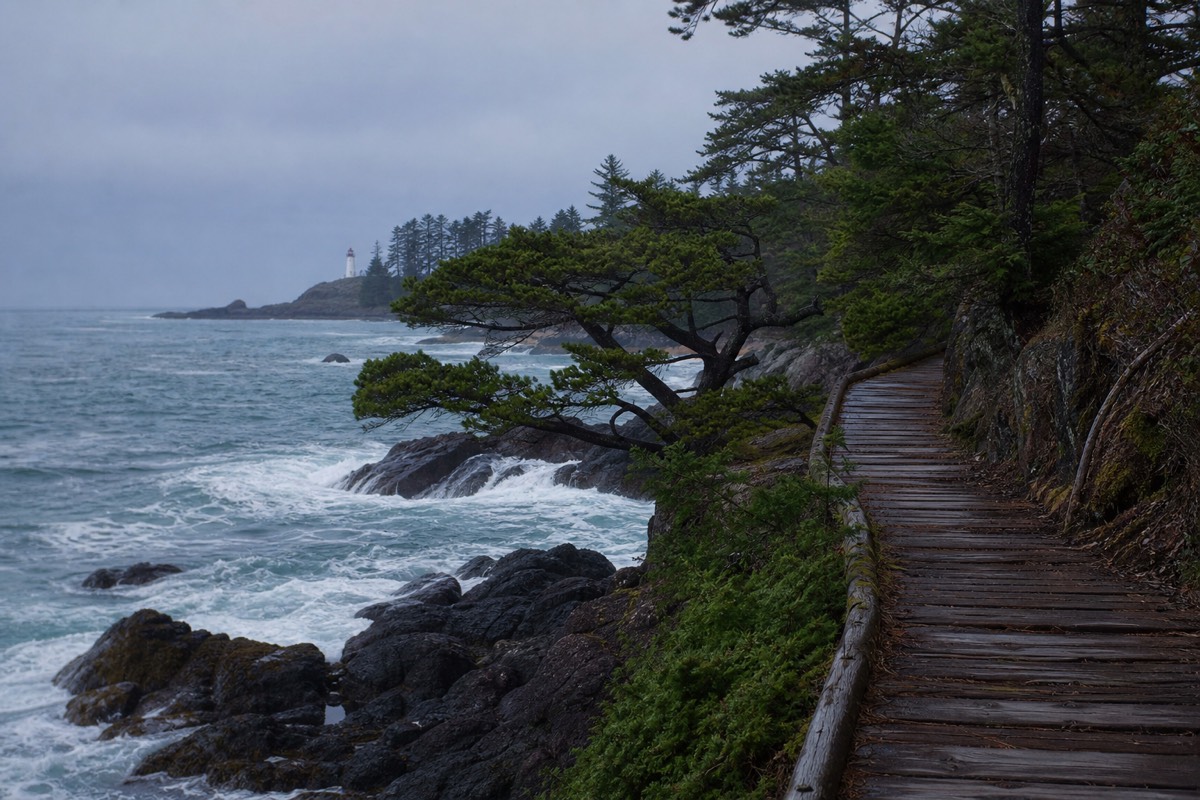
That is the honest short version and it holds up under most follow-up questions. The two towns are not competing versions of the same thing. Tofino sits at the end of the Esowista Peninsula with Clayoquot Sound in front of it, which is where the bears, the whales and the hot springs are. Ucluelet sits on the edge of Barkley Sound, which is where the Broken Group Islands are, and it has the better dedicated walking trail.
What tips most people toward Tofino is that the famous beaches are on the Tofino side and the tour departure dock is a five-minute walk from town. What tips people toward Ucluelet is the accommodation bill. Our own trip planning puts Ucluelet accommodation at roughly $150 to $350 a night against $350 to $650 for a mid-range beachfront room in Tofino in peak summer, and we have recommended the Ucluelet strategy to budget-conscious guests for years.
| If this describes you | Stay in | Why |
|---|---|---|
| Learning to surf, or surfing daily | Tofino | Cox Bay and Chesterman are on the Tofino side; you want to walk to the break, not drive to it |
| Whale watching, bear watching, Hot Springs Cove | Tofino | Those boats leave from the Tofino waterfront into Clayoquot Sound |
| Watching the budget | Ucluelet | Roughly $150 to $350 a night against $350 to $650 for a comparable Tofino room |
| Hiking as the main activity | Ucluelet | The Wild Pacific Trail starts in town and costs nothing |
| Sea kayaking in Barkley Sound | Ucluelet | Broken Group Islands trips leave from the Small Craft Harbour here |
| Travelling with young children | Either, leaning Ucluelet | Calmer water, the aquarium in town, less traffic and easier parking |
| One night only, first visit | Tofino | If you only get one evening, take the one with the beaches and the boats |
| Storm watching in winter | Either | Both face open Pacific weather; Ucluelet's trail viewpoints are unbeatable for it |
If you are staying four nights or more, there is a third answer that most guides never mention: split it. Two nights in each town costs you one packing session and removes the compromise entirely.
How Far Apart Are Tofino And Ucluelet?
About 40 km by road, a drive of roughly 40 to 45 minutes on Highway 4. From the junction where the highway divides, Ucluelet is 8 km south and Tofino is 36 km north. A year-round bus links them for $5.50 a ride, and a 25 km paved path connects them for cyclists.
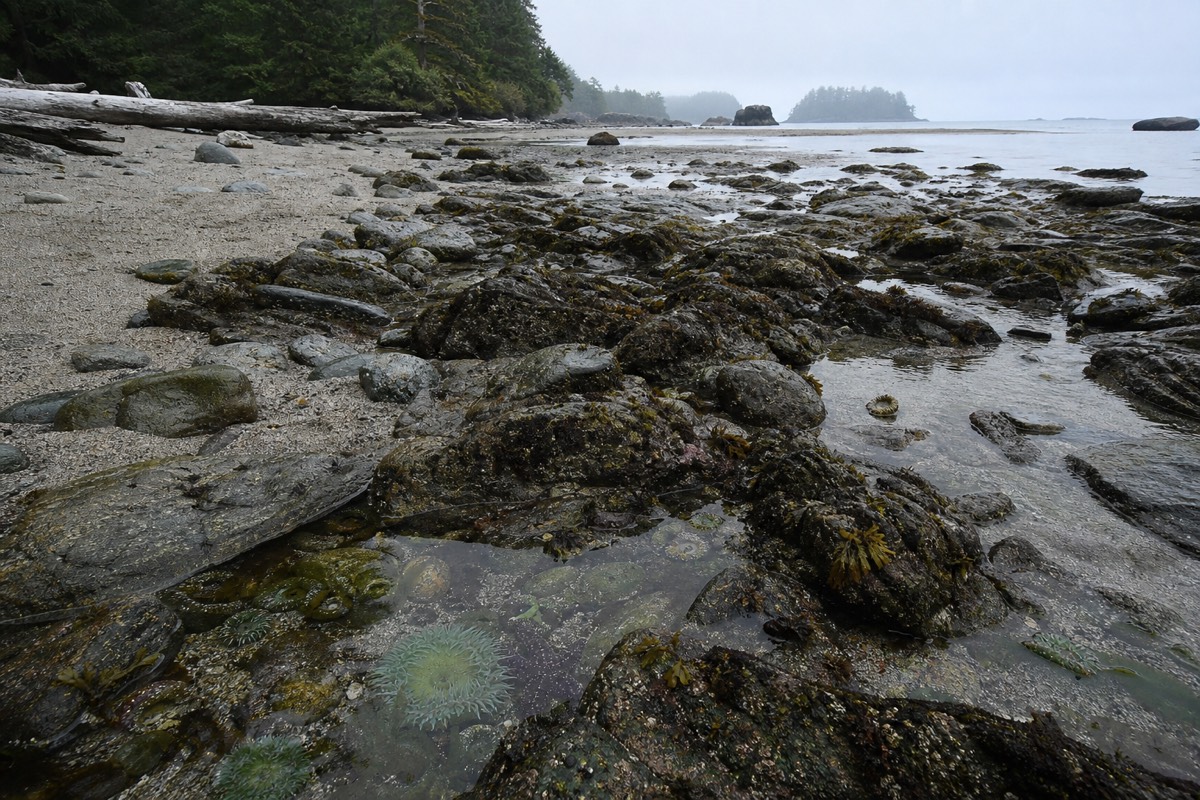
That 40 minute figure is the single most important number in this decision, because it defines what a day trip costs you. Forty minutes each way is fine once a day. It is tiresome twice a day, and it becomes genuinely annoying if you are chasing an early boat departure, a mid-afternoon low tide and a dinner reservation at the far end.
The road itself is easy: paved, two lanes, through second-growth forest, with the park entrance and the beach turnoffs strung along it. Everything worth stopping for between the towns is inside the national park reserve, which is why so many people underestimate the drive. You do not go from one town to the other. You go from one town through 30 km of park to the other, and you will want to stop.
Car-free travel between them is genuinely workable. West Coast Transit runs year-round, seven days a week, at $5.50 a ride or $10 for a day pass, connecting both towns with Long Beach and the First Nations communities along the way. The paved multi-use path that runs 25 km through the park between the two towns is one of the best cycling routes in the province, which turns the drive into a real day out rather than a transfer.
| Route or link | Distance | Time | Cost |
|---|---|---|---|
| Tofino to Ucluelet by road | About 40 km | 40 to 45 minutes | Fuel |
| Highway junction to Ucluelet | 8 km | Under 10 minutes | Fuel |
| Highway junction to Tofino | 36 km | About 30 minutes | Fuel |
| West Coast Transit bus | Both towns plus Long Beach | Year-round, seven days a week | $5.50 a ride, $10 day pass |
| Paved multi-use path | 25 km through the park | Half a day by bike, comfortably | Bike rental from around $30 a day |
| Vancouver to either town | Ferry plus Highway 4 | 5 to 6 hours total | Ferry, fuel, and booked sailings on the Horseshoe Bay route |
One consequence of the geometry: if you are driving from Vancouver, Ucluelet is the one you reach first. A late arrival is 28 km less painful on the Ucluelet side, which matters more than it sounds after a five-hour day.
Which Town Is Cheaper, And By How Much?
Ucluelet, consistently. Our own accommodation research puts Ucluelet at roughly $150 to $350 a night against $350 to $650 for a mid-range beachfront resort in Tofino in peak summer, with Tofino luxury rooms running $659 to $980. The gap is largest in July and August and narrows outside high season.
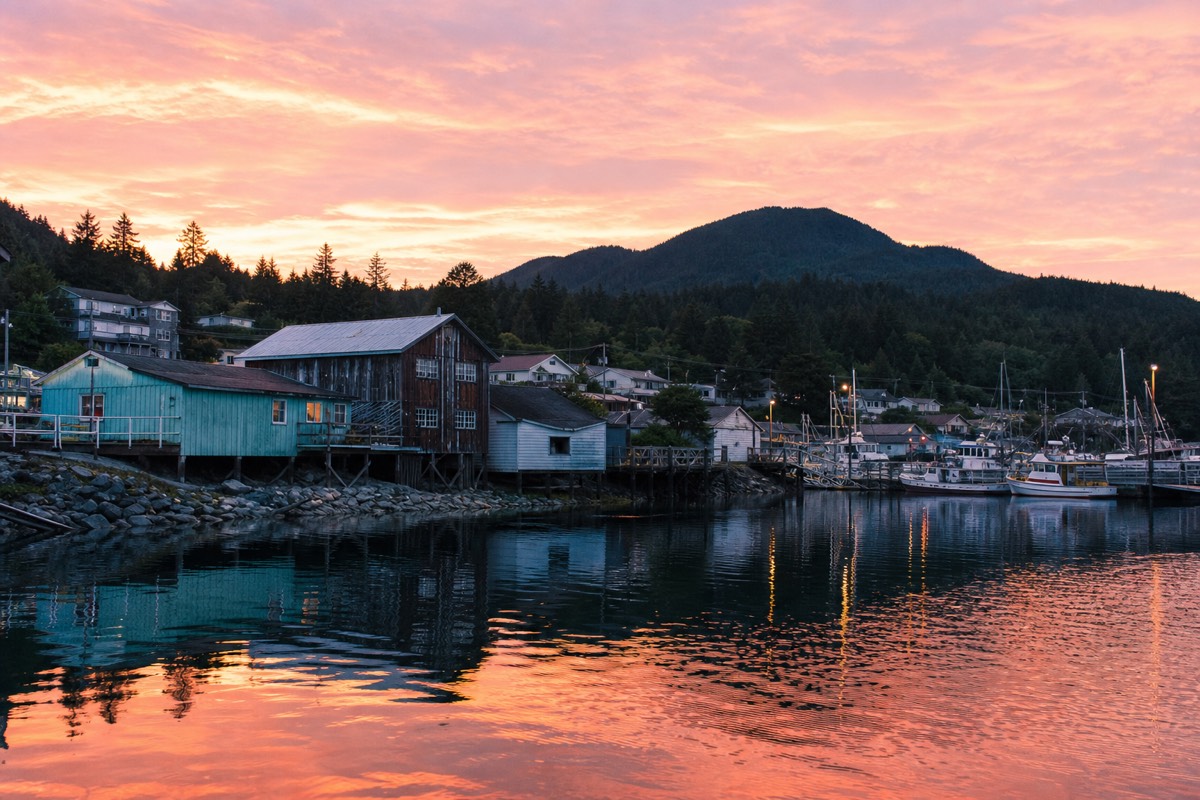
The reason is supply. Tofino is a geographically constrained town surrounded by protected land, with limited housing and a demand curve that has climbed hard since 2019. Local resort managers have described rates as roughly doubling over that period. There is no quick fix for that, because the land the extra rooms would sit on is a national park reserve or a First Nations reserve or the ocean.
Ucluelet has more room and a less concentrated brand, so the same coastline costs less. That is the entire arbitrage, and it is why we recommend it to budget-conscious guests as one of the best-kept strategies in the area. You are 40 minutes from Tofino's beaches, in a town on the same open Pacific, paying materially less for a bed.
Camping shifts the maths again. An unserviced site at Green Point inside the park is $34 a night, which undercuts everything in either town by an order of magnitude, and it sits roughly midway between them. Ucluelet Campground on Seaplane Base Road has 125 sites with free showers and some availability from October through April. Our full breakdown of camping in this corridor goes option by option.
| Accommodation type | Tofino, peak summer | Ucluelet, peak summer |
|---|---|---|
| Budget motel or hostel | $140 to $230 a night | Lower end of the $150 to $350 band |
| Mid-range, beachfront or view | $350 to $650 a night | Upper end of the $150 to $350 band |
| Luxury resort | $659 to $980 a night | Fewer options at this tier |
| Beach camping, private | $226 to $251 a night at Cox Bay | Serviced municipal sites, materially cheaper |
| National park campground | $34 unserviced or $40 with electricity at Green Point, roughly midway between the towns | |
Those figures reflect peak summer rates and move a long way outside high season. Winter accommodation in Tofino runs 40 to 60 percent cheaper than summer, which is the other honest answer to the budget question: the cheapest way to stay in Tofino is to come in January.
What Is Each Town Actually Like To Be In?
Tofino had 2,516 residents at the 2021 census and functions as a surf town with a serious food scene, a busy waterfront and summer traffic that fills its parking by mid-morning. Ucluelet had 2,066 and functions as a working harbour town, quieter, more spread out, with fewer visitors per square metre.
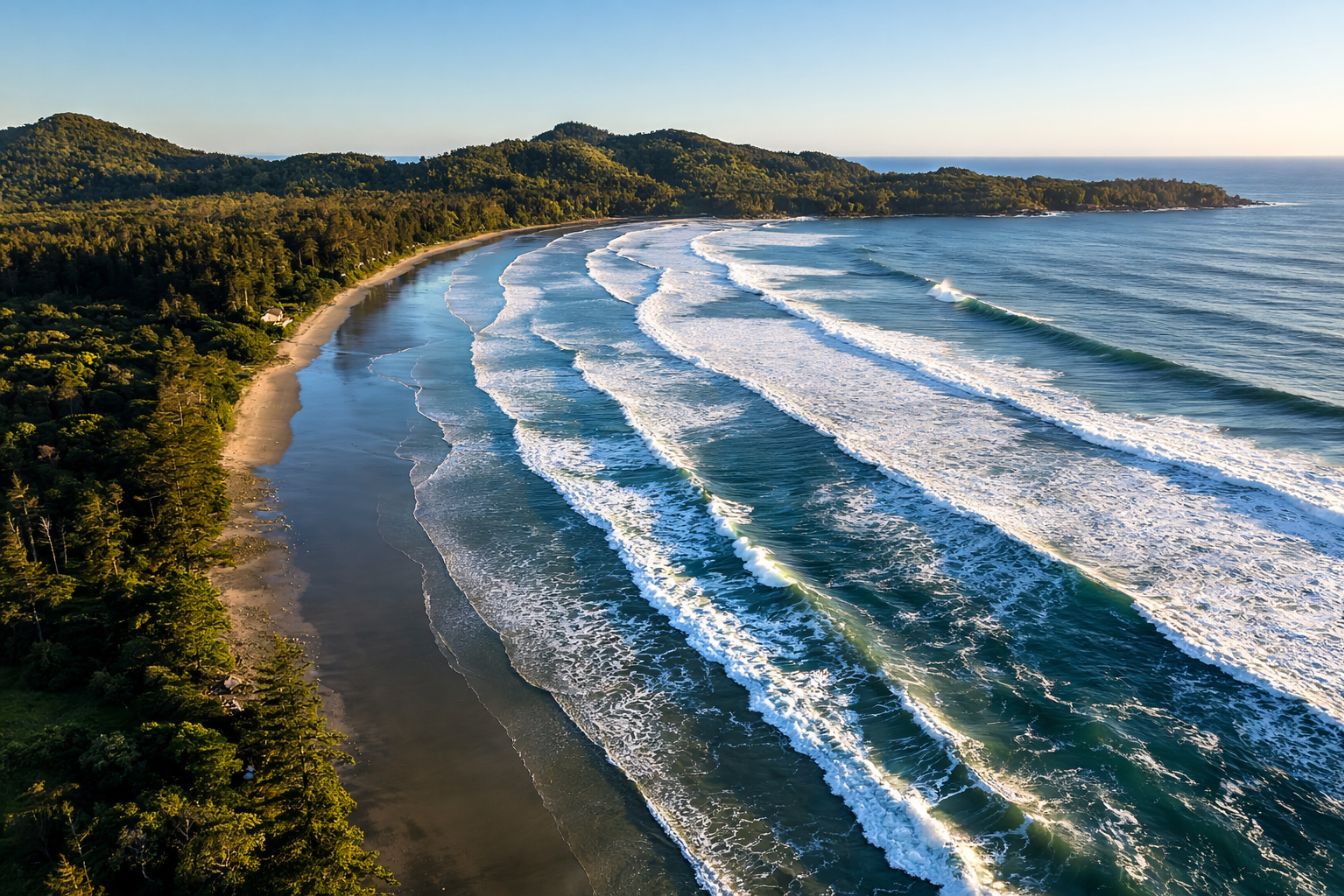
The population numbers are close enough to be misleading. Tofino absorbs vastly more visitors than Ucluelet does, so the felt difference in July is enormous. Tofino's core is busy, its restaurants book out weeks ahead, and by ten in the morning the Long Beach parking is filling. Ucluelet in the same week feels like a town where people live and fish, with visitors in it rather than a town made of visitors.
The names tell you something about each place. Ucluelet comes from Yuulu-il, meaning people of the safe harbour in the Nuu-chah-nulth language, and it is the homeland of the Yuulu-il-ath, the Ucluelet First Nation. That safe harbour is literal: the town sits inside a sheltered inlet, which is why the fishing fleet is based there. Tofino took its name in 1909 from Tofino Inlet, named by Spanish surveyors in 1792 after Admiral Vicente Tofiño de San Miguel, and it sits on Tla-o-qui-aht traditional territory at the edge of Clayoquot Sound, which became a UNESCO Biosphere Reserve in 2000.
Practically, the difference you will notice fastest is parking and evenings. Ucluelet has parking. Tofino has a paid parking programme in the downtown core from May to October and year-round at the beaches. Tofino has the restaurant reputation and the reservations problem that comes with it; Ucluelet has a smaller lineup and a much better chance of walking into somewhere at seven o'clock.
| Tofino | Ucluelet | |
|---|---|---|
| Population, 2021 census | 2,516 | 2,066 |
| Setting | End of the Esowista Peninsula, facing Clayoquot Sound | Sheltered inlet at the edge of Barkley Sound |
| Character | Surf town, destination restaurants, busy waterfront | Working harbour, fishing fleet, quieter core |
| Traditional territory | Tla-o-qui-aht First Nation | Yuulu-il-ath, the Ucluelet First Nation |
| Summer crowding | Heavy; beach parking fills by mid-morning | Noticeably lighter |
| Parking | Paid downtown May to October, paid at beaches year-round | Noticeably easier to find |
| Evening food | Strong lineup, book weeks ahead in summer | Smaller lineup, far easier to walk into |
| Distance to the other town | 36 km from the junction | 8 km from the junction |
Which Town Is Closer To Which Part Of Pacific Rim National Park?
Ucluelet is closer to the southern end of the Long Beach Unit and is the mainland base for the Broken Group Islands. Tofino is closer to the northern beaches and the Rainforest Trail. Green Point Campground sits between them. The third unit, the West Coast Trail, is far to the south of both and reached from elsewhere.
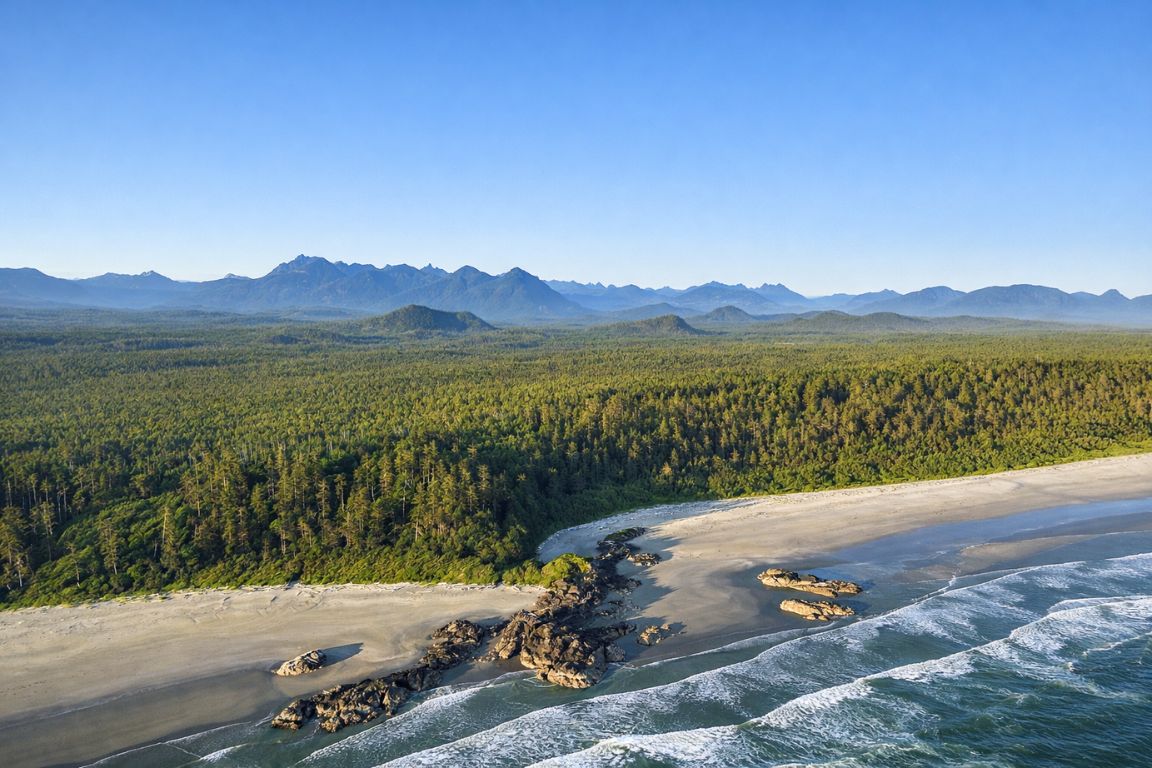
The park has three separate units and only one of them is in the corridor you are choosing between. The Long Beach Unit runs along the highway from just outside Ucluelet almost to Tofino, so both towns are effectively park-adjacent. What differs is which end you are at.
From Ucluelet, Florencia Bay is about 10.5 km north, roughly a ten-minute drive, and Wickaninnish Beach is around fifteen minutes. From Tofino, the northern beaches, the Rainforest Trail boardwalks and the Long Beach access points are the near ones, and the southern end of the unit becomes a longer errand. Green Point Campground sits about 12 km north of the junction, which puts it near the middle.
The Broken Group Islands are the decisive point in Ucluelet's favour for paddlers. That unit sits in Barkley Sound, reachable only by boat, and the guided day trips run out of Ucluelet's Small Craft Harbour rather than from Tofino. If a day in that archipelago is on your list, staying in Ucluelet removes a 40 minute pre-dawn drive from the front of it.
Ucluelet also owns the best walking on this side of the park boundary. The Wild Pacific Trail is not in the national park at all; it is a free community trail maintained by the Wild Pacific Trail Society, about 8 km in total, walkable in sections, with the 2.6 km Lighthouse Loop the best-known piece. It starts near the Amphitrite Point Lighthouse, whose current concrete tower opened in March 1915 after weather destroyed the 1906 wooden original.
| Destination | From Tofino | From Ucluelet | Notes |
|---|---|---|---|
| Long Beach | Close; the main access points are the near end | Further; the southern end is nearer | 16 km of open sand split into three named beaches |
| Rainforest Trail boardwalks | About 20 minutes | Further along the highway | Two 1 km old-growth loops just off the road |
| Wickaninnish Beach | Further | About 15 minutes | The closest full surf beach to Ucluelet |
| Florencia Bay | About 30 km | About 10.5 km, roughly 10 minutes | Local surfers' beach |
| Green Point Campground | Down the highway | Up the highway | 12 km north of the junction, roughly midway |
| Broken Group Islands | Longer transfer | Day trips leave the Small Craft Harbour here | Boat access only; the park's middle unit |
| Wild Pacific Trail | 40 minutes away | Starts in town, free | About 8 km in sections; Lighthouse Loop is 2.6 km |
| West Coast Trail | Not accessible from here | Not accessible from here | The park's third unit, far to the south |
Which Town Suits Surfers?
Tofino, without much argument. Cox Bay and Chesterman Beach are the beaches the surf industry is built around, and both are on the Tofino side. Ucluelet has real waves at Florencia Bay and Wickaninnish, both inside the park, but you drive to them rather than walk.
Long Beach itself is 16 km of open Pacific sand, divided by rocky outcrops into three named stretches: Wickaninnish, Combers and Long Beach proper. The whole of it is in the park, between the two towns, and it is surfable. What Tofino has that Ucluelet does not is beaches inside its own peninsula, so accommodation, board rental, lessons and the water are all in the same few kilometres.
Timing matters more than town, though. Beginners want June through August, when the waves are smaller and gentler and the water is at its least punishing. Experienced surfers want September through November, when the swells build and the summer crowds thin. Winter surf here gets serious fast, and our guide to the best surfing beaches around Tofino works through which break suits which level.
The one genuine argument for surfing out of Ucluelet is cost and crowding. You are 10 to 15 minutes from Florencia and Wickaninnish, you are paying less for a bed, and you are not queuing for a parking space at Cox Bay in August. If you have a car and a board and you are here for a week, that trade is defensible.
| Beach | Side | Distance | Suits |
|---|---|---|---|
| Cox Bay | Tofino | A few km from town | Consistent surf; the town's main break |
| Chesterman Beach | Tofino | A few km from town | Beginners and longboards; also the tide-pool beach |
| Long Beach | Between the towns | Inside the park | Space; arrive before 10 am in July for parking |
| Wickaninnish Beach | Park, southern end | About 15 minutes from Ucluelet | Consistent waves, closest surf beach to Ucluelet |
| Florencia Bay | Park, southern end | 10.5 km from Ucluelet | A local favourite; quieter than the northern beaches |
| MacKenzie Beach | Tofino | About 3 km from town | Sheltered cove; the calm-water option for small children, not a surf beach |
Which Town Is Better For Whale Watching, Bears And The Hot Springs?
Tofino, clearly. The wildlife boats work Clayoquot Sound and the waters around Flores and Vargas Islands, and they leave from the Tofino waterfront. Hot Springs Cove is roughly an hour and a half by boat from Tofino and is not practical from Ucluelet. Ucluelet's water strength is Barkley Sound kayaking.
Whale watching on this coast runs March through October, with gray whales peaking in March and April on the northern migration and humpbacks and minke whales through summer. The guided trips we list depart from the Marine Adventure Centre on the Tofino waterfront and run about two and a half hours into the nutrient-rich water near Flores, Vargas and Long Beach. Staying in Tofino turns that into a walk rather than a drive.
Black bear watching is even more Tofino-anchored, because the shoreline the bears forage on at low tide is in Clayoquot Sound. The evening trips run about two hours from the same dock. Grizzlies, incidentally, are not the local species here; the coastal black bear is what you will see, which is a distinction visitors get wrong constantly.
Hot Springs Cove is the trip that settles this section. It is roughly an hour and a half by boat north of Tofino, in Maquinna Marine Provincial Park, and reaching it means a boat or a floatplane from Tofino. From the dock you walk about 2 km of boardwalk through old growth to geothermal pools that cascade down to the sea. Adding a 40 minute drive to each end of that day from Ucluelet is possible and joyless.
Ucluelet's counter-argument is the Broken Group Islands and its own harbour. A half-day paddle out of Ucluelet Harbour goes past the working fishing fleet into protected water, looking for bears, deer, bald eagles and intertidal life, and it is one of the calmest introductions to sea kayaking on this coast. Our team at Tofino Tour Packages books both sides of the corridor, and the pattern is consistent: guests who base in Tofino book wildlife boats, guests who base in Ucluelet book paddles.
| Experience | Departs from | Typical length | Season |
|---|---|---|---|
| Whale watching | Tofino waterfront | About 2.5 hours | March to October |
| Black bear watching | Tofino waterfront | About 2 hours | Low-tide evenings through the warmer months |
| Hot Springs Cove | Tofino, by boat or floatplane | About 6 hours door to door | Year-round, weather permitting |
| Clayoquot Sound kayaking | Tofino, with a boat transfer | About 4 hours | Calmer months |
| Ucluelet Harbour kayaking | Ucluelet Small Craft Harbour | About 3 hours | Protected water, workable in most conditions |
| Broken Group Islands day trip | Ucluelet Small Craft Harbour | About 8 hours, roughly 8 am to 4 pm | Best May to October |
Which Town Works Better With Kids Or On A Quiet Nature Trip?
Ucluelet edges it for both, for the same underlying reason: less traffic, easier parking, calmer water and shorter walks. The Ucluelet Aquarium on Main Street is a genuinely good rainy-afternoon option, and the Wild Pacific Trail is short, safe and free.
The aquarium is unusual enough to be worth a detour on its own. It describes itself as Canada's first collect-and-release aquarium: local marine life is brought in for the season and returned to the water rather than kept permanently. It sits at 180 Main Street, opens daily from 10:00 to 16:30 with last entry at 16:00, and is run by the Ucluelet Aquarium Society on the traditional territory of the Yuulu-il-ath, the Ucluelet First Nation. For children who have spent three days looking at big grey water, touching a sea star is the thing they remember.
On the Tofino side, the family case is real too, and it centres on MacKenzie Beach, a sheltered cove about 3 km from town where the water is calm enough for toddlers, unlike Cox Bay or Long Beach where surf is the entire point. The Rainforest Trail boardwalks are stroller-accessible and short. Our guide to Tofino with kids covers the pacing in detail.
For quiet, Ucluelet wins on volume alone. The Wild Pacific Trail's viewpoints look straight out at the open Pacific with a fraction of the foot traffic that Long Beach carries in August, and much of it is stroller-friendly, including the paved section out to the lighthouse. Storm watchers in particular should know that those bluff viewpoints are among the best places on the island to stand and watch a system come in.
Can You Base In One And Day-Trip To The Other?
Yes, easily, in either direction. Forty minutes each way is a reasonable day trip and thousands of visitors do it every week. The version that works best is basing in Ucluelet for the price and driving north for the boats, with one long Tofino day rather than three short ones.
The failure mode is bouncing. If you base in Ucluelet and then drive to Tofino on three separate days for a boat, a dinner and a beach, you have spent four hours in the car and burned the good hours doing it. Cluster instead. Put the whale watching, the beach and the evening on the same Tofino day and make it a long one.
The reverse also works. Basing in Tofino and giving one day to Ucluelet gets you the Lighthouse Loop, the aquarium and a harbour paddle in a single tidy run, and you are back for the evening. That is the pattern for people who came primarily for Clayoquot Sound but do not want to miss the trail.
Four nights is the point where splitting becomes better than either. Two nights each removes every compromise, costs one extra check-in, and means you never drive the corridor except once, with your luggage, on the day you move. Our guidance on how many days you need in Tofino works through the wider length-of-stay question.
| Trip length | Best structure | Why |
|---|---|---|
| One night | Tofino | The beaches and the boats are there; do not spend your only evening driving |
| Two nights | Tofino, or Ucluelet on a budget | Too short to move; pick by priority and accept the trade |
| Three nights | One base plus one clustered day trip | Cluster the far-town activities into a single long day |
| Four or five nights | Split, two nights in each | Removes the compromise for one extra check-in |
| A week | Split, or camp midway at Green Point | The campground sits roughly between the two towns |
| Car-free | Whichever town your activities leave from | The bus and the bike path work but they lengthen every day |
What Do You Give Up By Staying In Ucluelet?
Proximity to the wildlife boats, the walkable surf beaches, and the restaurant scene. You also give up the specific pleasure of being in Tofino in the evening, which is a real thing and hard to quantify. What you get back is roughly half the accommodation cost and a considerably quieter week.
Start with the boats, because that is the concrete loss. A 7 am departure from the Tofino waterfront means leaving Ucluelet at about six. Bear watching goes out in the evening light and gets you back to Tofino late, which means driving the corridor at dusk when deer and bears are actually on the road. Neither is dangerous, but both are a tax you pay every time.
The food difference is real too. Tofino's kitchens are the reason a lot of people plan an evening around this town at all, and the four rooms that carry the town's reputation are all there. Our guide to where to eat and drink in Tofino names them, and the honest note is that none of them is a 40 minute drive from bed unless you are staying in Tofino.
What you get back is not just money, although the money is substantial over four nights. You get parking. You get a town where the summer crowd is present rather than overwhelming. You get the Wild Pacific Trail at the end of your street. And you get the Broken Group Islands at the shortest possible range, which is not a consolation prize for anyone who paddles.
Who Should Stay In Tofino Regardless Of The Price?
First-time visitors on a short trip, surfers, anyone whose trip is built around a wildlife boat or the hot springs, and anyone who came specifically for the restaurants. If your trip has one non-negotiable centrepiece and that centrepiece leaves from the Tofino dock, stay in Tofino and stop optimising.
The strongest case is the short trip. If you have two nights, the 40 minute corridor eats a meaningful share of your waking hours and you should not be paying it twice a day to save on a room. Three nights is the functional minimum for this coast in the first place, and on a two-night trip every logistics decision should be aimed at reducing driving.
The second case is anything tide-linked or weather-linked. Bear watching happens at low tide. Whale trips get rescheduled when the weather turns. Hot Springs Cove is a six-hour commitment that can shift by a day. All of those are much easier to absorb when the dock is a ten-minute walk away and a cancellation means going back to your room rather than driving home and returning tomorrow.
The third case is simply preference, and it deserves saying plainly. Tofino in the evening, with the light going down over Clayoquot Sound and the town full of people who have been in cold water all day, is one of the more particular pleasures in Canadian travel. It costs more than it should. Plenty of people decide it is worth it anyway, and that is a legitimate answer to this question rather than a failure to optimise.
For everyone else, the arbitrage is real and we will keep recommending it: stay south, drive north, and spend the difference on the boat.