How Many Days Do You Need In Tofino?
How many days in Tofino? Three is the minimum, but four to five is the sweet spot to explore beaches, wildlife, and rainforest without rushing.
Last updated: March 26, 2026
Count full days on the coast separately from travel days. Choose the duration that fits the day you actually have, and leave room for weather changes.
Affiliate links: we may earn a commission from qualifying bookings.
At A Glance: How Many Days In Tofino?
| 1 night / 1 day | Long Beach, one short trail, dinner in town | Better than nothing, but you will leave frustrated |
| 2 nights / 2 days | Beaches, rainforest trail, one guided tour, town exploration | Bare minimum; works only if you plan tightly |
| 3 nights / 3 days | Everything above plus whale/bear watching, Ucluelet day trip, sunset beach time | The standard recommendation for first-timers |
| 4-5 nights / 4-5 days | Full itinerary including Hot Springs Cove, Meares Island, multiple tours, unhurried pace | The sweet spot. What we recommend to most guests. |
| 6-7 nights / 1 week | Everything, plus slower pace, repeat beach visits, kayak expeditions, possible Cougar Annie’s Garden | Never too long. Most people who do a week say they needed two. |
How Many Days In Tofino Is Enough For A First Visit?
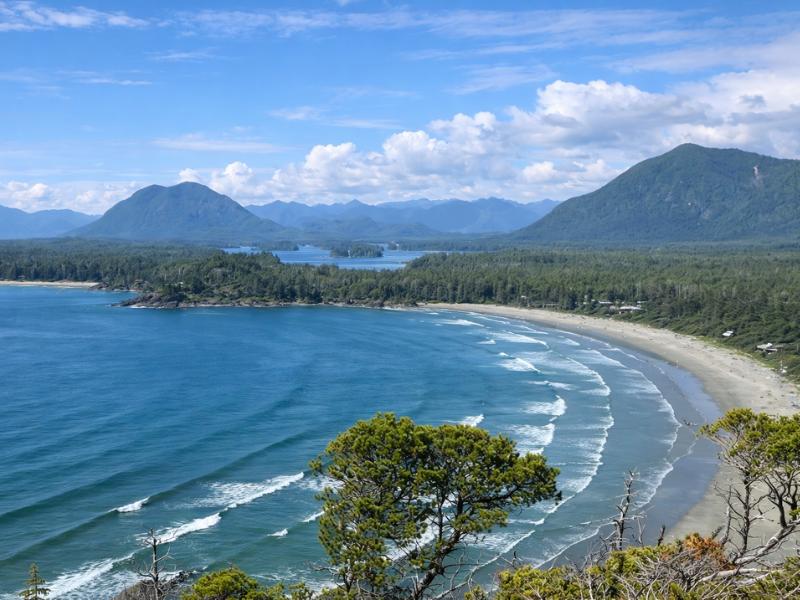
Three full days is the minimum for a first visit to Tofino that actually does the place justice. That means three nights, arriving one afternoon and leaving on the morning of day four. Two nights is the absolute floor, and it produces a particular kind of frustration: just as you settle in, you have to leave. The universal refrain from forum posts, travel reviews, and our own post-trip conversations with guests is the same. They all wish they had stayed one or two days longer.
The geography makes this more important than it sounds. Tofino is not a compact city with everything walkable from a hotel lobby. The area spreads over 30 kilometres of coastline along the Pacific Rim Highway from Ucluelet to Tofino, with beaches, trails, and key experiences scattered at different points along that corridor. Driving between them takes time. Settling into the pace takes a day. And the coast itself, the slow rhythm of tides, the shifting weather, the way the light changes over the Pacific in the evening, does not reveal itself on a schedule.
We have guided over 12,600 travelers through this coastline since 2012. The guests who rate their trips highest consistently share one pattern: they stayed long enough to stop rushing. Three days is when that starts to happen. Four days is when it fully arrives.
There is also a practical case for staying longer that most trip planners underestimate. Tofino’s weather is unpredictable in every season. A morning of heavy rain can clear by afternoon. A sunny forecast can turn grey by 2 p.m. With three or more days, weather becomes an inconvenience you work around rather than a catastrophe that ruins the trip. With two days, a rainy morning can swallow a significant portion of your time.
First time visiting the wild west coast? Here’s how to plan a trip to Tofino tour packages so you don’t show up unprepared for the rain, the remoteness, or the fact that everything books solid in summer.
What Can You Do In Tofino In 2 Days?
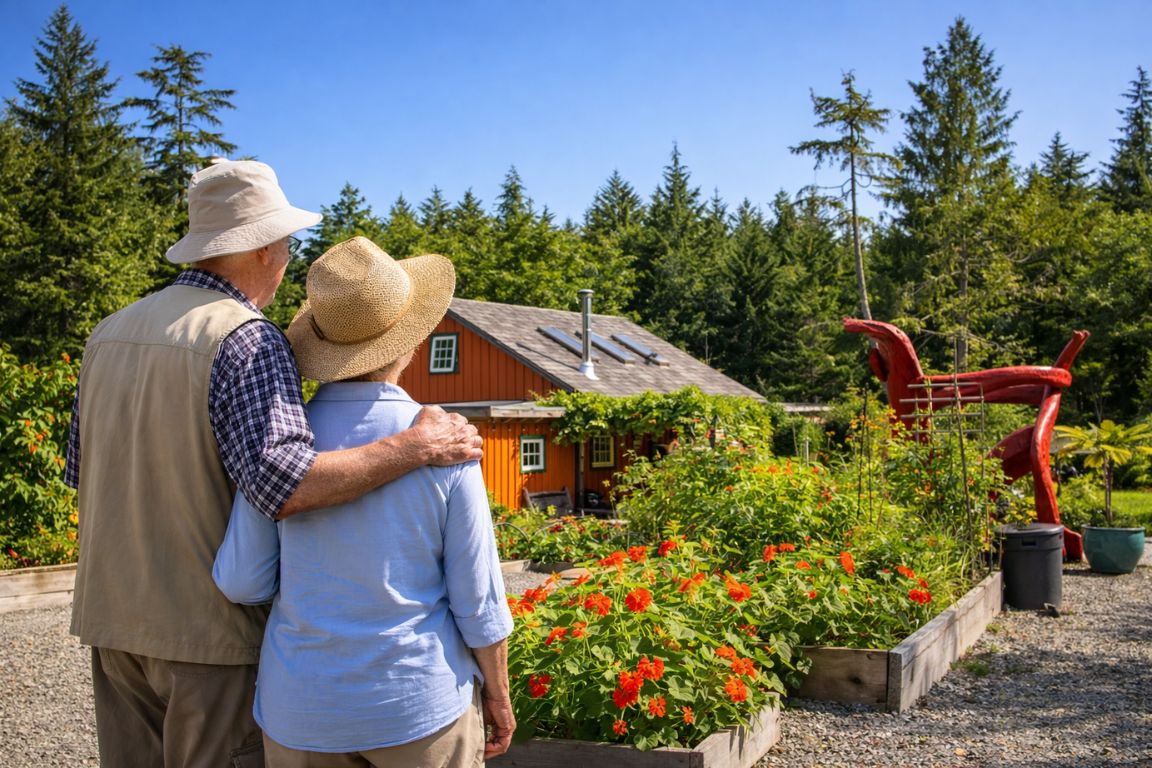 Two days in Tofino gives you enough time to hit the highlights: Long Beach, the Rainforest Trail, downtown Tofino, and one guided tour if you plan tightly. You will not reach Hot Springs Cove, you will likely not make it to Ucluelet, and you will leave with a list of things you did not get to. That is the honest reality of two days. It is better than not going. But it is genuinely not enough.
If two days is what you have, here is how to use them well.
Arrive the afternoon before day one starts. Do not count a travel day as a Tofino day. Get in, find your accommodation, walk to Mackenzie Beach or Chesterman Beach before dinner, and book any tours you still need to lock in. Restaurants too, if you have not already. Then sleep.
Day 1: Start at the beaches before 9 a.m. to beat the summer parking rush. Drive the beach corridor south toward Pacific Rim National Park and spend the morning at Long Beach, the most iconic stretch of coast in the area at 16 km of open Pacific sand. Walk to the Kwisitis Visitor Centre for context on the park and the surrounding ecosystem. In the afternoon, do the Rainforest Trail loops, two 1.2 km boardwalk circuits through old-growth cedar and spruce that take about 45 minutes each. Back in town for the evening: Tacofino truck for the ritual fish taco, then a proper dinner reservation if you have one. Sunset from Chesterman Beach if the sky cooperates.
Day 2: Book your single guided tour for the morning. Whale watching runs about 2.5 hours and is the most time-efficient tour option for a short visit, covering open water wildlife in half a day. Alternatively, a bear watching tour runs a similar length and is available April through October. Afternoon: explore downtown Tofino properly, the galleries, shops, the Tofino Botanical Gardens if you have not been, and grab coffee from Rhino or the Common Loaf. Leave time for a second beach in the late afternoon. Pack for the road back knowing you will be planning your return before you reach the ferry.
Need activity ideas? Our guide to the best things to do in Tofino tour packages covers everything from surf lessons to bear watching to beachcombing when the weather turns.
What Can You Do In Tofino In 3 Days?
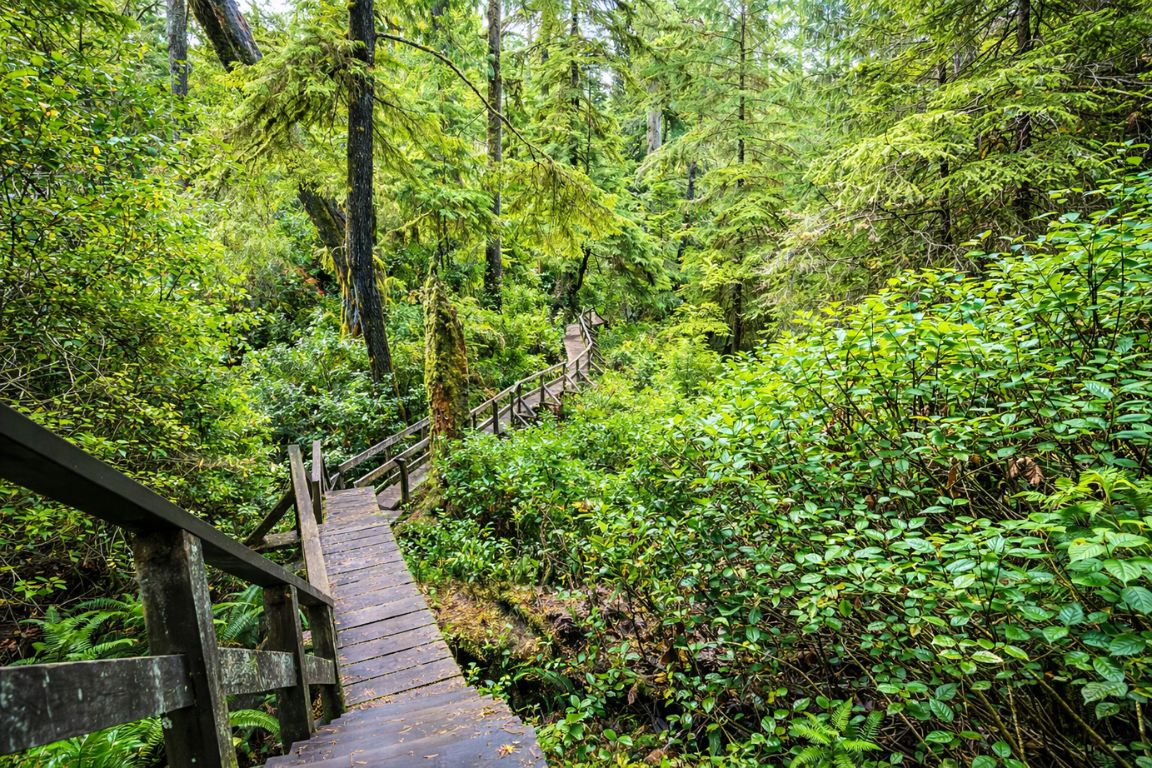 Three full days in Tofino is enough to cover the main beaches, the rainforest trails, two guided wildlife tours, a Ucluelet day trip along the Wild Pacific Trail, and several good meals. You will have time to breathe between activities without feeling like you are sprinting. This is the right length for a first visit if four or five nights is not possible.
Three days also gives you the weather buffer that two days does not. If day one is overcast and rainy, you adjust, do the Rainforest Trail and explore town, and save Long Beach for day two when the light is better. That flexibility is what makes three days feel complete instead of compressed.
Day 1: Arrive early. Drive the full beach corridor on arrival, stopping briefly at each main beach to get your bearings. Long Beach, Wickaninnish Beach, Cox Bay. Do not try to do everything on day one. Just orient yourself. The Incinerator Rock parking area at Long Beach gives you the best first-glimpse view of the coast from a car window. Dinner in town at a proper restaurant. You booked ahead, so you have a table at Wolf in the Fog or Shelter.
Day 2: This is the active tour day. Morning whale watching or bear watching tour, 2.5 hours on the water. Return to town, grab Tacofino for lunch while the line is worth it, then spend the afternoon on the Rainforest Trail and the Schooner Cove Trail, which winds through coastal forest to a sheltered pocket beach most visitors walk straight past. Sunset at Cox Bay lookout, a short hike above the bay that delivers one of the best westward views in the area.
Day 3: Drive south to Ucluelet, 40 minutes down the highway. Walk the Wild Pacific Trail Lighthouse Loop, a 2.5 km trail along exposed headlands with views that rival anything in Tofino. The Ucluelet Aquarium is worth an hour if you are traveling with children or simply curious about the local marine ecosystem. Drive back through the Long Beach Unit of Pacific Rim National Park and stop wherever the tide and light look right. Last dinner in Tofino. Pack for departure.
| Day 1 | Drive the beach corridor, stop at Long Beach and Cox Bay | Settle in, Mackenzie or Chesterman Beach | Dinner reservation in town |
| Day 2 | Whale watching or bear watching tour (2.5 hrs) | Rainforest Trail + Schooner Cove Trail | Sunset at Cox Bay Lookout, dinner |
| Day 3 | Drive to Ucluelet, Wild Pacific Trail Lighthouse Loop | Ucluelet Aquarium, drive back through Pacific Rim NPR | Final dinner in Tofino |
What Can You Do In Tofino In 4 To 5 Days?
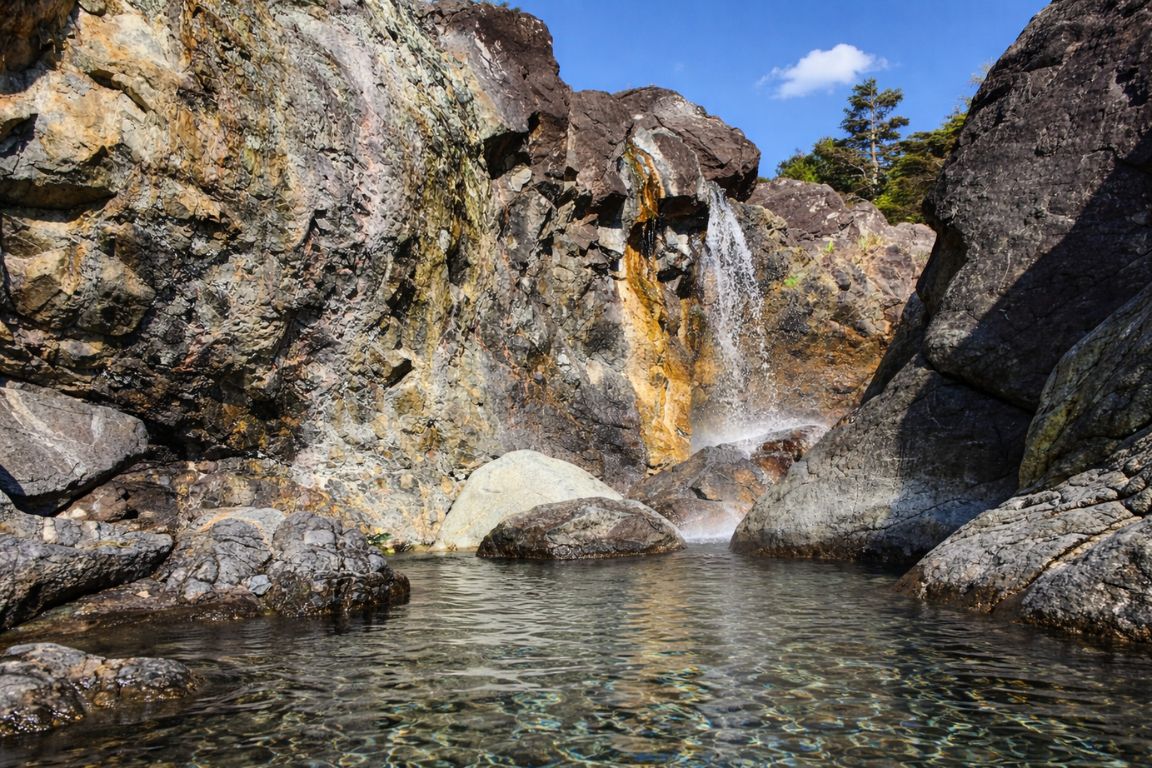 Four to five days is the sweet spot for Tofino. It gives you enough time for Hot Springs Cove as a full day excursion, a Meares Island guided hike, two different wildlife tours, every major beach along the corridor, unhurried meals, and genuine rest. You stop feeling like a tourist sprinting between highlights and start feeling like someone who actually knows a place.
Hot Springs Cove is what changes everything at four days. The excursion runs six hours door to door: 1.5 hours by boat each way through Clayoquot Sound, a 2 km boardwalk hike through old-growth rainforest at the other end, and time soaking in geothermal pools that pour down a rocky shoreline directly into the Pacific. It is only accessible by boat or floatplane. It requires a full day. And it is the single activity that most returning Tofino visitors name as the highlight of their entire trip. You simply cannot fit it into a two or three day visit without sacrificing everything else.
Meares Island is the other experience that opens up with a four or five day stay. The island sits just across the harbour from town, accessible by water taxi in minutes. The Big Tree Trail is a self-guided boardwalk through old-growth forest where individual western red cedars reach over 1,000 years old and 60 metres tall. For a more demanding full-day commitment, the Lone Cone Mountain Trail runs 6.5 km return up 742 metres of elevation and delivers panoramic views of Tofino Harbour and the surrounding islands. Both require a water taxi from town and a half day minimum.
What a 4-5 day itinerary adds beyond three days: a dedicated Hot Springs Cove day, a Meares Island morning, a second wildlife tour (so you do both whale watching and bear watching rather than choosing one), an afternoon in Ucluelet that is not rushed, time for a cedar sauna session, a morning surf lesson, a proper cycling day on the ʔapsčiik t̓ašii multi-use path, and the kind of slow beach morning where you arrive at Chesterman with coffee and stay for two hours because you can.
Need the full breakdown? Our Hot Springs Cove Tofino tour guide walks you through operator choices, what the boat ride is like, and what to expect when you reach the springs and boardwalk.
| Day 1 | Arrival and orientation | Beach corridor drive, Long Beach, dinner booking, town walk |
| Day 2 | Rainforest and wildlife | Morning whale watching, afternoon Rainforest Trail and Tonquin Beach |
| Day 3 | Hot Springs Cove (full day) | 6-hour boat tour: Clayoquot Sound, old-growth boardwalk, geothermal pools |
| Day 4 | Meares Island and bear watching | Morning water taxi + Big Tree Trail, afternoon bear watching tour |
| Day 5 | Ucluelet + slow finish | Wild Pacific Trail, Ucluelet Aquarium, final sunset at Cox Bay or Chesterman |
Is A Week In Tofino Too Long?
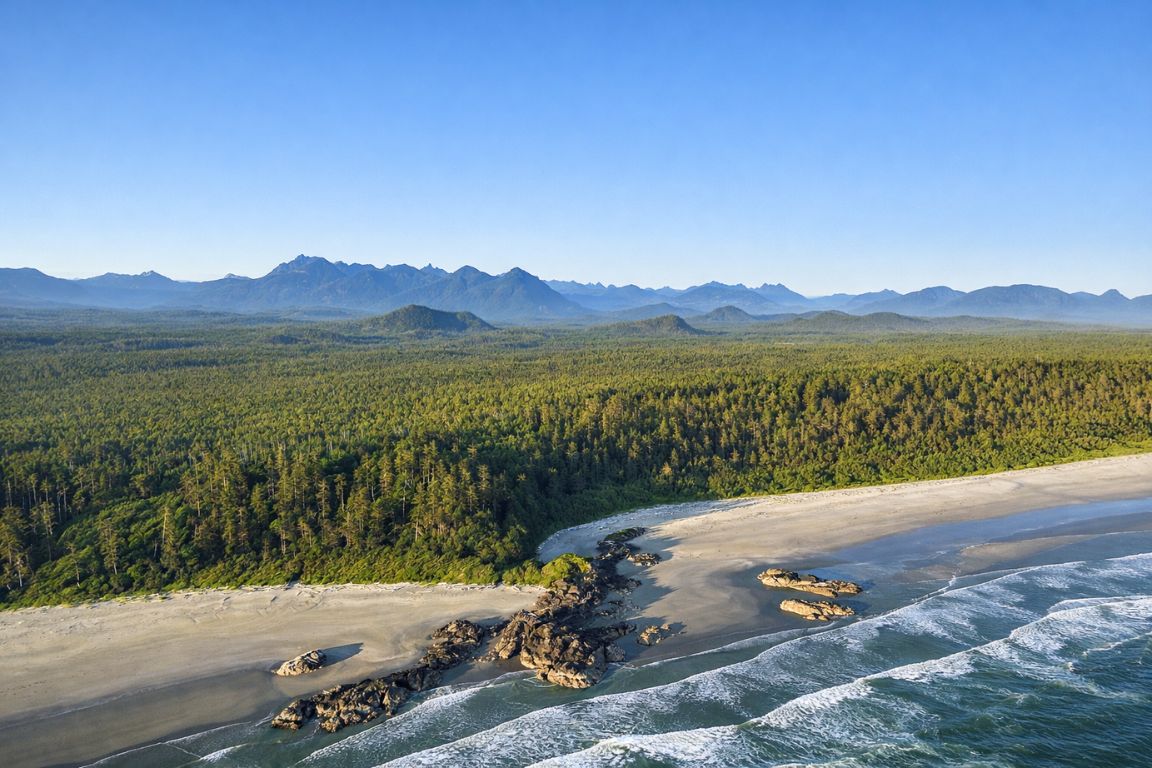 No. A week in Tofino is not too long. People who have stayed a week consistently say they could have used more time. The coast does not run out of things to offer. It offers something different every day depending on tide, weather, and season. The question is not whether there is enough to fill a week, but whether you are comfortable spending extended time in a small, remote, expensive coastal town that moves at its own pace.
A week opens Tofino to experiences that shorter stays cannot reach. Cougar Annie’s Garden, 30 km off the coast in Hesquiaht territory, is the restored homestead of Ada Annie Rae-Arthur, a pioneering woman who cleared the wilderness, established a post office, and reportedly shot over 50 cougars for bounty payments in the early 1900s. Access is by floatplane from Tofino, arranged through the Boat Basin Foundation. Overnight stays at the remote Temperate Rainforest Field Study Centre cabins are possible with advance booking. None of this makes it into a three-day trip.
Kayaking multi-day routes through Clayoquot Sound is available for experienced paddlers with proper equipment. The Broken Group Islands within Pacific Rim National Park Reserve, accessible only by boat, offer backcountry camping from May through September in some of the most sheltered and wildlife-rich waters on the BC coast. A week gives you the time and mental space to actually consider these options.
Even without the remote experiences, a week in Tofino settles differently. You stop treating every meal as an event to optimize and start going back to the same coffee shop because you like the way it feels in the morning. You check the surf conditions before choosing which beach to visit instead of just going to Long Beach because it is the obvious one. You find your pace. That is what Tofino is actually for, and it takes more than three days to find it.
Want to explore from the water? I’ve broken down Tofino kayaking tour packages so you know which operators stick to sheltered bays versus brave open ocean, and what wildlife you’ll actually see.
How Does The Journey Time Affect How Long You Should Stay?
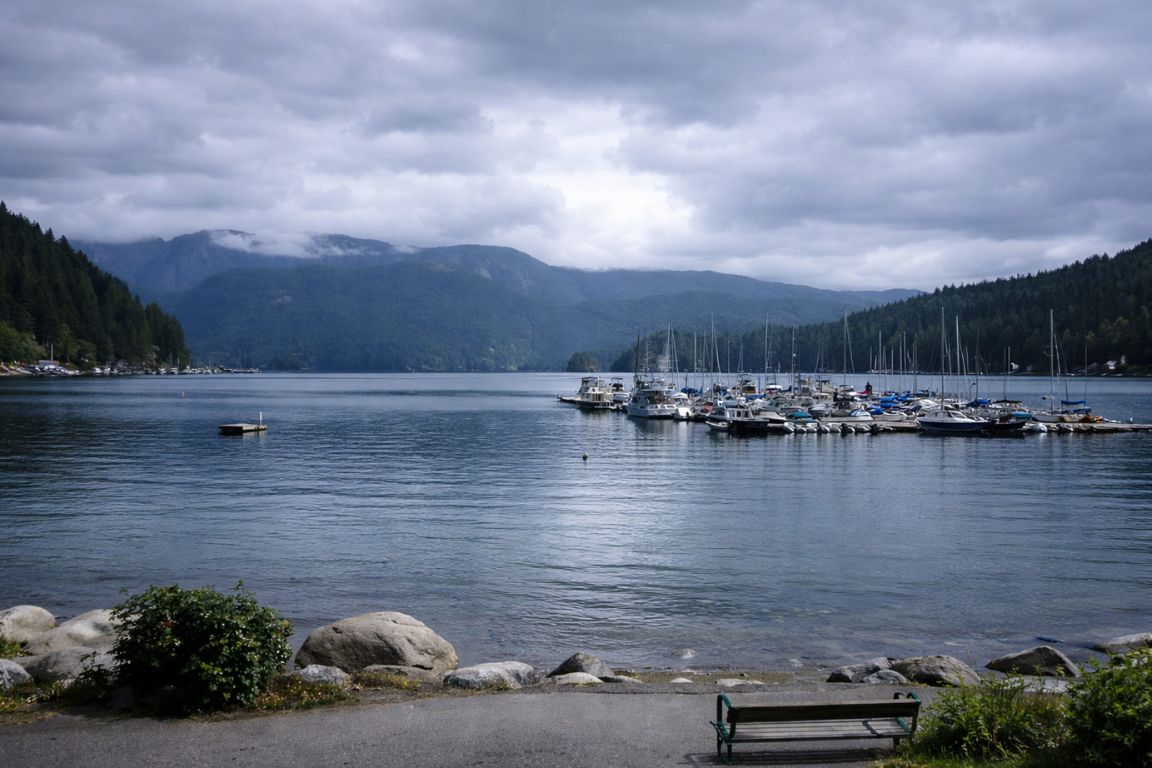 The journey from Vancouver to Tofino runs five to six hours including the BC Ferries crossing. That is a full travel day each direction. Anyone staying fewer than three nights is spending more time in transit than in Tofino. The return on that investment only starts to make sense at three nights minimum, and genuinely pays off at four or five. Flying by floatplane shortens the transit to 45 minutes but does not change the fundamental logic: Tofino is remote enough that the trip deserves time commensurate with the effort.
This is the argument most people know intuitively but do not articulate when planning. If you drive to Whistler for a weekend, you are 90 minutes from Vancouver and two nights feels efficient. Tofino is five hours away. A two-night stay means roughly 10 hours of travel for 48 hours on the ground. Subtract a travel afternoon on day one and a morning departure on day three, and you have about 36 actual hours in Tofino. That is why so many first-timers come back saying it was too short.
There is a specific version of this problem that comes up in forum threads and travel conversations constantly. Someone visiting BC for a week wants to see Vancouver, Tofino, and Whistler. Travel advisors consistently say the same thing: pick Tofino or Whistler, not both. The drive each way to Tofino takes a full day of a seven-day trip. Trying to cover both means rushing both. Tofino rewards the traveler who commits to it.
If you are flying in to Tofino by floatplane or Pacific Coastal Airlines, the transit math improves significantly, but the experience argument remains: the coast needs time to open up. A floatplane guest arriving on day one and leaving on day three still benefits enormously from adding a fourth night. The journey being easier does not mean the place is better experienced quickly.
What Activities Need The Most Time To Plan For?
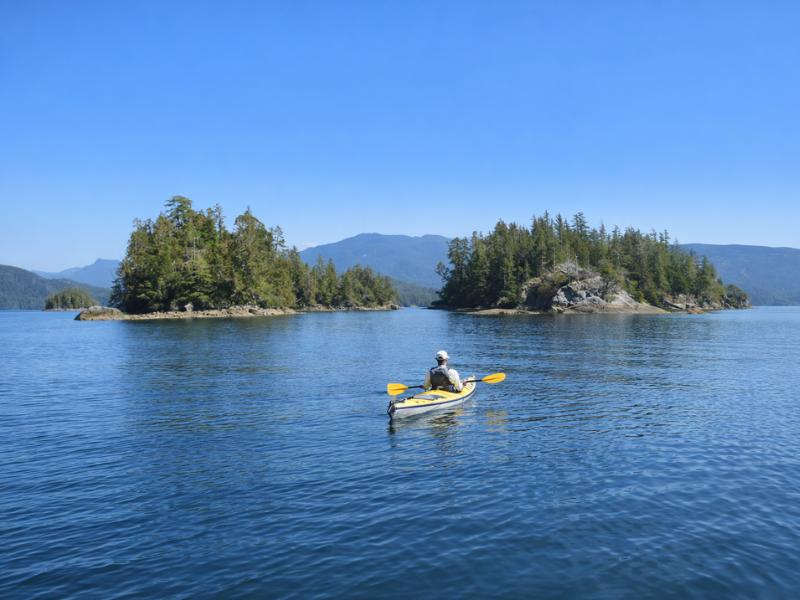
Hot Springs Cove requires a full day and advance booking. Bear watching tours run 2.5 to 3 hours and operate only from late April through October. Whale watching is 2.5 hours and books out weeks ahead in peak summer. Meares Island tours run 4.5 to 7 hours depending on the hike. Any activity that requires a boat or floatplane needs at least one night of weather buffer built into your stay. Plan these first, then fill around them.
Here is how we sequence activity planning with guests: start with the one or two things that are genuinely non-negotiable, and book those the moment accommodation is confirmed. Hot Springs Cove is the most common non-negotiable. It runs once a day with a maximum of 12 guests per departure at most operators. In peak season it sells out days or weeks ahead. If you want to do it, book it before your accommodation is even fully confirmed.
| Hot Springs Cove (boat) | 6 hrs (full day) | Year-round | 2-4 weeks in summer; ASAP |
| Whale watching | 2.5 hrs | Mar-Nov (peak Mar-Oct) | 1-2 weeks in summer |
| Bear watching | 2.5-3 hrs | Late Apr-Oct | 1-2 weeks in summer |
| Meares Island Big Tree Trail | Half day (water taxi + hike) | Year-round (weather permitting) | Water taxi: same day or 1-2 days |
| Lone Cone Mountain Hike (Meares) | 6-7 hrs (full day) | May-Oct | Book through Ahous Adventures; advance required |
| Rainforest Trail (self-guided) | 1.5-2 hrs | Year-round | No booking needed |
| Surf lesson (beginner) | 2-2.5 hrs | Year-round | 1-3 days in summer |
| Kayaking guided tour (half day) | 3-4 hrs | May-Oct | 2-5 days in summer |
| Wild Pacific Trail, Ucluelet | 2.5 hrs (Lighthouse Loop) | Year-round | No booking needed |
Tour durations and availability sourced from current operator information. Verified March 2026.
Weather is the other variable that makes activity sequencing important. Tofino’s marine climate means conditions can shift within hours. Hot Springs Cove and Meares Island both involve open water crossings that operators will delay or cancel in genuinely rough conditions. Having a buffer day in your itinerary, a day not assigned to any specific tour, means a weather cancellation becomes a shifted plan rather than a ruined itinerary. A longer itinerary such as the 5-day Vancouver Island adventure tour has more room to move a boat day than a two-night stay does.
How Many Days Do You Need In Tofino Depending On Your Travel Style?
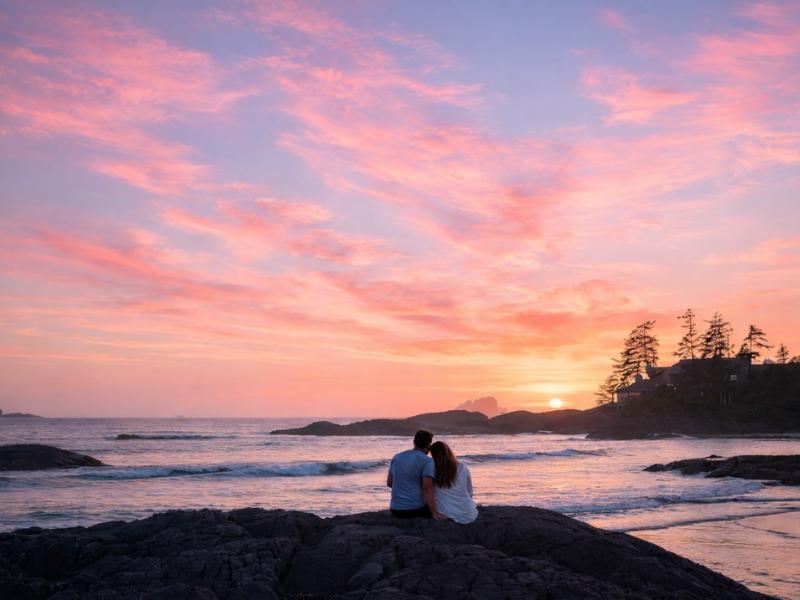
The ideal length of a Tofino trip depends heavily on what you are coming for. Surfers can stay a week and never repeat a session. Storm watchers can do two or three nights mid-week in winter and feel complete. Wildlife seekers doing whale watching, bear watching, and Hot Springs Cove need at minimum four nights to do all three without cutting corners. Couples on a romantic retreat do well with three to four nights. Families with children benefit from four to five nights for the pace and flexibility.
Here is how it breaks down by traveler type, based on what we see working and not working across thousands of guided groups.
First-time visitors: Three nights minimum, four is better. You need one day to orient, one day for guided wildlife experiences, and one day for the rainforest and Ucluelet. A fourth day adds Hot Springs Cove or Meares Island and removes the feeling that you are rushing.
Surfers: Depends entirely on skill level and what the ocean is doing. Beginners benefit from three to four days to get multiple lessons in and practice between them. Experienced surfers chasing autumn or winter swell could stay a week and feel the investment was right, especially if they are tracking specific conditions. Tofino has five surf-able beaches and the waves change character with every tide and swell direction. There is no ceiling on how long a surfer could stay productively.
If you’re here to surf, here are the best surfing beaches in Tofino tour packages based on skill level, wave consistency, and which beaches have surf schools right on the sand.
Wildlife and nature travelers: Four nights is the floor if you want whale watching, bear watching, and Hot Springs Cove without cramming. Five nights is more comfortable, giving weather flexibility for the boat-based excursions and time for the Rainforest Trail and Meares Island on the remaining days.
Storm watchers: Two to three nights mid-week in November, December, or January is the classic formula. The storms are the show, and they run continuously. A longer stay in deep winter means more quiet time and less activity variety, which suits some travelers perfectly and others less so. Three nights gives you two full storm-watching days plus evenings by the fire at a resort like the Wickaninnish.
Couples on a retreat: Three to four nights is the sweet spot. Long enough to unplug properly, short enough that the remote location does not start to feel limiting. The combination of a beachfront resort with in-room ocean views, one guided boat excursion, and two or three exceptional dinner reservations fills four nights completely.
Families with children: Four to five nights works best. Children need time to find their rhythm at the beach, and trying to compress multiple activities into two or three days with kids tends to produce tired, overstimulated children who remember being dragged between things rather than the wild coast itself. More nights and fewer daily activities produces better family memories almost every time.
Not sure if your kids can handle the cold ocean and unpredictable weather? Our guide on Tofino tour packages with kids covers age recommendations, engaging activities, and realistic expectations for Pacific Northwest beach trips.
What Our Guests Actually Book: Length Of Stay Patterns From 12,600+ Travelers
| Average nights booked by our guests | 3.3 nights | Reflects what experienced travelers actually choose once they understand the area |
| % who book Hot Springs Cove | 25% | High rate signals that guests prioritise this early; drives longer stay decisions |
| Most common regret from 2-night guests | Rushed/Ran out of time | Guides our recommendation to always push for 3 nights minimum |
| % who extend their stay after arriving | 12-15% | Tofino is one of the few destinations where on-the-ground extension is genuinely common |
| Average nights for repeat visitors | 5.2 nights | Repeat visitors almost always book longer than first-timers; experience teaches length |
The pattern across 13 years of guiding is consistent: guests who extend their trips beyond the minimum consistently rate their experience higher and return more often. Length of stay is the single variable most within a traveler’s control that predicts satisfaction at Tofino. Everything else, weather, wildlife sightings, restaurant availability, can be unpredictable. Staying long enough to absorb all of it is the one thing you can guarantee yourself.
Frequently Asked Questions
Is 2 nights in Tofino enough?
Two nights is the absolute minimum, and most people who do it wish they had stayed longer. You get roughly 36 hours of actual time in the area once you subtract the travel afternoon on arrival and the departure morning. That is enough to see Long Beach, do the Rainforest Trail, and fit in one guided tour. It is not enough to feel like you have actually been to Tofino rather than passed through it. Three nights is a much more satisfying threshold.
What is the minimum stay in Tofino?
Three nights, giving you three full days on the ground. This is the standard recommendation from local guides, forum veterans, and travel advisors who know the area. It covers the main beaches and trails, allows for one or two guided tours, and includes enough time for a Ucluelet day trip. Three nights also gives you a basic weather buffer: if one morning is rainy, you have flexibility to rearrange without losing the whole visit.
Can you do a day trip to Tofino from Vancouver?
Technically yes. You can fly one-way by floatplane in 45 minutes, spend a few hours at Long Beach, and fly back. In practice, the cost is substantial, the time at the destination is minimal, and the experience is nothing like staying. The area rewards time. A day trip produces a glimpse rather than an experience, and the cost of flights alone would fund a night or two of accommodation.
Is 4 nights in Tofino too long?
No. Four nights is the sweet spot we recommend most consistently to first-time guests. It allows for every major experience: Hot Springs Cove as a full day, both whale watching and bear watching tours, the main beach corridor, the rainforest trails, and a Ucluelet day trip, all without rushing any of them. Almost everyone who stays four nights says it was exactly right or that they wanted one more day.
What activities require the most time in Tofino?
Hot Springs Cove is the biggest time commitment at six hours door to door and must be treated as a full day. Meares Island’s Lone Cone Mountain hike runs six to seven hours and is physically demanding. Whale watching and bear watching tours each take 2.5 to 3 hours. Driving to Ucluelet and doing the Wild Pacific Trail properly takes a half day. The Rainforest Trail, in contrast, is the most time-efficient major experience: two 1.2 km loops, about two hours total, that can be combined with a Long Beach visit on the same day.
How many days is good for Tofino and Ucluelet together?
Four to five nights covers both well. Base yourself in Tofino and treat Ucluelet as a day trip rather than a separate accommodation stop. The two towns are 40 minutes apart on the same highway. A morning or afternoon in Ucluelet for the Wild Pacific Trail and the aquarium fits naturally into a four-day Tofino itinerary without requiring a second accommodation booking.
Written by Ethan James Callahan
Canadian tour guide since 2012 · Founder, Tofino Tour Packages
Ethan has guided over 12,600 travelers through Tofino and the surrounding Pacific Rim wilderness since founding the agency.