Best Things To Do In Tofino
Best things to do in Tofino: surf Cox Bay, whale watch, visit Hot Springs Cove, bear watch, and explore rainforest trails. Book Hot Springs first.
Last updated: March 26, 2026
Pick one booked experience for the day and leave space for beaches and weather. Match the time commitment and meeting town before choosing.
Affiliate links: we may earn a commission from qualifying bookings.
Best Things To Do In Tofino: Quick Reference
| Surfing / Surf Lessons | Year-round (best in fall) | 2.5-3 hrs (lesson) | ~$99/person (group lesson) | Yes, 1-2 weeks in summer |
| Whale Watching | March-October | 2.5-3 hrs | $130-$170 CAD/adult | Yes, 1-2 weeks in summer |
| Hot Springs Cove | Year-round | 6 hrs full day | ~$239 CAD/person + fees | Book first – 12 guests max/day |
| Bear Watching | April-October | 2-2.5 hrs | ~$169 CAD/adult | Yes; times set by tide |
| Rainforest Trail (Loops A & B) | Year-round | 45-60 min each loop | Parks Canada day pass (~$12.25 adult) | No |
| Meares Island Big Tree Trail | Year-round (best Apr-Sept) | 2-4 hrs (boardwalk or full loop) | Water taxi ~$30/person + trail fee ($35 adult) | Call water taxi ahead |
| Kayaking (guided) | Spring-Fall | 2.5-4.5 hrs | $80-$144/person | Yes, book in advance |
| Storm Watching | November-March | Free from beach; Wickaninnish Inn packages from $3-night stay | Free (beach); luxury hotel rates at the Wick | Book Wick early for peak Jan-Feb |
Prices approximate for 2025-2026. Verify current rates directly with operators before booking. Parks Canada day pass prices verified March 2026.
What Are The Best Things To Do In Tofino?
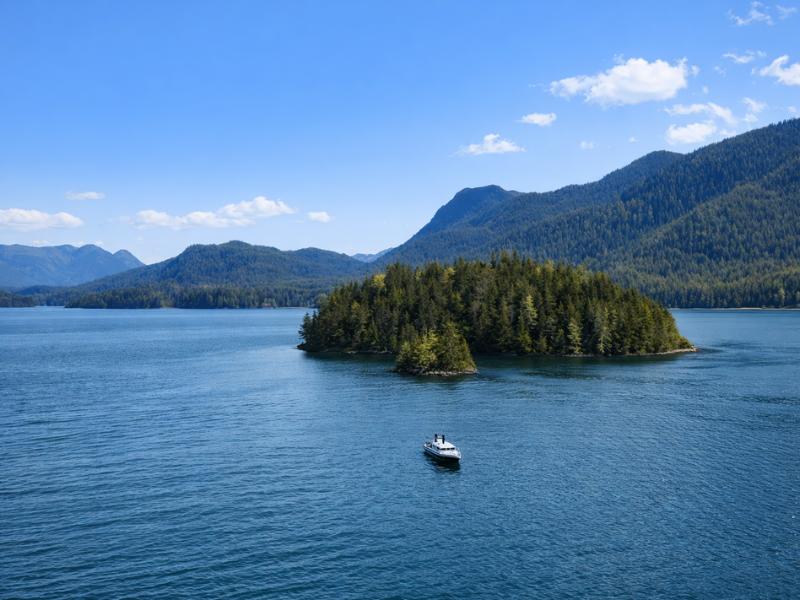
The best things to do in Tofino fall into three categories: get in the ocean (surf, kayak, paddleboard), get on the ocean (whale watching, bear watching, Hot Springs Cove), and explore the land surrounding it (rainforest trails, storm watching, Meares Island). Most water-based tours depart from the same harbour in the town core. Almost everything worth doing in Tofino is within 30 minutes of a single central point. The challenge is not finding things to do. It is sequencing them across a stay that is long enough to actually do them.
Tofino operates on a short list of superlatives that hold up to scrutiny. Canada’s surf capital. One of the best storm watching destinations in North America. The Hot Springs Cove boat trip is one of the only experiences on the continent where you soak in a natural geothermal pool above the open Pacific after hiking through a 2 km cedar boardwalk in the old-growth forest. Coastal black bears forage the shoreline at low tide within a 30-minute boat ride of downtown. Gray whales, humpbacks, and sea otters move through Clayoquot Sound from March through October. The Meares Island Big Tree Trail has western red cedars that are 1,500 years old, reachable by a 10-minute water taxi from the harbour.
What most visitors get wrong about planning a Tofino trip is the booking sequence. They arrive and then try to get on the water, only to find that Hot Springs Cove tours are fully booked for their remaining days, or that their preferred whale watching time slot is gone. The rule from thirteen years of guiding guests through this coast: Hot Springs Cove first, everything else second. One boat per operator per day, 12 passengers maximum. That scarcity is real and it fills up.
The sections below cover each activity in enough depth to plan, book, and show up knowing what you are actually doing and why it matters. This is not a list of things that exist in Tofino. It is a guide to the things worth building a trip around.
Wondering how to pull it all together? Our guide on how to plan a trip to Tofino tour packages walks you through everything from the ferry crossing to booking whale watching tours without any guesswork.
Surfing: Ride Canada’S Best Waves
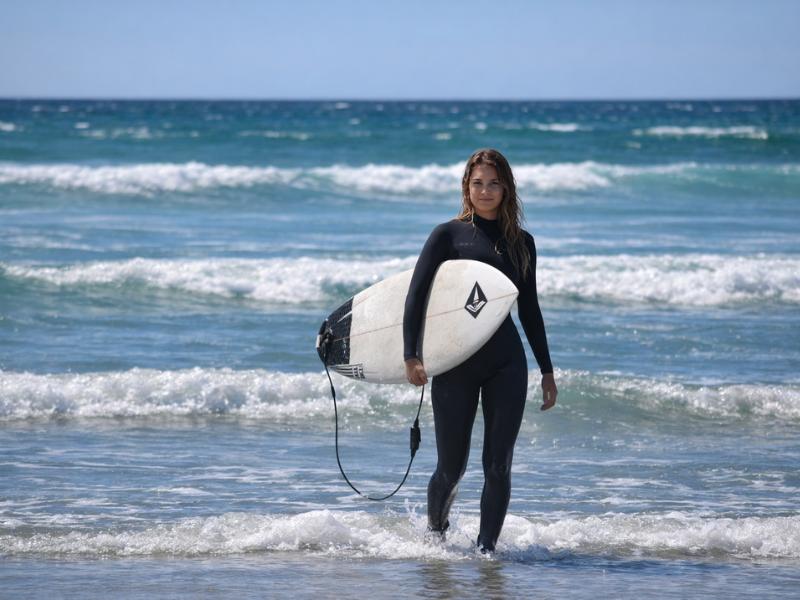
Tofino is Canada’s surf capital, with over 35 km of sandy beach breaks across four main beaches. Cox Bay is the most consistent and is home to both annual surf competitions. Long Beach is the best for beginners in summer. Chesterman Beach is the local favourite in fall and winter. A wetsuit is required year-round – water temperatures run 7°C to 14°C. Group surf lessons run about $99 per person for a 2.5-hour session including all gear, with a 5:1 student-to-instructor ratio.
The waves break year-round and the beach breaks are all over sand, which is the reason the surf culture here has an entry point that reef breaks elsewhere do not offer. You fall and you hit sand, not coral or rock. Surf schools including Surf Sister, Pacific Surf Co., Swell Tofino, and Sadler Surf School all run lessons for complete beginners. Instructors choose the beach each morning based on conditions, tides, and forecast, which means a booking with a surf school is also a guarantee that you will be at the right beach on the right day rather than standing at the wrong one wondering why the waves look wrong.
For experienced surfers, the breakdown is: Cox Bay first, North Chesterman when Cox Bay exceeds 6 feet and starts to close out, MacKenzie Beach as the sheltered fallback when everything else is maxed. Fall (September through November) is the season locals wait for: offshore southeast winds, the first big northwest swells of the year arriving in October, and the warmest water carryover from summer. Summer is beginner season. Winter produces 20 to 30-foot storm swell – dramatic to watch from the headland at Cox Bay, not appropriate for anyone without serious experience.
Every surf school provides rental wetsuits. A 4/3mm suit handles summer. From November through March you need a 5/4mm minimum with 7mm boots, 5mm gloves, and a 3mm hood. The Pacific is cold here in a very specific, practical way that surprises people who have only surfed warmer water. The gear solves it completely. The cold is not a problem with the right rubber on.
Wondering which beach to hit? Check out our breakdown of the best surfing beaches in Tofino tour packages – from mellow Long Beach to more challenging Cox Bay breaks.
Whale Watching: Get Out On The Water
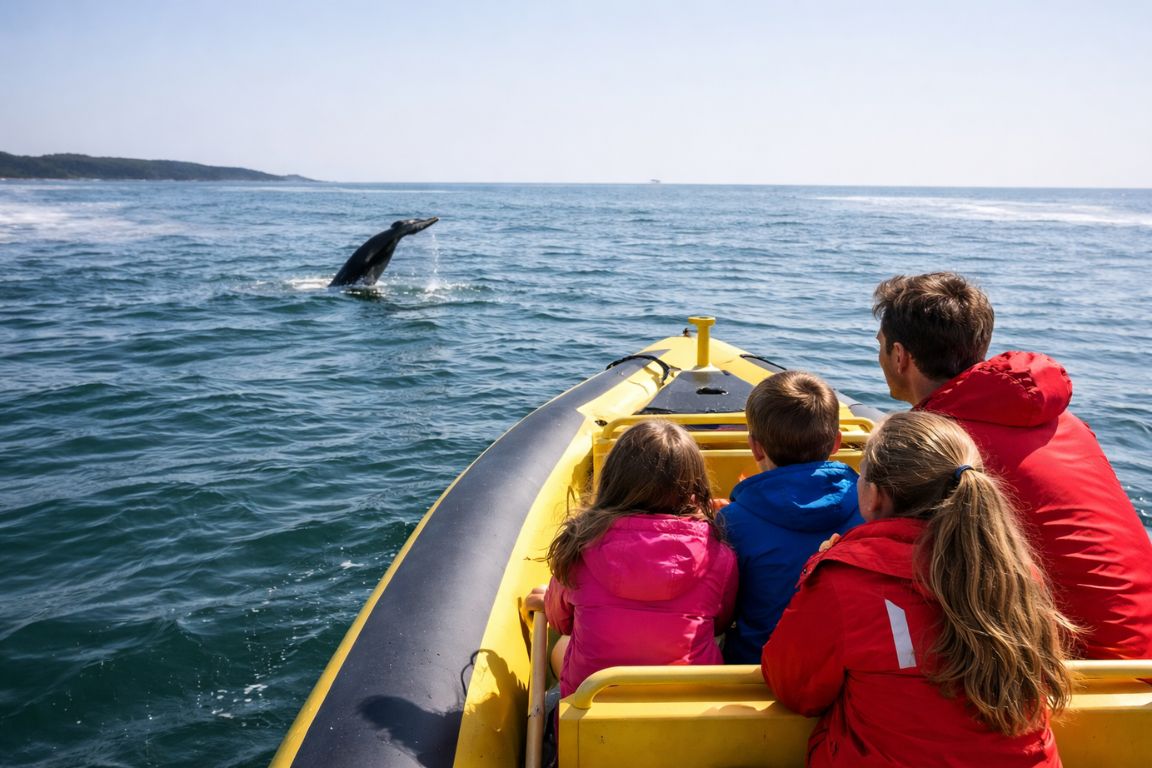 Whale watching in Tofino runs from March through October, with a 95%+ sighting success rate across major operators. The main species are gray whales (most reliable, present spring through fall), humpbacks (June-September), and transient orcas (unpredictable year-round). Tours run 2.5 to 3 hours and cost roughly $130 to $170 CAD per adult, departing from Tofino Harbour. All operators are within walking distance of downtown. Book one to two weeks ahead in summer.
The gray whale migration is the anchor of the whale watching season. Approximately 20,000 grays pass the coast of Vancouver Island in spring on their journey from Baja California to the Bering Strait, and about 200 stay in Clayoquot Sound through summer to feed on invertebrates in the muddy seafloor. Those resident animals are what your tour guide finds on a July morning. They know many of them by name, by barnacle pattern, by which feeding ground they prefer this week.
Humpbacks are the dramatic species. When one breaches, the sound reaches you before you process what you are seeing: 40 tonnes of animal clearing the water completely, then crashing back in. It does not happen on every tour and it cannot be scheduled. When it does happen it is one of the more arresting natural experiences available from the deck of a small boat in British Columbia.
The five main operators are Jamie’s Whaling Station (largest fleet, 40+ years), The Whale Centre (locally owned since 1982, non-expiring raincheck, named-whale tracking), Remote Passages (education focus since 1986), Adventure Tofino (maximum 12 guests, most intimate), and West Coast Aquatic Safaris (fully wheelchair accessible NANUQ vessel). All depart from the harbour. All have real records of operating responsibly in these waters. The choice between open Zodiac and covered cabin cruiser is the main decision: Zodiac puts you at water level with full ocean exposure; cabin cruiser is warmer, has a washroom, and is the right call for young children, pregnant guests, and anyone prone to seasickness.
One piece of information that consistently helps guests set appropriate expectations: the Pacific Rim Whale Festival in mid-March is one of the best moments of the year to be on the water. Twenty thousand whales moving north along the coast, peak migration activity, and educational events running across Tofino and Ucluelet. The summer crowds have not arrived. The weather is cooler but manageable. Early season whale watching is genuinely exceptional if you come prepared for West Coast conditions.
Need a solid recommendation? Here are the best whale watching tours in Tofino tour packages that consistently deliver – from zodiac adventures to covered boat tours for families.
Hot Springs Cove: The Full-Day Boat Trip
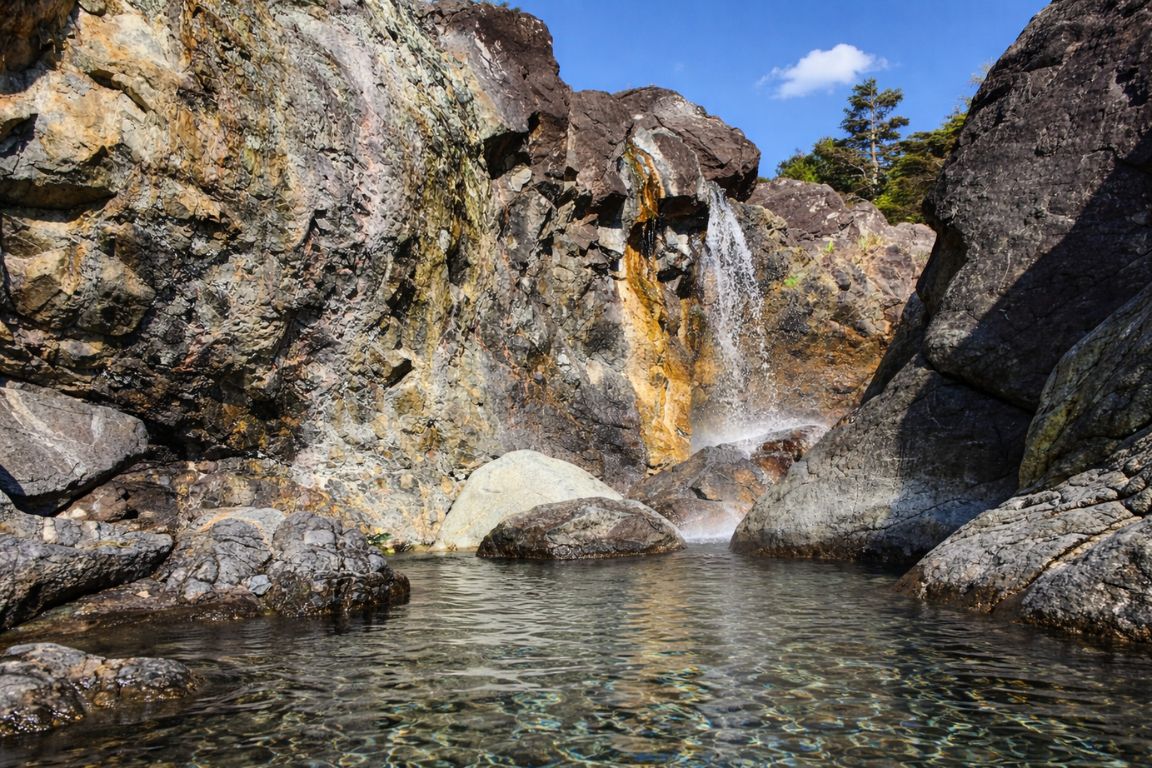 Hot Springs Cove is a natural geothermal spring in Maquinna Marine Provincial Park, 26 nautical miles northwest of Tofino, accessible only by boat or floatplane. The full tour takes six hours: 90-minute boat ride each way through Clayoquot Sound with wildlife viewing, a 2 km cedar boardwalk hike through old-growth forest, and about two hours in the natural pools above the Pacific. Each operator is limited to one boat per day with 12 passengers. Book this before anything else on your Tofino trip.
The boat passes through channels between islands where sea otters float in kelp beds, bears work the shoreline, and eagles sit in trees that have not changed significantly since before anyone now living was born. The boardwalk to the springs is cedar-planked, hand-split, and winds through coastal temperate rainforest that closes in overhead within the first few steps. The sound of the ocean disappears. You hear the forest instead: rain on needles, the creak of large cedars, the occasional burst of bird call. Then the forest opens and the springs appear at the edge of the rock shelf above the Pacific.
Six small rocky pools descend toward the tidal zone, where the hot geothermal water meets the cold ocean. The hottest pools average 50°C and the experience of sitting in steaming water while cold ocean spray drifts in from the open Pacific is one of the stranger and more restorative physical sensations the coast offers.
A few things every traveller needs to know before booking. The Ahousaht Stewardship Fee applies to all visitors ($15 per person at time of writing, collected by operators) in addition to the BC Parks access fee ($3 per person). Dogs, glass, soap, and alcohol are not permitted in the pools. Water shoes or sandals are strongly recommended: the rock path to the pools is uneven and slippery at the best of times. The boardwalk has significant stairs and is not suitable for guests with serious mobility limitations. And the pools at peak summer hold many people in a very small space — ask your operator what time of day they access the springs to understand how crowded your visit will likely be.
The floatplane option is worth knowing about. Tofino Air and Atleo Air Service fly to Hot Springs Cove in roughly 20 minutes instead of 90 by boat. For guests who want to minimise the boat journey or have limited time, the combination of flying in and taking a boat back (or vice versa) is an option. The experience on the water through Clayoquot Sound is genuinely part of the value of the full tour, but the flight gives the aerial view of the Sound that the boat cannot offer.
Need the full breakdown? Our Hot Springs Cove Tofino tour guide walks you through operator choices, what the boat ride is like, and what to expect when you reach the springs and boardwalk.
Bear Watching: The Quiet Alternative
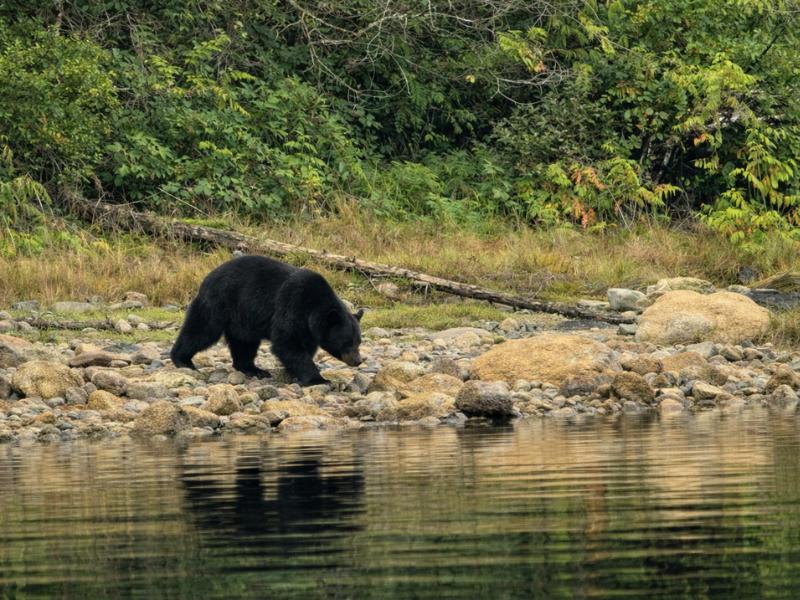
Bear watching in Tofino takes place on the sheltered inlets and channels of Clayoquot Sound, where coastal black bears come to the shoreline at low tide to forage for crabs, fish, and clams. Tours run about 2 to 2.5 hours, cost approximately $169 CAD per adult (The Whale Centre), and operate April through October. Because tours are timed to low tide, departure times change daily. Bear watching is completely calm water – no ocean swell, no seasickness risk. It is a fundamentally different physical experience from whale watching.
The difference between whale watching and bear watching in Tofino is not just the species. It is the water. Whale watching takes you toward the open Pacific, which has swell and motion. Bear watching runs through the protected inlets of Clayoquot Sound, where the water is flat and the surrounding forest reflects in channels that look like mirrors on calm mornings. The pace is slower. The engine often cuts when bears are present, and the boat drifts quietly as the animals work the rocks 40 metres away.
Coastal black bears feed differently from inland bears. They turn rocks to find crabs, wade into streams for fish, and work the tidal zone systematically during the low tide window when the food is accessible. Watching a mother black bear teach a cub to overturn a beach boulder and find what is underneath is an experience that sits outside the usual frame of wildlife tourism. It is not a big, dramatic moment. It is just a bear doing what bears have done on this coast for thousands of years, and you are there for it.
Bear watching season runs April through October and follows the tide schedule exactly. Your booking confirmation will include the departure time, which may be early morning one day and early afternoon the next based on when low tide falls. This is not an inconvenience to plan around. It is information that confirms the operator is running their tours correctly. Sighting rates across major operators run at 95% or above through the peak months. No food or strong fragrances on board; guests are asked to minimise noise and movement once bears are spotted. Those are not arbitrary restrictions. They are what makes the sightings as natural and unforced as they are.
Black Bear Kayaking offers bear watching by kayak rather than motorboat, which gets you closer to the water surface and quieter once the kayaks deploy from the shuttle vessel. For guests who find the boat tour experience too passive or who want a more physically engaged wildlife encounter, this is the option worth knowing about.
Hiking And Rainforest Trails: Old Growth On Your Doorstep
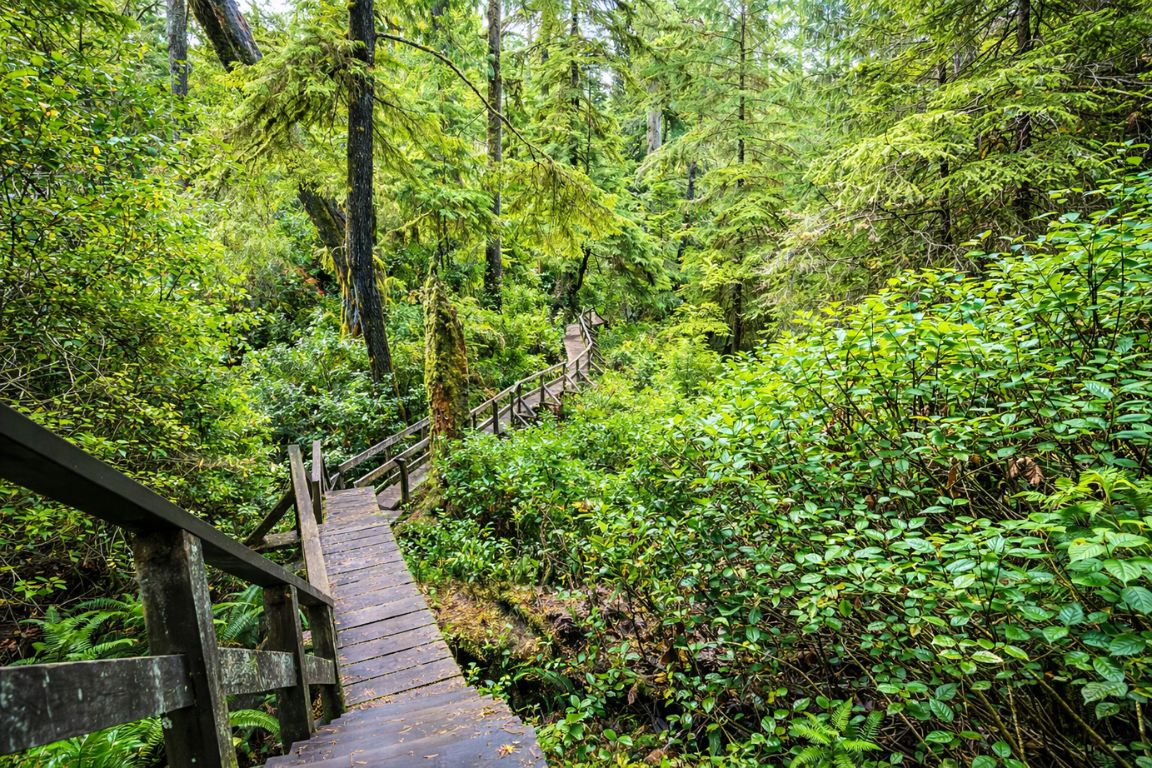 Tofino’s best hiking includes the Rainforest Trail in Pacific Rim National Park (two 1 km loops, boardwalk, old-growth cedar and spruce), the Tonquin Trail from the town core to a series of sheltered beaches, and the Meares Island Big Tree Trail (water taxi required, 2.4 km boardwalk to a 2,000-year-old cedar). For serious hikers the Lone Cone Trail on Meares Island climbs 700 metres in 2.7 km for panoramic views across Clayoquot Sound. A Parks Canada day pass ($12.25 adult) covers all park trails. The Big Tree Trail has a separate trail fee ($35 adult).
The Rainforest Trail pulls you in quietly. Spruce and cedar close over the boardwalk within the first few steps of either Loop A or Loop B, and the light drops to something green and diffused, like standing at the bottom of a shallow sea. The sound of the highway fades almost immediately. You stop hearing the ocean. The boardwalk is well-maintained, the interpretive signage is worth reading, and the loops take less than an hour each, which means this is the kind of hike you do in addition to everything else rather than instead of it. The trailheads sit right off Highway 4 inside Pacific Rim National Park, accessible by car, by bicycle on the ʔapsčiik t̓ašii path, and by West Coast Transit.
The Tonquin Trail starts practically in the town of Tofino itself, which makes it the easiest access to old-growth forest and secluded pocket beaches from anywhere you are staying in the downtown core. The 3 km trail system moves through coastal rainforest on boardwalk and gravel paths, dropping to Tonquin Beach and then connecting to Middle Beach and beyond. The beaches here are sheltered and smaller than Cox Bay or Long Beach, with rockier surrounds that make the tide pool exploring significantly better.
Meares Island is the hike that most visitors underestimate and many call the highlight of their trip. A 10-minute water taxi from Tofino Harbour lands you at the trailhead for the Big Tree Trail, which follows cedar-planked boardwalk for 1.2 km to the Hanging Garden Tree, a western red cedar approximately 2,000 years old with a circumference of 18.3 metres. The tree is still alive. Other plants have taken root in its branches and trunk over the centuries, which gives it the appearance of a small vertical ecosystem. Going past the boardwalk onto the full 4.2 km loop requires proper footwear and some tolerance for mud, fallen logs to climb over, and real rainforest conditions. It is worth it. The trail fee ($35 adult, $30 youth/senior, $25 child) goes to the Tla-o-qui-aht First Nation, on whose Tribal Park the trail operates.
Bring a phone to call the water taxi for pickup on Meares Island. There is no cellular signal reliability guaranteed on the island. Call before you leave the trailhead area.
Wondering where to hike? Check out our Tofino tour hiking trails guide – from easy beach walks to challenging rainforest scrambles through old-growth forest.
Kayaking And Paddleboarding: Explore Clayoquot Sound
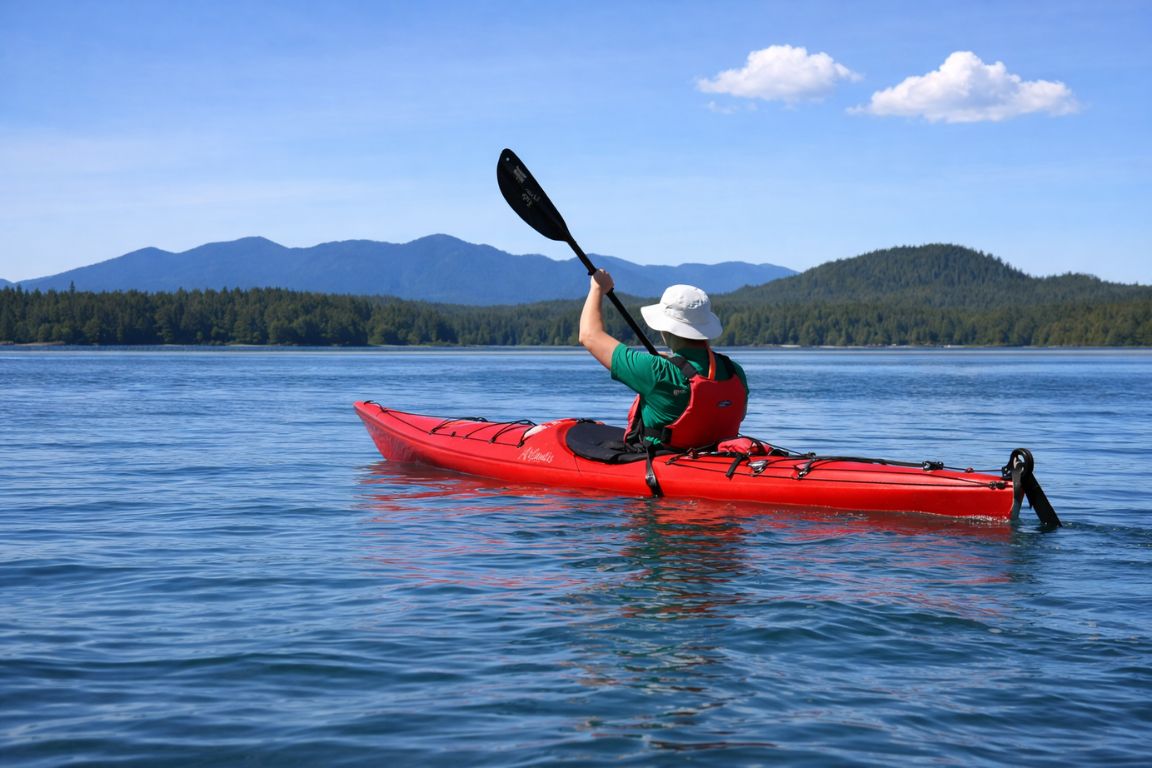 Kayaking in Clayoquot Sound puts you at water level in a UNESCO Biosphere Reserve of fjords, islands, and old-growth forest. Guided tours range from 2.5-hour harbour paddles ($80/person) to 4.5-hour trips to Meares Island ($144/person). No experience is required for guided tours. Paddleboarding is available at MacKenzie Beach and on the calmer inlets. Both are spring through fall activities, with the season running roughly April to October for most operators.
The practical distinction between a boat tour and a kayak tour in Tofino is this: on a boat, you are a passenger watching the coast. In a kayak, you are at the same level as the seals, the herons, and the otters. The engine is silent. When a harbour seal surfaces 3 metres from your bow it does so with a different quality of presence than it would from a boat deck above it. That difference is real and it explains why people who have done both consistently say the kayak experience sits in a different category.
Tofino Sea Kayaking has operated since 1988, running harbour paddles and Meares Island trips from the town core. Remote Passages includes sea kayaking as part of its tour program. Black Bear Kayaking offers the bear-watching-by-kayak experience described in the bear section, which is one of the more unusual activity combinations available on the coast. All operators provide equipment and instruction, and none require prior paddling experience for their introductory tours. The sound is calm water throughout, sheltered by islands and channels from the open Pacific swell that makes ocean kayaking challenging.
Paddleboarding on the calmer beaches, particularly MacKenzie Beach and the inlet waters, is accessible to anyone. Tofino Paddle Surf operates from MacKenzie Beach and provides lessons and rentals. Stand-up paddleboarding in the surf at Cox Bay or Long Beach is a different level of commitment, appropriate for people who are already comfortable in surf conditions. The instructors at surf schools can advise on whether a particular day and location works for SUP surfing given the conditions.
If you’re considering kayaking, here’s everything about Tofino kayaking tour packages so you understand skill requirements, wildlife chances, and whether to book calm bay tours or more adventurous ocean paddles.
Storm Watching: Tofino In Winter
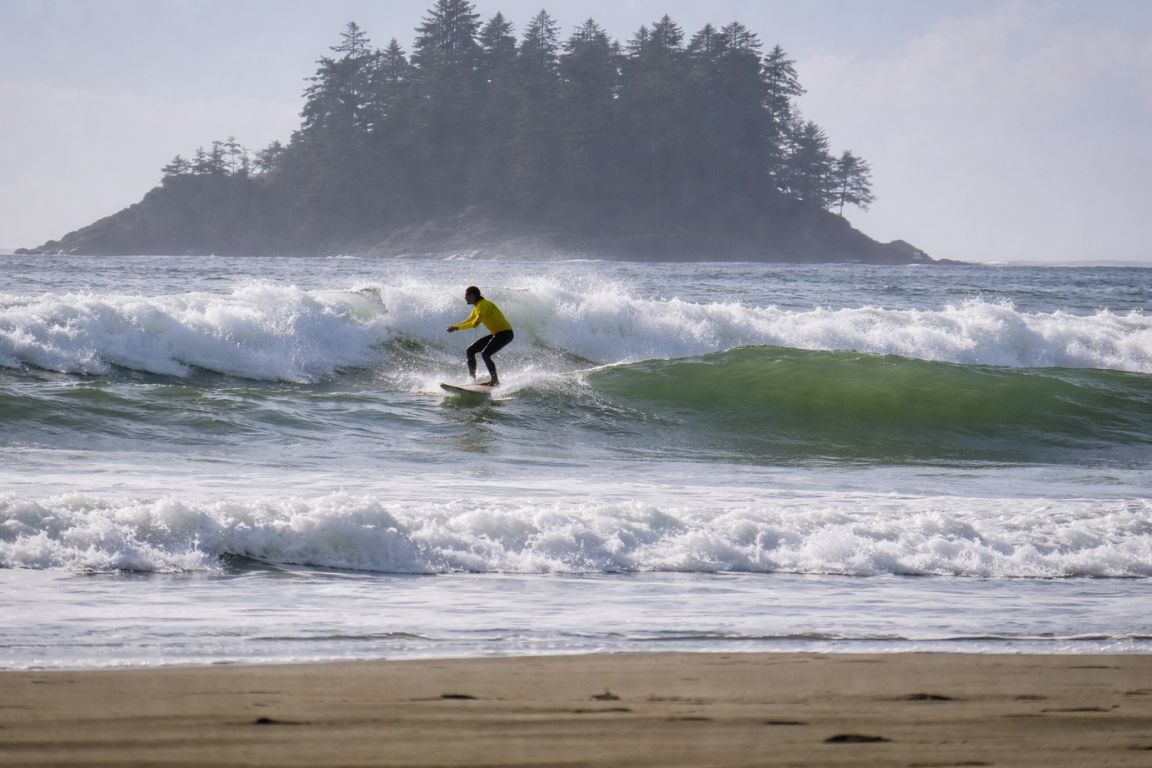 From November through March, Pacific storms generate waves of 20 to 30 feet that arrive at Tofino’s exposed coastline with nothing between here and Japan to slow them down. Storm watching is a genuine category of travel here, not a marketing euphemism for bad weather. The Wickaninnish Inn on Chesterman Beach was purpose-built for it and was designated a Canadian Signature Experience by the Canadian Tourism Commission in 2011. The best beaches to watch from are Cox Bay, Wickaninnish Beach, and Chesterman’s rocky north end. Always stay back from the waves – sneaker waves are real and the rocks are slippery.
Most people who have never been to Tofino in winter expect to be managing through bad weather. What they find instead is that the weather is the experience. When a northwest storm pushes a 25-foot groundswell against the Cox Bay headland and the water launches into white spray 10 metres above the rock shelf, it is not unpleasant to witness. It is one of the more visceral natural spectacles available on this coastline. The scale of the ocean becomes comprehensible in a way it simply is not on a calm summer day.
The Wickaninnish Inn is the centrepiece of Tofino’s storm watching infrastructure. The Inn sits on a rocky point at the north end of Chesterman Beach and was designed from the beginning with floor-to-ceiling ocean-facing windows, a fireplace in every room, and full rain gear provided for guests who want to walk the beach in the storm rather than watch from inside. Charles McDiarmid, whose family has been on this coast since 1955, built the Inn around the storms specifically. The Storm Watchers package runs November 1 through March 31 (excluding the January closure) and is worth booking early for the peak storm months of January and February.
You do not need to stay at the Wickaninnish Inn to storm watch in Tofino. The beaches are public and free. Long Beach Lodge Resort at Cox Bay has a Great Room with ocean views and a hot tub overlooking the surf. Pacific Sands Beach Resort runs storm watching packages with savings through the season. The storm watching experience is available at every price point. What the Wick provides that others cannot is a specific combination of luxury, positioning, and legacy that makes it the best address in Canada for that activity.
Safety is not a footnote for winter beaches. Sneaker waves, also called rogue waves, are real: unpredictably large waves in a set that arrive without warning and have swept people off coastal rocks. Tourism Tofino explicitly warns against standing on tidal rocks during storm season. The spray areas are marked, the high tide lines are visible, and the basic rule is straightforward: stay well back, observe from above the beach rather than from rock level, and check the tide table before you go out. The storms produce one of Canada’s most compelling natural spectacles. They also kill people who misread the risk.
Not all seasons are equal on the wild coast. The best time to visit Tofino tour packages changes dramatically based on storm season, summer crowds, whale migration, and how much rain you’re willing to endure.
How Our 12,600+ Guests Split Their Time In Tofino
After 13 years of coordinating itineraries for guests across every season and every ability level, the patterns in how people structure a Tofino stay are consistent. The table below captures what we see repeatedly and what we use to build first-time visit itineraries.
| Most-booked activity on a first Tofino visit | Beach Exploration | The activity most first-timers anchor their whole trip around |
| % of guests who add a second water-based tour | 45% | Most people who do whale watching also want bear watching or Hot Springs once they are on the water once |
| Most common regret on a 2-night visit | The Travel-to-Stay Ratio | Almost always Hot Springs Cove missed due to late booking or not enough nights |
| Recommended minimum nights to do Tofino properly | 3 nights minimum; 4-5 preferred | Two nights leaves no room for a weather delay, a day with bad surf, or a spontaneous hike |
| % who say Tofino exceeded expectations | 92% | Tofino consistently over-delivers on first visits when the itinerary is built correctly |
The pattern we see most in post-trip feedback from guests who had genuinely exceptional trips: they stayed at least four nights, they booked Hot Springs Cove before they arrived, and they had at least one unscheduled half-day that let them respond to conditions rather than chase a fixed agenda. The coast rewards flexibility. A morning when the swell lines up at Cox Bay perfectly, or a low tide that puts 10 bears on the Clayoquot shoreline simultaneously, or a storm that pushes in from the northwest at exactly the moment you are watching from the Wick’s deck – those things cannot be engineered. They can only be available for.
Frequently Asked Questions
What is Tofino most famous for?
Tofino is most famous for surfing and storm watching. It is Canada’s surf capital, with over 35 km of beach breaks accessible to all skill levels and consistent waves year-round. In winter, Pacific storms produce some of the most dramatic coastal conditions in North America. The Wickaninnish Inn was designated a Canadian Signature Experience for storm watching in 2011. Whale watching, bear watching, Hot Springs Cove, and old-growth forest hiking are all major draws that fill a longer stay.
How many days do you need in Tofino?
Three nights is the minimum to experience Tofino properly, with four to five nights the recommended stay for a first visit. Two nights allows only a compressed version of the experience, with no buffer for weather delays or slow days. Hot Springs Cove alone is a full 6-hour day. Whale watching, a surf lesson, and the Rainforest Trail each take another half-day or more. Build in one unscheduled day to respond to what the coast is actually doing on the day you are there.
What is the most popular thing to do in Tofino?
Whale watching and surfing are the two most popular activities, with Hot Springs Cove close behind. Whale watching is the easiest on-water experience to organise for any age and fitness level, and the 95%+ sighting rates across major operators make it a reliable highlight. Surfing draws everyone from first-timers taking group lessons at Long Beach to experienced surfers chasing fall swells at Cox Bay. Hot Springs Cove is the activity most commonly cited as the trip highlight by guests who do it.
What is the best time to visit Tofino?
The best time depends on what you are there for. July and August are best for beginners, beach days, and summer crowds. September through November is the locals’ preference: great surf conditions, whale season still running, bears still active, fewer people. March and April bring the gray whale migration and the Pacific Rim Whale Festival. November through March is storm watching season. Tofino genuinely has something worth coming for in every month of the year.
Is Hot Springs Cove worth it?
Yes. Consistently and without qualification. The combination of the Clayoquot Sound boat journey, the old-growth cedar boardwalk, and the geothermal pools above the open Pacific is the kind of experience that people describe years later as one of the best days they have had outdoors anywhere. The tour is a full six hours and the fee is significant. Both things are true and the experience justifies them. The main caveat: book it before anything else on your trip. One boat per operator per day, 12 passengers maximum. It fills.
Do I need a car to do things in Tofino?
Not for most activities. All water-based tours (whale watching, bear watching, Hot Springs Cove, kayaking) depart from Tofino Harbour, which is walkable from downtown. In summer, the free Tofino Shuttle runs from the town core to Long Beach. West Coast Transit covers the Tofino to Ucluelet corridor year-round for $5.50 a ride. The ʔapsčiik t̓ašii bike path provides cycling access to most beaches. A car gives flexibility for spontaneous stops and access to the Highway 4 corridor. For most itineraries, it is helpful but not required.
Written by Ethan James Callahan
Canadian tour guide since 2012 · Founder, Tofino Tour Packages
Ethan has guided over 12,600 travelers through Tofino and the surrounding Pacific Rim wilderness since founding the agency.