Best Surfing Beaches In Tofino
Tofino surf guide: Cox Bay for all conditions, Long Beach for beginners, Chesterman for power, MacKenzie as fallback. Cold water means wetsuits year-round.
Last updated: March 26, 2026
Choose your surf beach first. The bookable options below are coastal exploring and vacation photography; neither includes a surf lesson.
Affiliate links: we may earn a commission from qualifying bookings.
Tofino Surf Beaches: Quick Reference
| Cox Bay (č’ahạ yis) | All levels; competitions; consistent year-round | Summer (beginners); Fall (intermediate/advanced) | Mid to high | Canada’s #1 surf beach; Corner is experts only (rip current) |
| Long Beach | Beginners; surf lessons; summer sessions | Summer (Jun-Sept) | Anything but low | Parks Canada pass required; 16 km of forgiving sand |
| North Chesterman (Nanukuʔwa) | Intermediate/advanced; locals’ pick | Fall and Winter | Mid-tide | Dormant in summer; comes alive when Cox Bay is too big |
| South Chesterman (Yuʔatu) | Beginners; boogie boards; surf lessons | Spring and Summer | Low to mid | More sheltered end of Chesterman; softer waves |
| MacKenzie Beach (tinwis) | Families; calm swimming; fallback surf | Winter (big swell only) | Varies | Most sheltered beach; only surfable a handful of times per winter |
Beach conditions change daily with tides, swell, and wind. Check Surfline, the La Perouse Bank buoy report, and Tourism Tofino’s live webcams before heading out. Verified March 2026.
Is Tofino Good For Surfing?
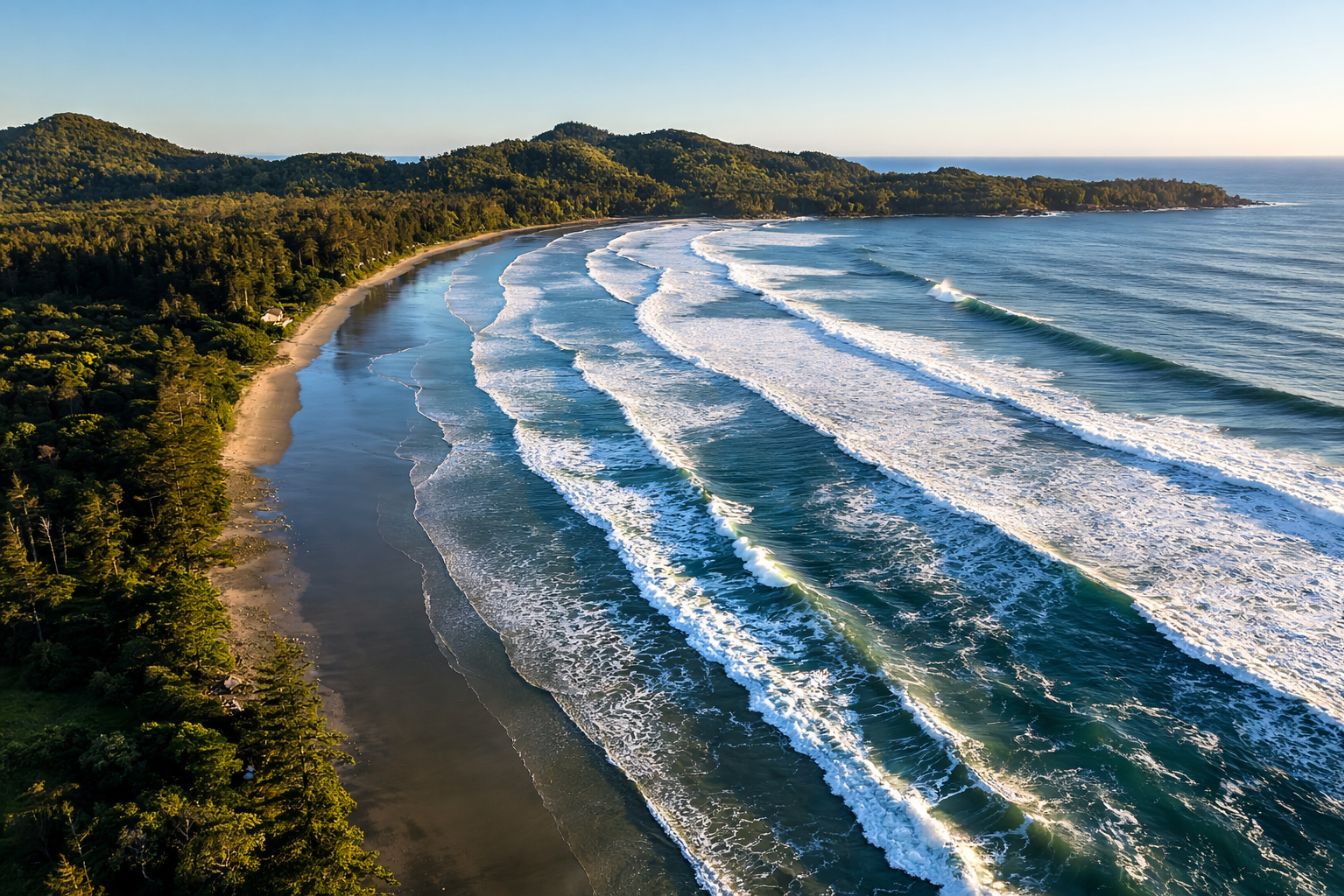 Yes, and by most measures it is the best surf destination in Canada. Tofino has over 35 km of surfable beach, consistent swells year-round from the open North Pacific, and water temperatures that force commitment rather than punishment. Outside magazine named it the best surf town in North America. The variety of breaks means beginners and experienced surfers both find what they need within a few kilometres of each other.
The numbers make the case quickly. Thirty-five kilometres of sandy beach breaks. Four distinct surf zones ranging from protected cove to open Pacific swell magnet. Competitions including the Queen of the Peak Women’s Canadian Surf Championships and the Rip Curl Nationals run here because the waves are reliable enough to build a professional event schedule around.
What makes Tofino different from other Canadian surf destinations is the swell window. The coast faces full west into the North Pacific, with nothing between here and Japan. Winter storms crossing the Pacific from the Aleutian Islands generate groundswells with 15 to 22 second periods that roll into Cox Bay and Long Beach with surprising size and shape. Even in summer, when those storms quiet down, residual swells and local wind swell keep the water moving. You are not waiting for surf in Tofino. You are choosing which beach fits what is arriving.
All Tofino breaks are beach breaks over sand. That matters for beginners especially. A wipeout on sand is a different proposition from hitting reef, and it means Tofino has a genuine entry point for people who have never surfed before. The surf school culture here reflects that: Surf Sister, Pacific Surf Co., Swell Tofino, Tofino Surf School, Sadler Surf School, and Wick’d Surf Camps all run lessons year-round, with group ratios of roughly 5 or 6 students per instructor. Group lessons run about $99 per person for a 2.5 to 3 hour session including all gear.
We’ve mapped out how to plan a trip to Tofino tour packages based on what actually matters – getting there by ferry or plane, booking hotels months ahead, and timing around storm season versus summer surf.
What Is The Best Surfing Beach In Tofino?
Cox Bay is the best overall surf beach in Tofino, named Canada’s number one surf beach by Pacific Sands and the site of both major annual surf competitions. It captures the most swell, breaks across the whole beach on most conditions, and has three distinct zones that suit different skill levels. For beginners specifically, Long Beach in summer runs a close second, and South Chesterman is the most forgiving spot for a first lesson.
The honest answer is that “best” changes by the day. A day when Cox Bay is 8 feet and closing out is not a Cox Bay day. A day when the swell is 4 feet from the northwest with an offshore east wind is one of the great days in Canadian surfing, and Cox Bay will be the place you want to be. The conditions determine the beach. What follows explains each break in enough detail to make that call yourself.
Cox Bay: Tofino’S Premier Surf Beach
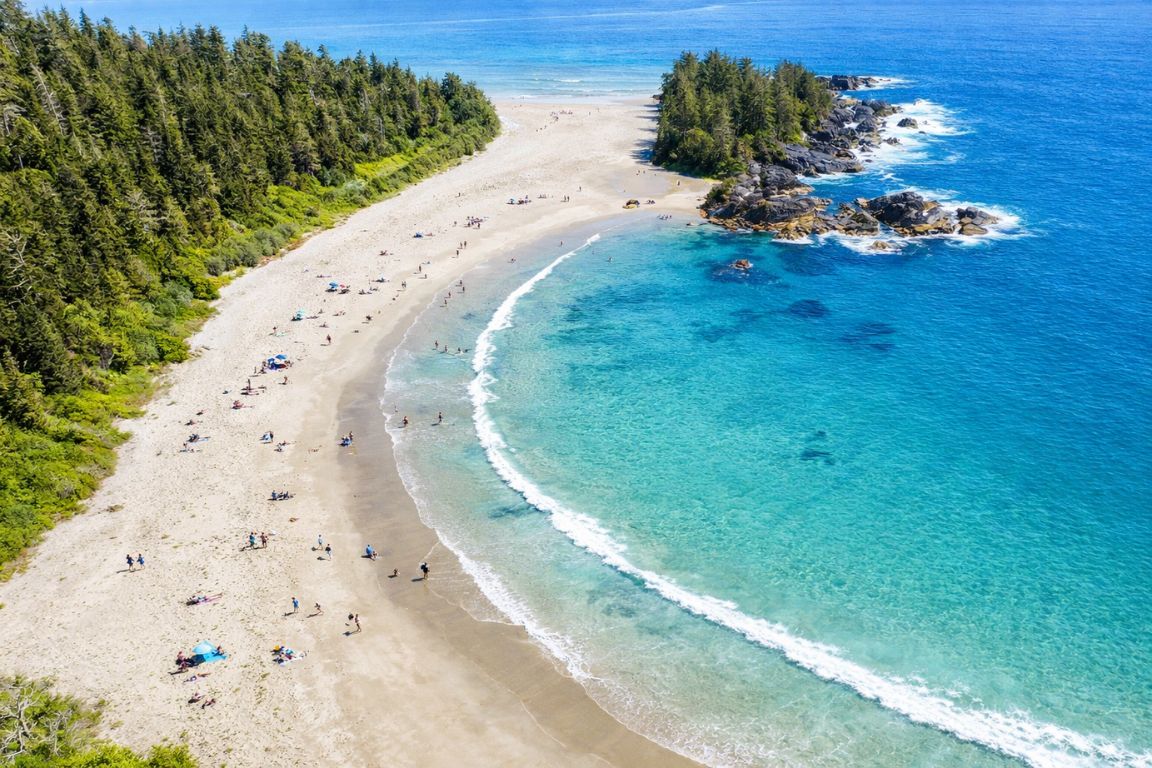 Cox Bay is the largest and most consistent surf beach in Tofino, the site of both annual competitions, and the beach where you find the highest concentration of intermediate and advanced surfers throughout summer and fall. It breaks across three zones: the Middle is the main crowd area and works on all tides; Lando’s on the left produces long rides on northwest swells; the Corner on the right is experts only due to a powerful rip current. When swell exceeds 6 feet, move to North Chesterman.
Stand at the top of the beach access path on a clean fall morning with an east offshore wind and a 5-foot northwest swell running, and Cox Bay answers the question of why people call this place Canada’s surf capital. The water is grey-green and moving with purpose. Lines are stacking on the horizon. A dozen surfers sit in the lineup at the Middle, reading the sets. A couple of them are very good.
The beach is crescent-shaped and faces due west, which means it picks up energy from any swell coming out of the western half of the compass. That consistency is what the competitions rely on. Queen of the Peak, the Women’s Canadian Surf Championships, runs here in fall. The Rip Curl Nationals runs in spring, typically April. Both events use Cox Bay because it delivers.
The three zones behave differently enough to function as separate breaks. The Middle is where most people surf, because it works on shifting peaks across all tide stages and handles a mix of ability levels. This is the section surf schools set up in during summer when the waves are gentle and the swell is 2 to 3 feet. Northwest swells send energy down toward Lando’s on the left side of the beach, where the lefts can peel for a long distance toward the creek mouth when the sandbars are right. Advanced surfers who find the Middle too crowded often drift toward Lando’s for the room.
The Corner, at the right end of the beach, requires a paragraph of its own because of how often first-timers misjudge it. Southern swells hit the Corner at the right angle to produce a steep right-hander that can be the highest-performance wave on the whole peninsula when the conditions stack up correctly. It is also the location of one of the strongest rip currents in Tofino. Not a rip to manage. A rip to leave alone unless you are an experienced ocean swimmer who knows what to do if you get taken. Every surf guide, every surf school, every local who talks about Cox Bay says the same thing: the Corner is for people who have surfed this specific break before and know what they are doing. Leave it.
Tide matters at Cox Bay. Mid to high tide is generally best, producing cleaner, better-shaped waves across the Middle and Lando’s. Low tide tends to make waves closeout faster, which is frustrating for anything beyond beginner whitewash surfing. That said, the sandbar is always shifting, and what worked at high tide last week might not be the same this visit. Check the webcam, check the buoy, and stay flexible.
The general rule most Tofino surfers know by heart: when the swell is bigger than 6 feet, Cox Bay starts to close out and gets difficult to manage. That is when you drive to North Chesterman and check the conditions there instead.
Long Beach: The Beginner’S Playground
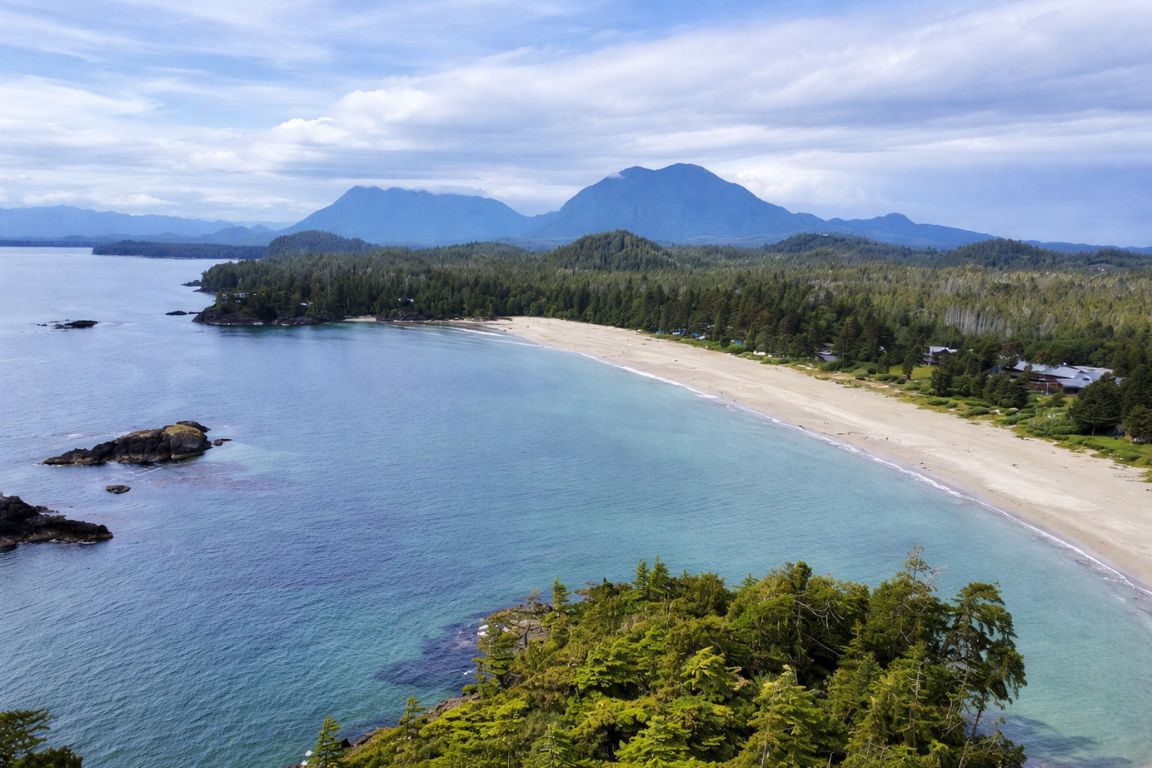 Long Beach is a 16 km stretch of sand inside Pacific Rim National Park Reserve, about 20 minutes south of Tofino town. In summer it produces the most forgiving waves on the peninsula, which is why Tofino’s surf culture started here in 1968 and why most surf schools run their beginner lessons here. A Parks Canada day pass is required. Best at anything except low tide. In winter the beach becomes exposed and powerful, not suitable for beginners.
The first surf school in Tofino opened on Long Beach in 1968, before the paved highway even existed. That tells you what the waves are like in summer: gentle, consistent, and forgiving enough that someone decided a business could be built on teaching complete novices here. By the time the highway came in 1971 and word got out to the rest of Canada, Long Beach had already earned its reputation as the place where you learn.
The beach itself is the longest on the west coast of Vancouver Island at 16 km. That scale changes the experience. Standing at the waterline, the ends of the beach are too far to see clearly. The waves break across the full width in summer, producing rolling whitewash sections that are ideal for learning to pop up, to paddle, and to find your footing before the wave closes. Sandy bottom throughout. Wide, forgiving, and well-suited to the foamie boards (soft-top longboards) that every surf school uses for beginner lessons.
The beach sits inside Pacific Rim National Park Reserve, which means a Parks Canada pass is required. Day passes are purchased at automated kiosks in the parking lots, credit card only. The parking lots fill fast on summer weekends. If you are arriving with a surf lesson booked, the school will tell you which lot to use and what time to get there.
Tide reads differently at Long Beach than at Cox Bay. Anything but low tide generally works well. At low tide the beach becomes very wide and the waves tend to break far from shore, which means a long paddle and inconsistent surf for beginners. Mid to high tide brings the waves closer in and produces the rolling sections that are easiest to read and catch.
Winter is a different story. Long Beach is more exposed than the other beaches and once the Pacific storm season arrives in late October, the waves exceed what any beginner should be near. Experienced surfers come here for the power, but it is not the place to try surfing for the first time once the season turns.
Chesterman Beach: The Local’S Alternative
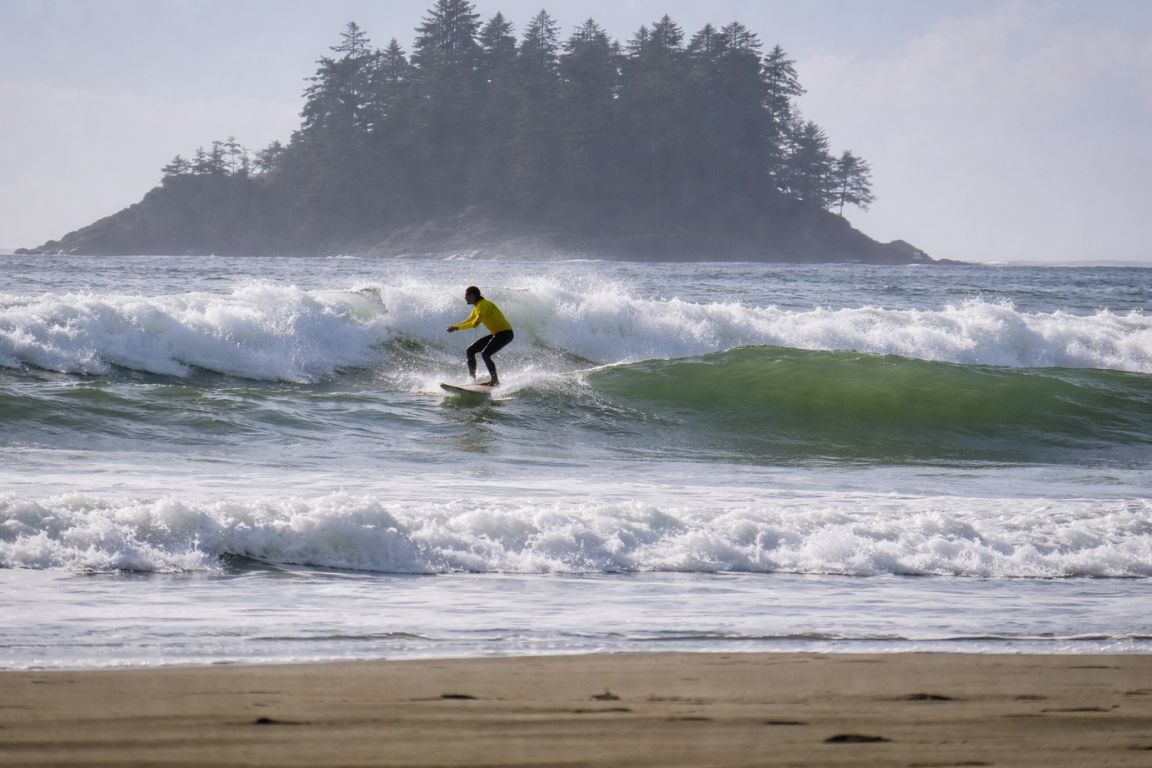 Chesterman Beach splits into North and South sections connected at low tide by a sandspit to Frank Island. North Chesterman is the punchiest, most technical beach break in Tofino, described by Surfline as the local favourite and best in fall and winter when Cox Bay is too big. South Chesterman (Yuʔatu) is protected and better for beginners and surf lessons year-round. Mid-tide is best for North; low to mid for South.
Chesterman is 2.7 km of beach a few minutes south of downtown Tofino, and the experience depends entirely on which end you are standing at. The two sections share a name and a geography but they behave like different breaks.
North Chesterman is the one locals talk about. Surfline’s description is precise: steepest and punchiest compared to the more crumbly waves at Cox Bay and Long Beach, often the local favourite, and essentially dormant through summer. That last part is the detail most visitors miss. In July and August, North Chesterman is flat or close to it. The waves there need size and period to wake up, and summer swells do not deliver that. What summer does is let the sandbars build and shape themselves undisturbed. By the time the first October swells arrive, North Chesterman has had four months to develop sand formations that produce steeper, more hollow waves than you find at Cox Bay. Locals who have been waiting patiently all summer are suddenly very attentive.
When Cox Bay hits 6 feet and starts closing out, North Chesterman is the first check. The surrounding reef and islets break up incoming swell lines, creating peaks where they would not exist at Cox Bay. The beach is a little more sheltered, meaning when Cox Bay is unrideable, North Chesterman might be 2 to 3 feet smaller and perfectly shaped. Mid-tide is the call here. Low tide makes waves dump too fast and too close to shore. Very high tide loses the shape.
South Chesterman (Yuʔatu in Nuu-chah-nulth) is consistently more protected and easier. The waves are softer and slower, making it one of the better spots for surf lessons and beginners who want something more manageable than the open exposure at Cox Bay. Surf schools operate here regularly. Best at low to mid tide, which keeps the waves rolling rather than closing out. When the tide is high, the beach mostly produces whitewash, which is beginner-friendly in a different way: just shorebreak rolling in, nothing technical required.
The walk across the sandspit to Frank Island at low tide is one of Tofino’s simpler pleasures. It has nothing to do with surfing and everything to do with understanding why this place is special. The island sits 300 metres offshore, accessible by foot for maybe an hour on either side of low tide, and the view back to the mainland with the rainforest rising behind the beach is the kind of view that explains why people move here.
MacKenzie Beach: The Protected Cove
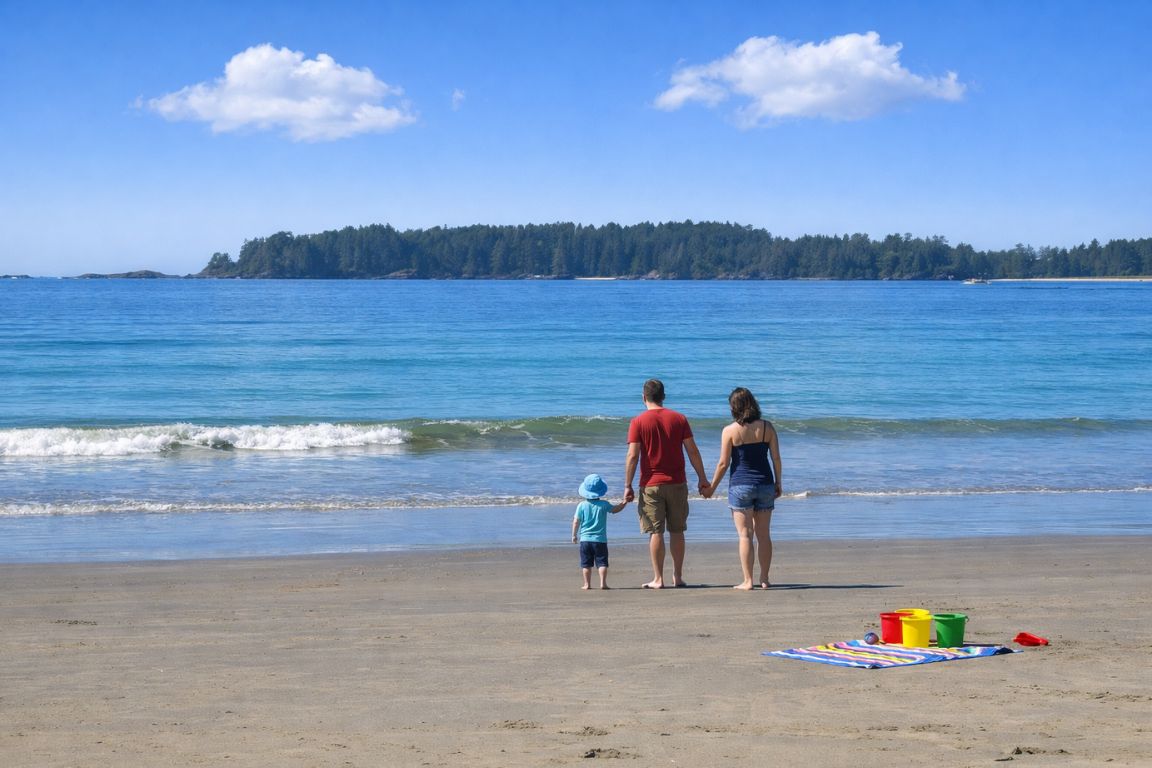 MacKenzie Beach (tinwis) is the most sheltered beach in Tofino, a protected cove that rarely produces surfable waves. When it does work, it is during major winter swell events when Cox Bay and North Chesterman are both too big. For most visits, MacKenzie is better used as a calm swimming beach, a family spot, and the base for tide pool exploring. It sits closest to downtown Tofino, walkable from the town core.
Every surfer in Tofino knows the fallback sequence by heart. Cox Bay first. If that is too big, North Chesterman. If North Chesterman is also maxed, MacKenzie Beach. It only appears in that sequence because no other option exists, not because MacKenzie is a good surf spot on a normal day. It works maybe a handful of times each winter, during the big systems that send 20-foot swell energy far enough into the cove to produce something rideable. Those days are real but unpredictable and infrequent.
What MacKenzie does well, consistently, is everything else. The protected cove means the water is calmer than any other beach in Tofino. Families with young children come here for the same reason adults with back injuries take the covered cabin cruiser on whale watching tours: the cove simply delivers a gentler version of the Pacific. Crystal Cove on the south end of MacKenzie has remarkable tide pools at low tide, a detail most first-time visitors discover only because they read about it somewhere, not because it is obvious from the road.
The beach sits roughly 1 km from the Tofino town core, walkable in about 15 minutes along the Multi-Use Path. Tofino Paddle Surf operates here for SUP rentals and lessons. If you are in Tofino with people who surf and people who do not, MacKenzie is often the easiest place to send the non-surfers for the day while everyone else heads to Cox Bay or Chesterman.
If you’re planning a family trip to the west coast, here’s the honest take on Tofino tour packages with kids based on what actually works in the rain and which activities children find fun versus boring.
What Is The Best Time Of Year To Surf In Tofino?
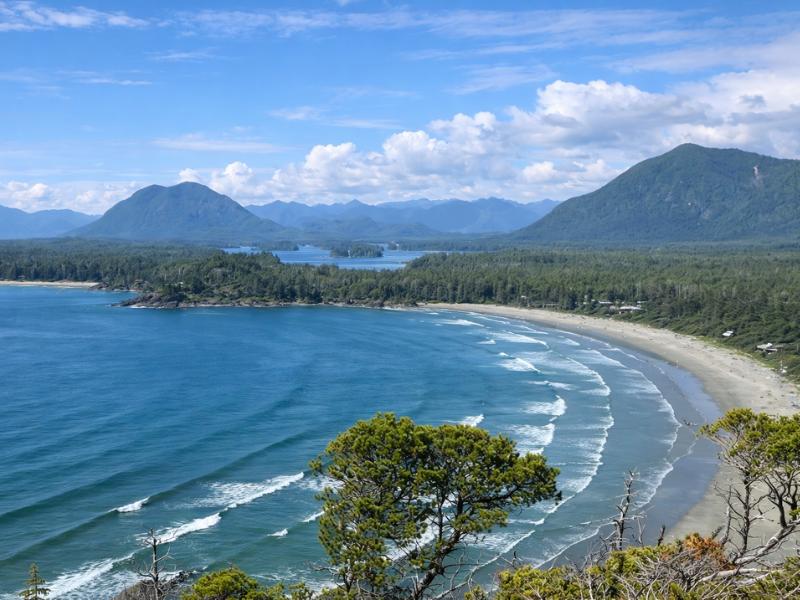
Fall is the best season for surfing in Tofino, full stop. September through November brings offshore southeast winds that groom the waves, the first heavy swells of the season from October onward, the warmest water temperatures of the year from summer carryover, and noticeably fewer people in the lineup. Summer is best for beginners and lessons. Winter produces the biggest, most powerful waves but is only for experienced surfers. Spring is underrated for its mix of residual winter swell and calmer weather.
Locals will say fall quietly, without the marketing energy of summer, because they are trying to keep it to themselves. The water peaks at around 13 to 14°C in August and holds that warmth through September and into early October. Southeast offshore winds arrive and the beach breaks groom into clean, lined-up walls. The first northwest groundswells push through in October bringing 10 foot plus surf that would have Cox Bay at peak performance. The competitions are scheduled here because of exactly this: reliable shape, offshore winds, and size without the summer chaos.
Summer is when most people visit and it serves beginners perfectly. Swells run 2 to 4 feet, winds are lighter and less consistent (sometimes onshore, sometimes offshore), and every surf school is fully operational. The water is as warm as it gets. If you have never surfed before, a July or August trip and a lesson at Long Beach or South Chesterman will give you the experience in the most accessible way the coast offers.
Winter is the most dramatic season in Tofino but the least accessible for anyone who is not already a competent surfer. Swells hit 20 to 30 feet during the heaviest storm systems. Those are not surfable waves in any meaningful sense. They are spectacles. Storm watching from the Wickaninnish Inn or from the headland above Cox Bay in December is one of the more arresting natural experiences you will have anywhere in Canada. But the surfable days in winter require experience, knowledge of the local breaks, and the ability to read conditions that change quickly. Cox Bay on an overhead winter swell with an offshore wind is exceptional surf. Cox Bay on a double overhead with a cross-shore onshore howl is something to watch from land.
Spring is genuinely underrated. March and April see residual northwest swells from the winter season, occasional southern swells coming up from the central Pacific, and the beginning of better weather. The crowds are gone. The surf schools are ramping back up. A 4/3mm wetsuit handles the conditions through most of April, which is easier than the full winter rubber required from November through March. If you want to avoid summer crowds and still find real surf, spring is worth the conversation.
Timing completely changes your Tofino experience. The best time to visit Tofino tour packages depends on whether you want dramatic winter storms, summer surfing and whales, or shoulder season rain without the crowds.
| Summer | Jun-Aug | 2-4 ft, gentle rollers, variable wind | Beginners, lessons, families | 4/3mm + optional 5mm boots |
| Fall | Sept-Nov | 4-10+ ft, offshore SE winds, groomed shape | Intermediate/advanced; locals’ favourite | 4/3mm (Sept) to 5/4mm (Nov) |
| Winter | Dec-Feb | 10-30 ft storm swell, powerful and raw | Experienced surfers only; storm watching | 5/4mm + 7mm boots + 5mm gloves + 3mm hood |
| Spring | Mar-May | Residual NW swell, occasional southern swell, improving weather | Intermediate; underrated season | 4/3mm to 5/4mm depending on month |
Do You Need A Wetsuit To Surf In Tofino?
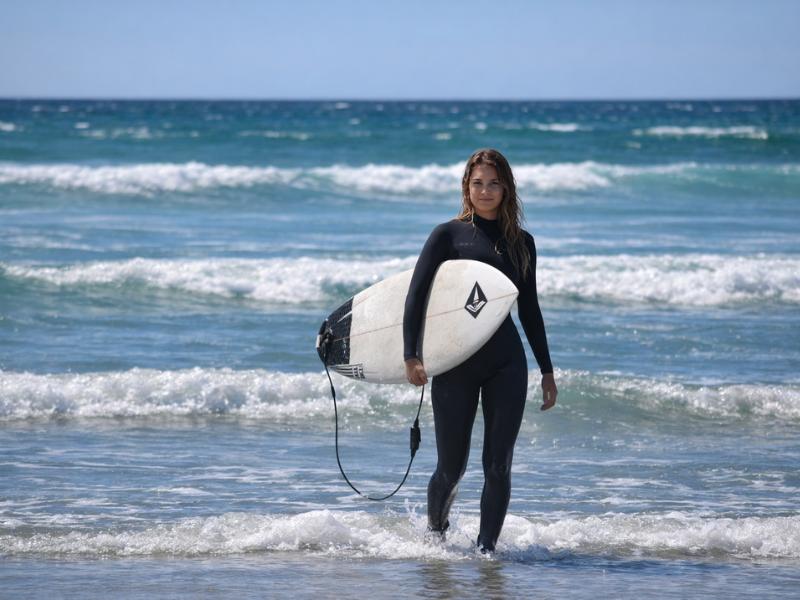
Yes, always. Water temperatures in Tofino range from 7°C in January to about 14°C at peak in August. Cold shock can affect your ability to swim within 10 minutes of exposure without a wetsuit, at any time of year. In summer a 4/3mm wetsuit is the minimum. In winter you need a 5/4mm suit with 7mm boots, 5mm gloves, and a 3mm hood. Every surf school provides rental wetsuits. This is not a beach where you decide based on air temperature.
The water temperature range at Tofino surprises almost everyone who has not surfed cold water before. Even in August, when the air temperature can reach a comfortable 18 to 20°C and the beach looks inviting, the water sits at around 13 to 14°C. That is cold. Cold enough that swimming without protection becomes uncomfortable quickly, and surfing, which involves repeated wipeouts and time in the water, requires a properly fitted wetsuit regardless of what the sky looks like.
Tourism Tofino states this plainly: cold shock can impact extremities and movement within 10 minutes of exposure to these temperatures. This is not a precaution for people who feel the cold easily. It is a physiological reality of the Pacific Ocean at this latitude. The wetsuit is not optional.
The practical guide by season is this. In summer from May through September, a 4/3mm wetsuit covers most conditions. Some days in July you can skip the boots. A hood is generally not necessary. Through fall from October into November, the water is still carrying summer warmth but the air temperature and wind are dropping, and a 5/4mm wetsuit becomes more appropriate as the month progresses. Winter from November through March demands the full system: 5/4mm suit, 7mm boots, 5mm gloves, 3mm hood. Pacific Surf Co. specifically recommends checking that the suit has no rips, tears, or leaking seams before a winter session, because a cold flush at 7°C is not a minor inconvenience.
All surf schools include rental wetsuits in the lesson price, sized from XS to XXXL and typically 5/4mm to cover all conditions. Rental shops around town (Tofino Bike Co., Swell Tofino, Live to Surf, and others) rent wetsuits separately for independent surfers. If you are buying rather than renting, a 4/3mm suit handles most of the year with the addition of boots in cooler months, and a 5/4mm covers the shoulder and winter seasons. Swell Tofino keeps their rental fleet at 5/4mm year-round specifically because the universal suit is warmer than most guests need in summer and exactly right for everything else.
| Jun-Aug | 11-14°C | 4/3mm | 5mm optional | Not required |
| Sept-Oct | 12-14°C (Sept) / 10-12°C (Oct) | 4/3mm to 5/4mm | 5mm | Optional; conditions vary |
| Nov-Apr | 7-10°C | 5/4mm minimum | 7mm | 5mm gloves + 3mm hood required |
| May | 9-11°C | 4/3mm to 5/4mm | 5mm recommended | Optional depending on wind |
Water temperature data sourced from surf-forecast.com historical satellite data for Tofino. Verified March 2026.
What Our Guided Guests Tell Us About Surfing In Tofino
After 13 years of coordinating surf lessons and beach visits for over 12,600 guests, the patterns in what people wish they had known are consistent. The table below reflects what comes up repeatedly in post-trip feedback and in the conversations our guides have at the beach.
| % of first-time surfers who stand up in their lesson | 90% | Long Beach and South Chesterman in summer consistently produce this outcome; it rarely happens at Cox Bay |
| Most common beach beginners are sent to for lessons | North Chesterman | The answer changes by season; our guides check conditions before confirming beach each morning |
| % who wished they booked lessons rather than renting independently | 40% | Independent rentals without local knowledge often end up at the wrong beach for the day’s conditions |
| Most common wetsuit mistake | Sizing (too loose) | Usually a suit that is too thin for the season, or rented gear with damaged seams; always check before paddling out |
| % of guests who surf at more than one beach during their stay | 55% | Guests who stay 3+ nights and have a car typically surf two or three different beaches depending on daily conditions |
The single most consistent piece of feedback from guests who have tried surfing before arriving in Tofino: the cold water was not as much of a problem as they expected once the wetsuit was on. And the single most consistent feedback from guests who struggled: they went to Cox Bay on a day it was too big, did not know to go elsewhere, and spent the session getting worked in the shorebreak. Which brings us to the real lesson this coast teaches.
Frequently Asked Questions
What is the best beach to learn to surf in Tofino?
For complete beginners, Long Beach in summer is the most forgiving option, with gentle rolling waves over a wide sandy bottom. South Chesterman (Yuʔatu) is also well-suited for lessons and has more shelter than Long Beach. Cox Bay is not the best choice for a first lesson: the waves are larger and more unpredictable, and the rip current at the Corner is a genuine hazard for people who are not yet comfortable in the water. Book with a surf school and let the instructor choose the beach based on that day’s conditions.
Do I need my own surfboard and wetsuit to surf in Tofino?
No. Every surf school includes boards and wetsuits in the lesson price. Rental shops throughout Tofino offer standalone board and wetsuit rentals for independent surfers. Swell Tofino, Tofino Bike Co., Live to Surf, and Pacific Surf Co. all have rental gear. If you plan to surf more than two or three times in a trip, buying a wetsuit is worth considering, but rental gear is more than adequate for a visit.
Can beginners surf at Cox Bay?
Yes, in summer when the waves are small (2 to 3 feet). The Middle section of Cox Bay produces gentle rollers in June and July that are manageable for someone who has had at least one lesson. The Corner is always off limits for beginners due to the rip current. In fall and winter, Cox Bay is not appropriate for beginners regardless of which section. Always go out with a surf school until you have a solid handle on reading rips and local conditions.
How cold is the water for surfing in Tofino?
Water temperatures range from 7°C in winter to about 14°C at peak in August. The ocean is cold year-round. A properly fitted wetsuit handles it well: 4/3mm in summer, 5/4mm with boots, gloves, and a hood in winter. Tourism Tofino notes cold shock can affect movement within 10 minutes of unprotected exposure to these temperatures, so the wetsuit is non-negotiable regardless of season.
When is the best time to surf in Tofino?
Fall (September through November) is the best overall season for experienced and intermediate surfers. Offshore southeast winds groom the waves, the water is at its warmest from summer carryover, and the first significant swells arrive in October. Beginners are best served by summer (June through August) when waves are smaller and more consistent. Winter produces the most dramatic surf but is only for experienced surfers.
Are there surf competitions in Tofino?
Yes, two annually. The Rip Curl Nationals runs in spring, typically April, at Cox Bay. Queen of the Peak, the Women’s Canadian Surf Championships, runs in fall at Cox Bay. Both events are worth attending even for non-surfers: the beach access is public, the competition level is high, and watching experienced surfers work Cox Bay at competition swell gives a useful benchmark for what the waves can do there.
Written by Ethan James Callahan
Canadian tour guide since 2012 · Founder, Tofino Tour Packages
Ethan has guided over 12,600 travelers through Tofino and the surrounding Pacific Rim wilderness since founding the agency.