Best Whale Watching Tours In Tofino
Tofino whale watching is worth it - 2.5-3 hour tours, $130-170 CAD, and 95%+ sighting rates. Choose Zodiac for thrills or covered boats for comfort.
Last updated: March 26, 2026
Choose the meeting town and vessel carefully. The Tofino and Ucluelet offers below are different departures, with different party restrictions.
Affiliate links: we may earn a commission from qualifying bookings.
Tofino Whale Watching At A Glance
| Season | March through October (some operators start in February) |
| Tour duration | 2.5 to 3 hours |
| Typical adult price | $130-$170 CAD per person (verified March 2026) |
| Sighting success rate | 95%+ across most major operators |
| Most common species | Gray whale (most reliable); humpback (June-Sept); orca (unpredictable, year-round) |
| Vessel types | Open Zodiac (thrilling, low water line) or covered cabin cruiser (comfortable, washroom) |
| If no sighting | Most operators offer a free raincheck tour; Adventure Tofino offers 50% refund or raincheck |
| Book ahead | 1-2 weeks for summer; March-May often available closer to arrival |
| Departure point | All operators depart from Tofino Harbour, walkable from downtown |
Prices and availability are subject to change. Always verify current rates directly with operators before booking. Verified March 2026.
Is Whale Watching In Tofino Worth It?
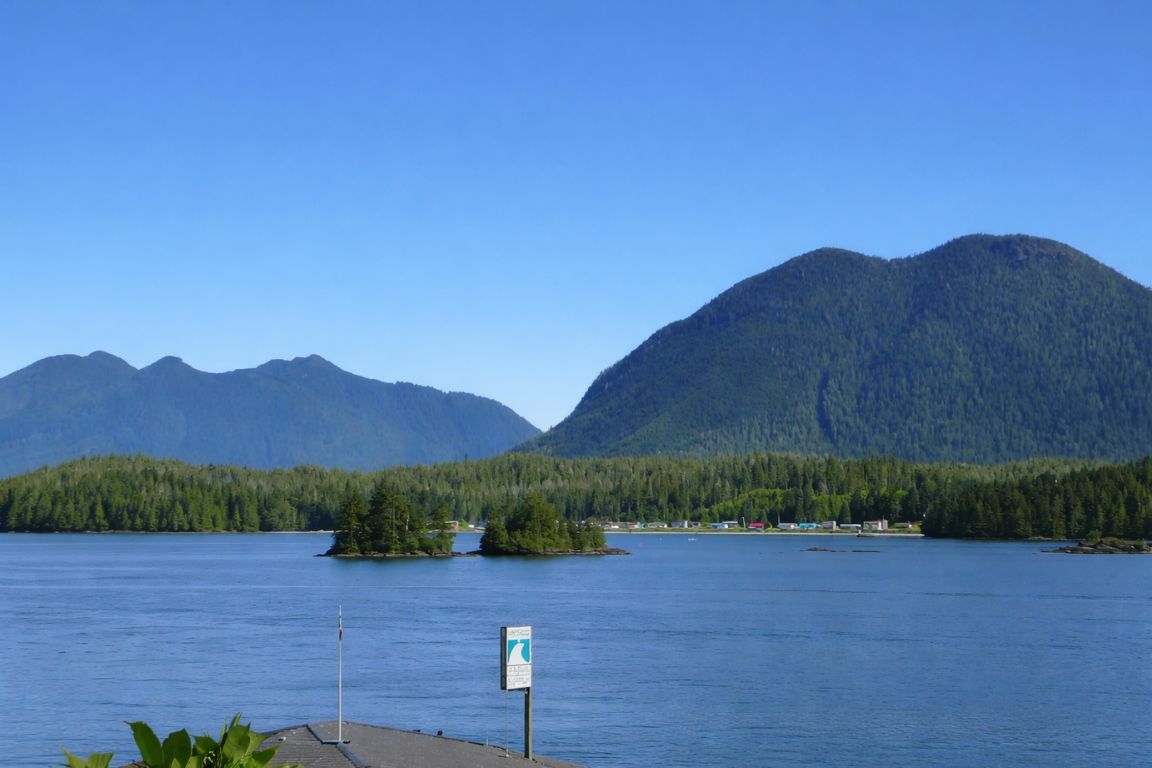 Yes. Tofino whale watching consistently delivers on its premise. The waters of Clayoquot Sound support one of the longest whale watching seasons on Canada’s west coast, running from March through October. Sighting success rates across established operators hold above 95%. The scenery alone, islands and old-growth rainforest rising from the Pacific, justifies the trip. Add a gray whale surfacing 30 metres from the boat and the experience becomes one those people describe for years.
What makes Tofino different from whale watching in Victoria or other BC destinations is the open Pacific exposure. Tofino sits on the western edge of Vancouver Island with nothing between the coast and Japan. The nutrient upwelling that creates is what draws the whales, and the scenery of Clayoquot Sound, a UNESCO Biosphere Reserve of fjords, islands, and ancient forest, is what surrounds you while you watch them.
After guiding over 12,600 travelers through this coast since 2012, whale watching is the activity most people name as a highlight of their entire Tofino trip. Not the beaches, not the rainforest trails. The moment a gray whale breaks the surface 50 metres off the bow, spouts, and arches its back before diving is something you genuinely cannot replicate anywhere else accessible from Vancouver in a few hours.
The one caveat worth stating plainly: this is wildlife in the open ocean. The whales are there, they have been there for decades, and the guides know where to find them. But a rough sea day can change where operators go. A morning when the animals are deeper can mean more waiting and less action. The 95% sighting rate is real and it reflects years of operating in very good conditions for whale finding. It is not a guarantee that the tour will look exactly like the photos. Go with openness and you will almost certainly be amazed.
What Types Of Whales Can You See In Tofino?
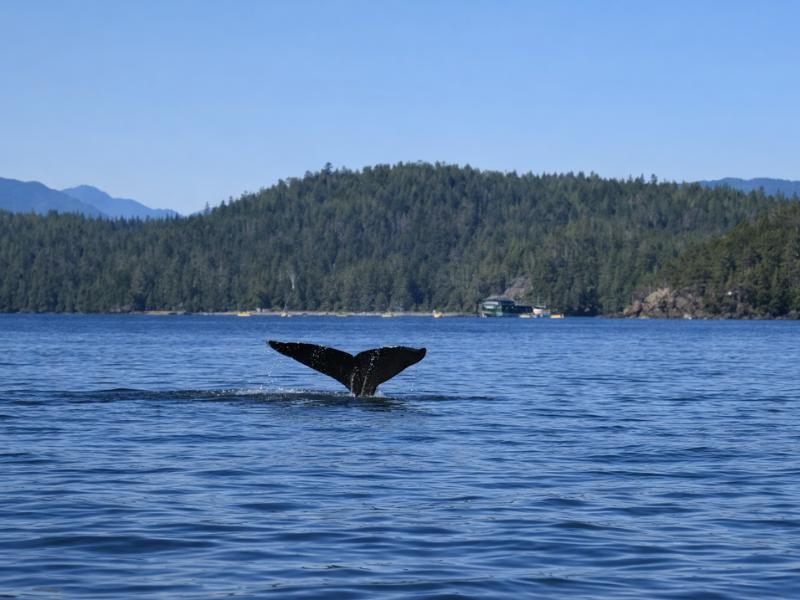
Gray whales are the most reliable sighting, present from March through late November with about 200 resident animals feeding in Clayoquot Sound through summer. Humpbacks arrive from May or June and are seen through September or October. Orcas (transient Bigg’s killer whales) appear year-round but unpredictably, showing up a few times a month in the best of circumstances. On any given tour you are also likely to see sea otters, Steller sea lions, harbour seals, and bald eagles.
Gray whales are the heart of the Tofino whale watching experience. Each spring, approximately 20,000 gray whales migrate north from breeding lagoons in Baja California, Mexico toward feeding grounds in the Bering Strait near Alaska, passing directly along the coast of Vancouver Island. The peak of this migration runs through March and April, which is when the Pacific Rim Whale Festival takes place. Some whales keep going north but around 200 stay in Clayoquot Sound’s shallow, nutrient-rich waters through the summer, feeding on invertebrates buried in the muddy seafloor. These residents are the animals guides encounter most on summer tours. Guides can often identify individual animals by the barnacle patterns on their backs, and many of the same whales return to Tofino year after year.
Humpbacks are the crowd-pleaser. Where gray whales surface, breathe, and dive in a relatively understated way, humpbacks breach. A full breach is a 40-tonne animal launching itself completely out of the water and crashing back into the ocean. When it happens within eyeshot of a tour boat the sound is audible from 200 metres away. Humpbacks are in the area from approximately May or June through September or October, with peak presence in July and August. They are not seen on every tour but when they appear the experience is exceptional.
Orca sightings are the wildcard everyone hopes for. The orcas most commonly encountered around Tofino are transient (Bigg’s) killer whales, mammal hunters that travel in small family groups across a wide range. They have no fixed schedule or residence. When a pod passes through, it can produce the most dramatic wildlife viewing on the water: active hunting, spy-hopping, and tight coordinated movement. It cannot be planned for. Operators share sightings information with each other on the water in real time, so when orcas appear, most tour boats converge on the location.
| Gray Whale | Mar – Nov (year-round possible) | Mar-Apr (migration); Jun-Sept (resident feeders) | Very high; most common tour sighting |
| Humpback Whale | May – Oct | Jul-Sept | Moderate; spectacular when present |
| Orca (Transient) | Year-round | Unpredictable; a few times per month in season | Low but possible; an exceptional bonus |
| Sea Otter | Year-round | All season | Very high; kelp rafts near Vargas Island |
| Steller Sea Lion | Year-round | All season | High; haul-out rocks near open coast |
| Bald Eagle | Year-round | All season | Very high; often seen on trees and rocks near shore |
When Is The Best Time To Go Whale Watching In Tofino?
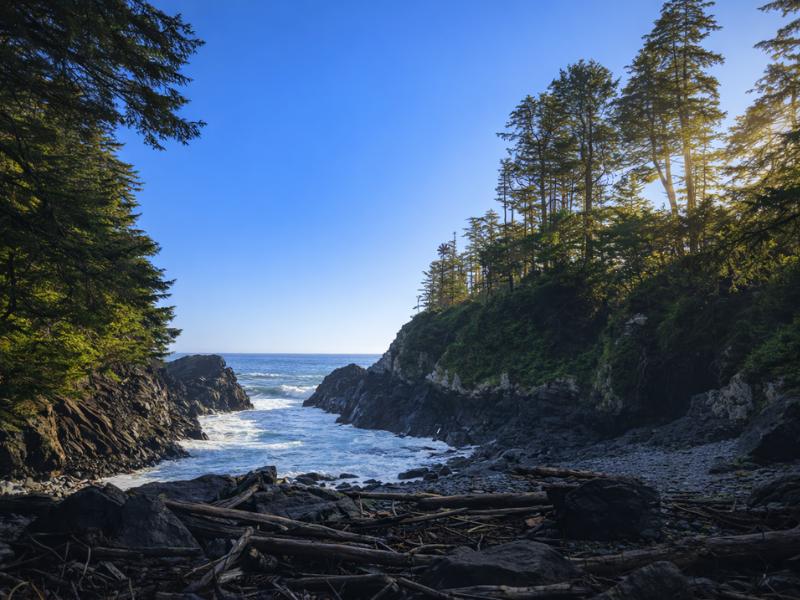
May, June, September, and October are the best months for whale watching in Tofino. The weather is pleasant, fewer boats are on the water, and both gray and humpback whales are present. July and August have more whale activity but also the most tours running simultaneously, which can mean crowded viewing situations. March and April are best for the gray whale migration peak, including the Pacific Rim Whale Festival in mid-March.
This is one of the pieces of information that consistently surprises first-time visitors and rarely makes it onto popular travel blogs. July and August are not the best months for whale watching. They are the busiest months, with the most people on the most boats converging on the same animals. Regulatory viewing distances (operators must stay 100 metres from marine mammals) mean a whale surrounded by six tour boats provides a different experience than one with two boats present.
The operators themselves will tell you this. Multiple tour company guides when asked directly say the shoulder months produce more memorable individual experiences. The whales are just as present. The guides are no less skilled. The difference is the boat density. September in particular threads a needle: gray whales are still feeding in the Sound, humpbacks are still around, the first autumn swells have arrived, and tour numbers have dropped from their August peaks.
For the migration spectacle specifically, nothing matches late March. The Pacific Rim Whale Festival runs in mid-March each year across Tofino and Ucluelet, celebrating the return of the gray whales. On a calm March morning with 20,000 whales moving north along the coast, a tour during the festival week can feel genuinely otherworldly. The weather is cooler and less predictable than summer but the water activity can be extraordinary.
There is no optimal time of day. Gray whales feed actively throughout the day and night, and operators consistently report that morning and afternoon tours produce equivalent sighting rates. Book whatever departure time fits your schedule.
Planning ahead? Our guide to the best time to visit Tofino tour packages breaks down storm watching season versus summer beach weather and what you’ll actually experience each month on Vancouver Island’s edge.
What Are The Best Whale Watching Tours In Tofino?
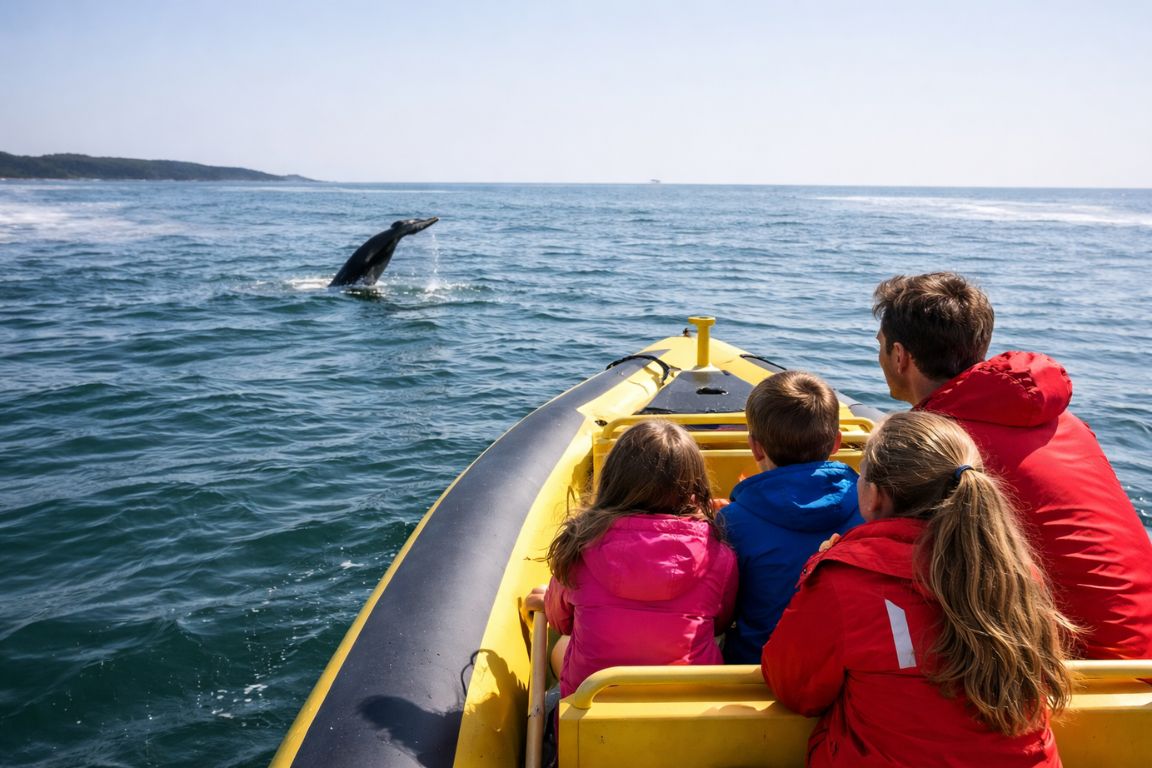 The established Tofino whale watching operators are Jamie’s Whaling Station, The Whale Centre, Remote Passages, Adventure Tofino Wildlife Tours, and West Coast Aquatic Safaris, all operating from Tofino Harbour within walking distance of downtown. Each has a distinct character. Jamie’s has the largest fleet and longest history. The Whale Centre is the oldest locally-owned operator with a deep naturalist focus. Remote Passages emphasises education and small groups. Adventure Tofino runs the most intimate tours at a maximum of 12. West Coast Aquatic Safaris offers the most accessible vessels.
All five operators are legitimate, all have strong review histories, and all have been operating in Clayoquot Sound long enough to know exactly where the animals are at any given time of year. The differences between them are real but not enormous. Here is what actually sets each apart.
Jamie’s Whaling Station has been running tours out of Tofino for over 40 years and operates the largest fleet on the west coast of Vancouver Island, offering everything from open Zodiacs to large covered cruisers that hold dozens of passengers. Their cabin cruiser tours start from approximately CA$169 per adult. The Raincheck Guarantee provides a free return tour if no whales are spotted. The scale of their operation means maximum departure flexibility and the most boat options, but also the largest group sizes on the bigger vessels. For families or groups who want multiple departure time choices and the security of the biggest operator in the area, Jamie’s is the natural starting point.
The Whale Centre has been locally owned and family-operated since 1982, making it the longest-running whale watching company in Tofino. Their guides spend hundreds of hours on the water each season and run a sightings blog that tracks individual animals by name and markings. They offer both heated cabin cruisers and open Zodiac tours. The naturalist depth on these tours is notable: guides identify individual gray whales by barnacle patterns, explain feeding behaviour in real time, and share ongoing research connections with marine scientists. The Whale Centre’s non-expiring raincheck guarantee has no expiry date, meaning a raincheck from a tour this year can be used in five years’ time.
Remote Passages has operated eco-tours since 1986 with a consistent emphasis on education and responsible wildlife viewing. Their tours begin with an orientation video explaining the local ecosystem before guests board. Groups are kept smaller, and multiple reviews over the years mention the quality of guide interpretation as a standout feature. They run Zodiacs and offer combination packages including Hot Springs Cove. For travelers who want a more educational, interpretive experience rather than a pure wildlife thrill, Remote Passages is the strongest choice.
Curious about visiting? Here’s our complete Hot Springs Cove Tofino tour guide – how to get there, what tour companies are reliable, and whether it’s worth the boat journey and cost.
Adventure Tofino Wildlife Tours was founded in 2007 by Jens Kalwa, a guide who has worked in Tofino’s waters since the 1990s. Tours are capped at 12 passengers on open Zodiac boats, making this the most intimate of the main operators. The small group size means every guest has an unobstructed view and the guide can address the group as a whole rather than managing a large crowd. Their no-sighting policy offers either a 50% refund or a raincheck, which is the most flexible of any operator’s guarantee. For serious wildlife observers who want the closest possible experience to a private tour at a group price, Adventure Tofino is the standout.
West Coast Aquatic Safaris operates the NANUQ and WASCO, all-weather vessels that are fully wheelchair accessible through a partnership with the Accessible Wilderness Society. The emphasis on accessibility makes this the operator of choice for guests who use wheelchairs or have mobility considerations. The fleet uses a covered aluminium catamaran design that handles ocean swell more smoothly than most vessels, making it the strongest option for anyone concerned about motion sickness. Their sighting rates are consistently high and reviews highlight the crew’s warmth and knowledge.
Tofino Resort and Marina also runs whale watching through their Adventure Centre, operating a 12-seat custom Zodiac (Whiteraven) and a 12-passenger covered boat (Blackfish), with a 95% sighting success rate and the Tofino Promise raincheck valid for 12 months. Their location at the marina makes them convenient for guests staying at the resort.
We’ve rounded up the best things to do in Tofino tour packages so you’re not stuck wondering which activities need advance booking versus what you can play by ear depending on conditions.
| Jamie’s Whaling Station | 1982+ | Largest fleet, flexible times, families | Varies by vessel | Free raincheck tour |
| The Whale Centre | 1982 | Naturalist depth, returning visitors, named-whale tracking | 12 per boat | Non-expiring free raincheck |
| Remote Passages | 1986 | Education, smaller groups, eco-focus | 12 per boat | Raincheck / refund policy |
| Adventure Tofino | 2007 | Most intimate, serious wildlife watchers | 12 max | 50% refund or raincheck |
| West Coast Aquatic Safaris | ~2005 | Accessibility, families, smooth ride, motion sickness | 37 (NANUQ) | Free raincheck voucher |
All operators depart from Tofino Harbour. Verified March 2026.
What Is The Difference Between Open Boat And Covered Boat Tours?
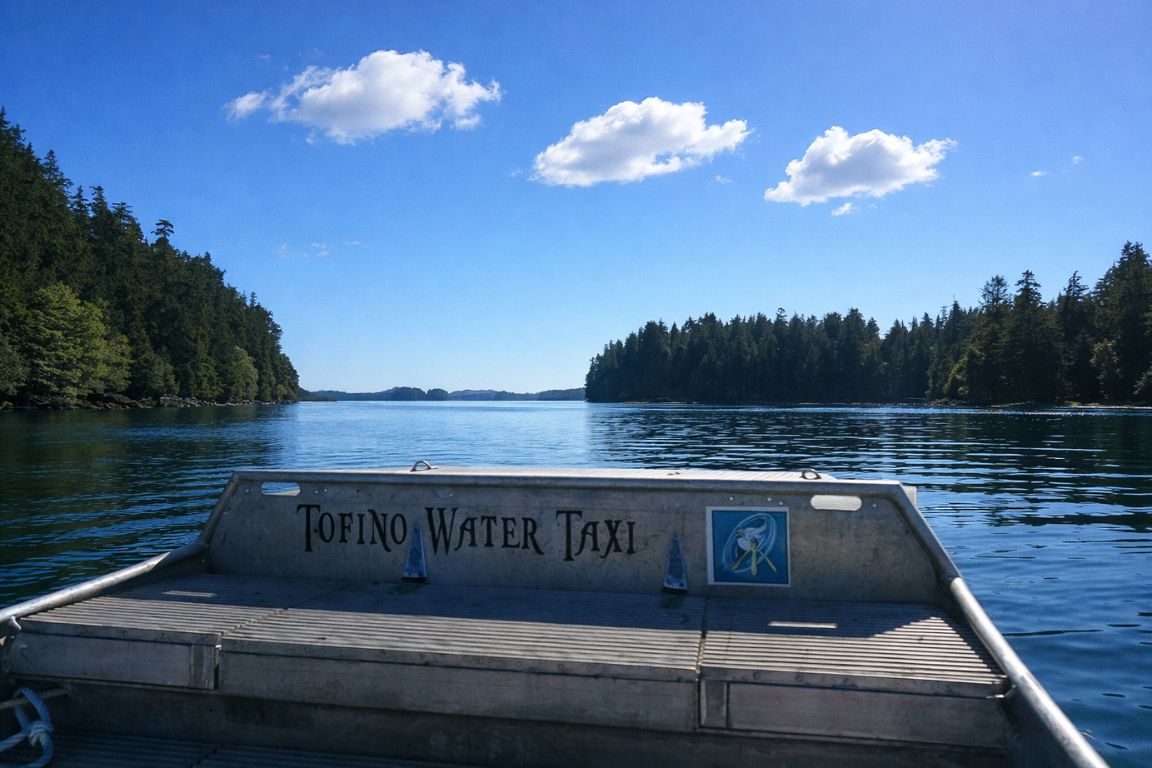 Open Zodiac boats sit lower to the water, move faster, carry smaller groups, and put you in direct contact with the ocean environment. You wear a full-body Mustang floater suit provided by the operator. Covered cabin cruisers are more comfortable, have washrooms, allow movement around the vessel, and are warmer and drier. Both types see the same whales. The choice is about how you want to experience the journey between sightings, not about which produces better wildlife encounters.
The floater suits on Zodiac tours look intimidating before you put them on and become a feature of the experience once you do. They are warm, buoyant, and waterproof, and they mean you arrive at a whale sighting already protected from ocean spray rather than scrambling for a jacket. Every operator provides them. Children under a specific height (typically 4’8″ / 142 cm) and people who are pregnant, have back or neck problems, osteoporosis, or have had recent surgery should take the covered cabin cruiser instead. The Zodiac’s motion on open ocean swell is fast and abrupt in a way that is thrilling for most people and genuinely unsuitable for others.
Cabin cruisers typically hold more passengers. The larger vessels at Jamie’s can carry dozens of people across multiple decks with outdoor viewing areas and indoor shelter. The medium-sized cabin cruisers at The Whale Centre and West Coast Aquatic Safaris hold 12 and offer a balance between comfort and intimacy. The covered format also means a restroom, which matters on a 2.5 to 3-hour tour on open ocean.
The honest trade-off: the Zodiac puts you at water level when a whale surfaces nearby, which is a physically different experience from watching from a deck above. Multiple experienced guides have described the Zodiac sighting as more visceral: you smell the breath, you feel the displacement of water as the animal dives, and the horizon fills with the animal in a way that does not happen from a higher vantage. The cabin cruiser delivers a more controlled, comfortable experience where you are equally likely to see the whale but slightly more removed from it.
If you are prone to motion sickness, go covered. If you have any health restrictions listed above, go covered. If you are bringing young children under four years old, go covered: operators typically require infants and very young children to travel on the larger covered vessels only. For everyone else, the Zodiac is the option most people recommend when asked to choose in retrospect.
Not sure if your kids can handle the cold ocean and unpredictable weather? Our guide on Tofino tour packages with kids covers age recommendations, engaging activities, and realistic expectations for Pacific Northwest beach trips.
How Much Do Whale Watching Tours In Tofino Cost?
Whale watching tours in Tofino typically run $130 to $170 CAD per adult for a 2.5 to 3-hour tour. Jamie’s cabin cruiser tours start from approximately CA$169. Most operators charge in a similar range with minor variations by vessel type and season. Children under a certain age receive discounted rates. Several operators offer multi-tour discounts if you book whale watching and bear watching together.
The price point is one where Tofino does not apologise. A three-hour tour on a certified vessel with an experienced guide into the richest marine wildlife habitat on Canada’s west coast is not cheap. It compares reasonably to similar wildlife experiences elsewhere and delivers on that price more consistently than most. The operators who have been running tours for 30 to 40 years know exactly where the animals are because they have been tracking the same individuals across decades.
Some additional fees appear at booking that travellers sometimes miss. A fuel surcharge (around $10) is common. A small eco-fee and in some cases a Tribal Park Allies contribution supporting Tla-o-qui-aht First Nation stewardship are also typically added. These are legitimate and small relative to the tour price but worth knowing about in advance so the total is not a surprise at checkout.
Multi-tour discounts are worth checking. Jamie’s offers $15 off per person on every tour after the first when you book whale watching and bear watching together. Other operators have similar deals. If you are doing both activities during your stay, booking them through the same operator often saves money and simplifies logistics.
| Whale watching tour (adult) | $130-$170 CAD | Varies by operator and vessel type |
| Child/youth discount | Typically 10-20% off adult rate | Age range varies by operator |
| Fuel surcharge | ~$10 per person | Added at checkout, not always shown in headline price |
| Eco/stewardship fee | 1-2% of tour cost | Supports local conservation and First Nations stewardship |
| GST | 5% | Applied at payment |
| Multi-tour discount (whale + bear) | $15 off per person (Jamie’s) / varies | Ask operator when booking second tour |
| Tip for guides and captain | Optional; $10-$20 per person typical if exceptional | Not expected but appreciated for great guides |
Prices approximate for 2025-2026. Always verify current rates directly with operators. Verified March 2026.
What Should You Bring On A Whale Watching Tour In Tofino?
Operators provide full floater suits on Zodiac tours and PFDs on cabin cruisers. What you bring: warm base layers regardless of season, closed-toe shoes, a waterproof case for your phone or camera, seasickness medication taken well before departure if you are at all prone, and sunscreen. Even on overcast days UV is significant on open water. Leave sugar-heavy snacks behind, as they increase nausea risk for sensitive guests.
The single most important preparation step for anyone who has ever experienced motion sickness in a car, on a ferry, or on a boat is taking anti-nausea medication before the tour. Not when you start feeling sick on the water, which is too late. The medication needs to be in your system before departure. Dramamine, Gravol, and Bonine are available over the counter. A pharmacist can advise on which works best for different people. This is not optional for anyone with a history of motion sickness. The Tofino open ocean carries real swell, not the sheltered inlet conditions of bear watching tours or Victoria whale watching. Every operator mentions this in their FAQ and pre-tour communications. Take it seriously.
Cameras and phones need protection. The Zodiac generates spray as it moves across open water, and even the covered boats can collect mist on the outer viewing deck. A waterproof phone case or a dry bag for camera equipment costs very little and prevents a significant loss. Operators on Zodiac tours recommend a protective bag specifically.
Dress in layers under the provided suit. Even in July, ocean temperatures off Tofino run around 12 to 14°C and the wind amplifies the cold. A light fleece under the floater suit keeps you comfortable for three hours. People who come in a t-shirt and jeans make this mistake annually, even in August.
What Do Most First-Timers Get Wrong About Whale Watching In Tofino?
The most common mistakes are not taking seasickness medication in advance, expecting the tour to look like nature documentary footage, misunderstanding what “guaranteed sighting” actually means in practice, and underestimating how cold it gets on the open ocean even in summer. The guests who have the best experience consistently share one habit: they arrive with low specific expectations and high general openness. Every tour is different. That is the point.
Here is what the patterns across thousands of tours actually show.
The seasickness problem is preventable and frequently ignored. Jamie’s FAQ states explicitly: refrain from high-sugar food and drink before the tour, take any medication a few hours before departure, and if you have ever been sick on a boat or in a car, prepare accordingly. The open ocean around Tofino moves differently from sheltered water. People who have whale watched in Victoria or on calm inlets and felt fine are sometimes surprised by the Pacific swell. Nobody who took proper precautions and regretted it. Many people who skipped precautions regret it.
The “guaranteed sighting” is a raincheck, not a cash refund. Every operator’s guarantee means: if you do not see a whale, you can come back on another tour for free (or with a discount). Adventure Tofino’s policy is the exception, offering a 50% refund as an alternative. Read the fine print before assuming a cash refund if conditions are bad. The rainchecks are legitimate and operators honour them, but they require availability on a future tour and are for the original guest only.
Orca expectations need to be recalibrated. Forum posts and social media create the impression that orca sightings are a normal part of a Tofino whale watching tour. They are not. Orcas appear a few times per month in season, unpredictably, and operators share information in real time to get guests to sightings when they occur. But you should not book a Tofino whale watching tour expecting to see orcas. You should book it expecting to see gray whales, sea otters, sea lions, and eagles, with humpbacks and orcas as extraordinary potential bonuses.
Photography expectations need managing. The regulatory 100-metre minimum distance from marine mammals is a legal requirement for all operators. The whales sometimes close that gap of their own accord, which is when the closest encounters happen. But most of the time, photographs of distant spouts and arching backs are what the camera captures. The experience of being present for it does not require a telephoto lens to be worthwhile. Binoculars help.
Booking too late in peak season. July and August tours at the most popular operators fill one to two weeks ahead. Travelers who decide to book the morning of are regularly turned away in peak summer. Book before you arrive, not after you settle in.
First time visiting the wild west coast? Here’s how to plan a trip to Tofino tour packages so you don’t show up unprepared for the rain, the remoteness, or the fact that everything books solid in summer.
Whale Watching Patterns From Our 12,600+ Guided Guests
| % of guests who book whale watching | 85% | Whale watching is close to a universal activity among Tofino visitors |
| Most chosen vessel type (Zodiac vs. cabin) | Cabin Cruiser | Guides our default recommendation when guests ask which to choose |
| % who rated whale watching as trip highlight | 72% | Consistently the top-rated individual activity across all trip types |
| Most common regret from whale watchers | Under-dressing / Motion Sickness | Usually either not booking early enough or not taking seasickness prep |
| % who also book bear watching on same trip | 45% | Whale + bear combination is the most popular tour pairing in Tofino |
Thirteen years of guiding groups on this coast has confirmed one thing about whale watching: the people who leave rating it the best experience of their entire trip are almost always the ones who came in without a fixed script of what they expected to see. A gray whale feeding 40 metres from the boat, doing nothing dramatic except existing at full scale, routinely produces as much quiet awe as the most spectacular humpback breach. The ocean sets the agenda. Your job is to be there for it.
Frequently Asked Questions
When is whale watching season in Tofino?
Whale watching season in Tofino runs from March through October, with some operators beginning in February. Gray whales are the most consistent sighting throughout the season. Humpbacks are present from May or June through September or October. Orcas appear year-round but unpredictably. The Pacific Rim Whale Festival takes place in mid-March each year, celebrating the peak of the gray whale migration.
How much does whale watching in Tofino cost?
Most whale watching tours run $130 to $170 CAD per adult for a 2.5 to 3-hour tour. Jamie’s cabin cruiser tours start from approximately CA$169. A fuel surcharge of around $10 per person and GST are added at checkout. Children typically receive a discounted rate. Multi-tour discounts of $15 per person or more are often available when booking whale watching and bear watching together with the same operator. Prices verified March 2026.
What is the best whale watching company in Tofino?
All five main operators (Jamie’s Whaling Station, The Whale Centre, Remote Passages, Adventure Tofino, and West Coast Aquatic Safaris) are reputable with strong records. The best choice depends on your priorities. Jamie’s offers the most flexibility and largest fleet. The Whale Centre has the deepest naturalist focus. Remote Passages emphasises education. Adventure Tofino is the most intimate at 12 guests maximum. West Coast Aquatic Safaris is the best choice for accessibility needs and motion sickness concerns.
What happens if you don’t see any whales?
Most Tofino operators offer a raincheck: a free return tour on a standby basis if no whales are spotted. The Whale Centre’s raincheck never expires. Jamie’s issues a Raincheck Guarantee. Adventure Tofino offers either a 50% refund or a raincheck, which is the most flexible policy. The sighting rate across most operators is over 95% during their main season, so the guarantee is rarely invoked, but it exists and operators honour it.
Should I take seasickness medication for whale watching in Tofino?
Yes, if you have any history of motion sickness in cars, on ferries, or on boats. Take it several hours before departure, not after you start feeling unwell. Tofino whale watching tours operate on open Pacific Ocean water with real swell, which is different from sheltered bay conditions. Even people who have never been seasick elsewhere occasionally find the Pacific swell challenging. Dramamine, Gravol, and Bonine are available over the counter. Ask a pharmacist about which is best for you.
Is whale watching in Tofino suitable for children?
Yes, with some considerations. Covered cabin cruiser tours are suitable for most ages. Open Zodiac tours have a minimum height requirement of approximately 4’8″ and are not recommended for very young children. Infants typically travel free on covered vessels but must be noted on the manifest. Most operators require children to be at least 6 to 8 years old for Zodiac tours. Whale watching is a family-friendly activity and one that children consistently describe as a highlight of the trip when the experience is matched to their age and the right vessel type.
Written by Ethan James Callahan
Canadian tour guide since 2012 · Founder, Tofino Tour Packages
Ethan has guided over 12,600 travelers through Tofino and the surrounding Pacific Rim wilderness since founding the agency.