Wild Pacific Trail, Ucluelet: The Complete Hiking Guide
Forty minutes south of Tofino there is a coastal trail system that most Tofino guides quietly skip, including, until now, ours. It costs nothing, it is open all year, and on a big-swell winter afternoon it is the most dramatic walk anywhere on this stretch of Vancouver Island. Here is every section of it, with the real numbers.
Almost every hiking article written about this coast starts and stops in Tofino. Rainforest Trail, Tonquin, the boardwalk out to the Hanging Garden Tree on Meares Island. Those are excellent walks and we have written about them at length. They also share a characteristic: they are forest walks, sheltered, green, quiet, with the ocean showing up at the end as a reward.
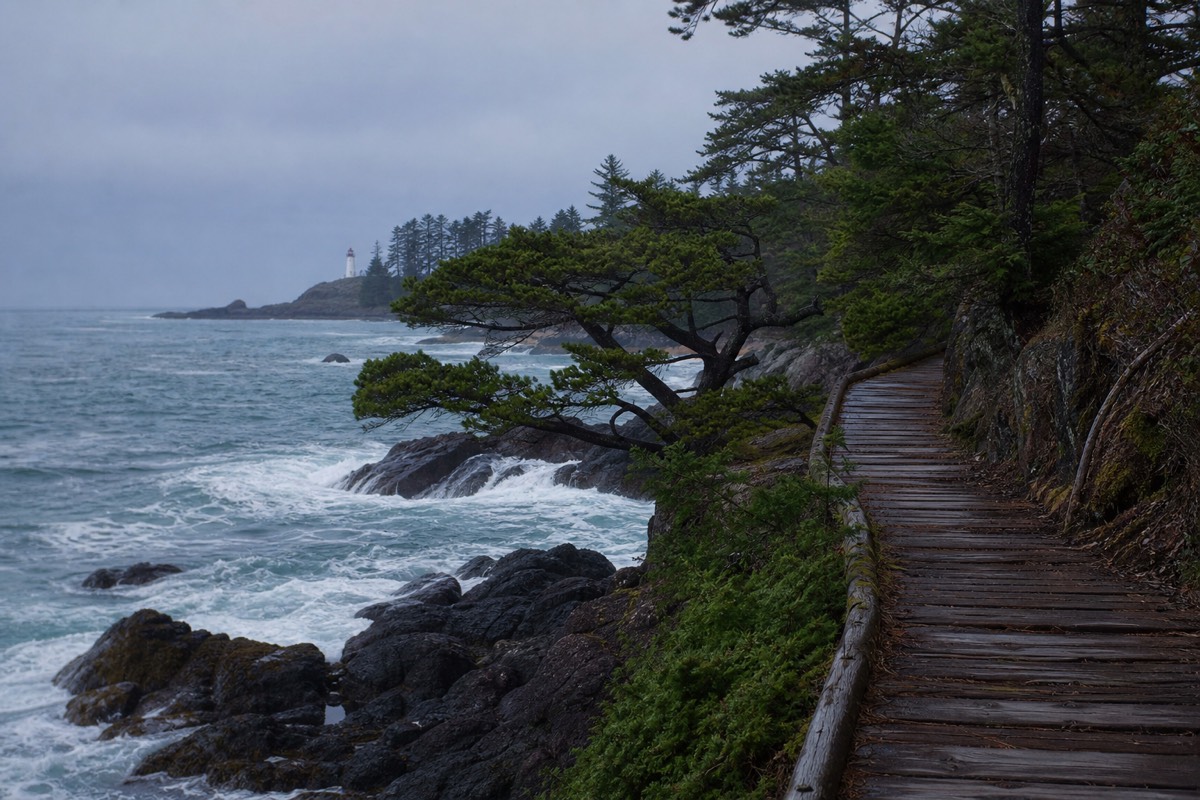
The Wild Pacific Trail is the opposite proposition. It runs along the exposed outer headlands of Ucluelet, the town at the southern end of the Pacific Rim, and its entire point is that nothing stands between you and the open ocean. On a calm July evening it is a gentle stroll with benches. In February, with a storm system stacked up offshore, it is the reason people drive across an island in the rain. This guide covers every published section, what each one costs in time and effort, where to leave the car, and how the whole system compares with the trails on the Tofino side.
Every Wild Pacific Trail section, by published length
Section lengths are the figures published by the Wild Pacific Trail Society's own visitor guide and the District of Ucluelet's trail page. Where the two disagree, both numbers appear in the section table above.
The Wild Pacific Trail stays a free self-guided walk. These options add a harbour paddle, a wildlife boat trip or arrival transport, not a ticket to the trail.
Affiliate links: we may earn a commission from qualifying bookings.
What Is The Wild Pacific Trail?
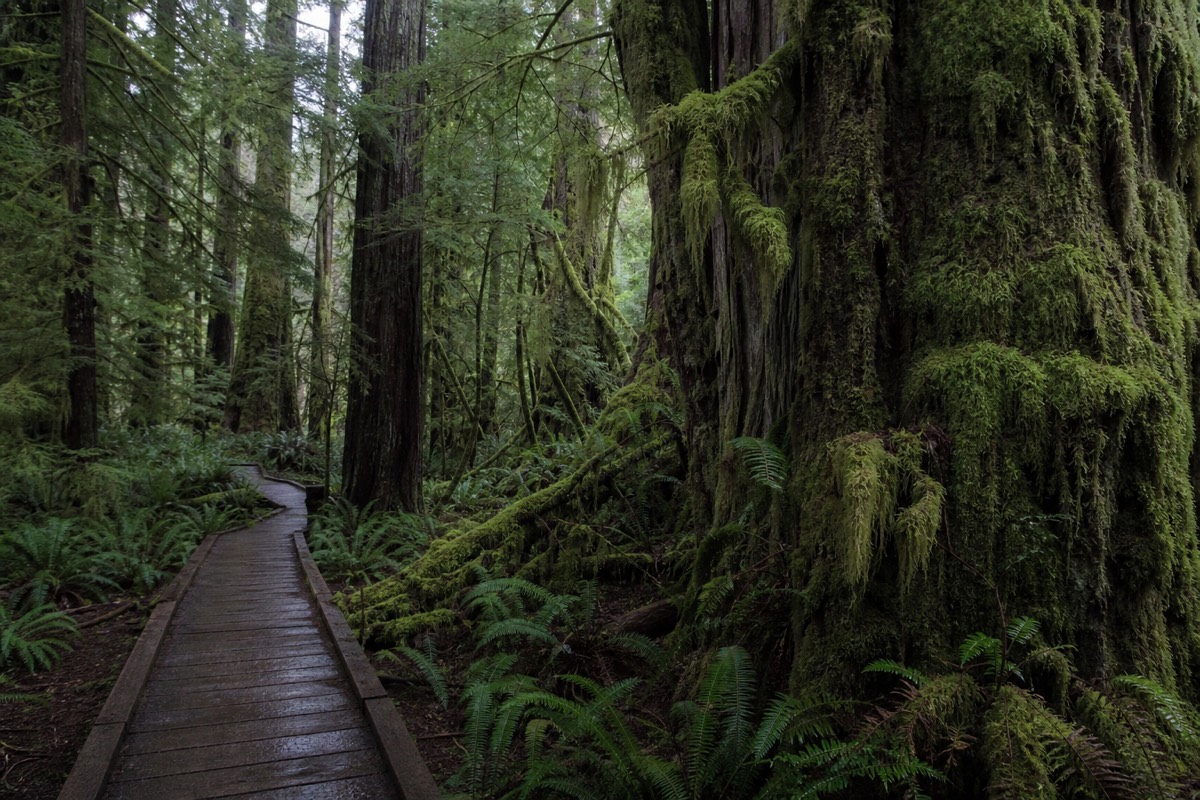
The Wild Pacific Trail is a free public footpath along the exposed headlands of Ucluelet, about 40 minutes south of Tofino on the same highway. It is not one trail but a linked set of sections, from a 2.6 km circuit around a lighthouse to a one-kilometre loop through 800-year-old cedars, with no gate, no permit and no fee.
The trail exists because one person decided it should. It originated through the vision and initiative of Ucluelet's "Oyster Jim" Martin, and it is maintained today by the Wild Pacific Trail Society on donations, with collection boxes at the trailheads and at points along the route. There is no admission charge, no reservation system and no parking fee at any of the lots. That single fact makes it structurally different from almost everything else worth walking on this coast.
One honest note before the numbers. Different sources segment this trail differently, and their published lengths do not reconcile neatly. The District of Ucluelet lists the Lighthouse Loop at 2.5 km; the trail society's own visitor guide gives 2.6 km. The Artist Loops appear as a 0.5 km spur in one listing and as a 2.75 km one-way run in the other, because one is describing the loop itself and the other is describing the whole northern walk it sits on. Added up, the published sections come to roughly nine kilometres of trail. Treat the table below as a planning tool rather than a survey.
| Section | Published length | Time | Grade | Trailhead and parking |
|---|---|---|---|---|
| Lighthouse Loop | 2.6 km loop (District of Ucluelet lists 2.5 km) | 45 to 60 min | Easy; wide, gentle along the coast, hills on the inland side | Two lots on Coast Guard Road; He-Tin-Kis Park on Peninsula Road |
| Big Beach | 1 km | 20 to 30 min | Easy | Marine Drive at Matterson Drive |
| Brown's Beach | 3 km | An hour or more | Easy to moderate; road-adjacent, then wilder | Lot north of the Black Rock Oceanfront Resort on Marine Drive |
| Artist Loops | 0.5 km spur off Brown's Beach; 2.75 km one way for the full northern run | 45 to 60 min | Moderate to challenging; small hills and stairs | Big Beach or Brown's Beach lots |
| Rocky Bluffs | About 1.5 km one way | 15 to 20 min on top of the Artist Loops | Easy until a short hilly stretch on the bluffs | Reached from the Artist Loops or Brown's Beach Frog Lot |
| Ancient Cedars Loop | 1 km loop | About 15 min | Easy | Brown's Beach Frog Lot; the Raven Lot is a 10-minute walk or short cycle away |
Because the sections are strung along the western edge of a small town, you do not have to commit to the whole thing. Most visitors drive between two or three trailheads over a morning, or cycle the bike path that links them. Nothing here is a wilderness undertaking, and yet the drop from a bluff bench to the water below is real enough that the Society posts warnings about staying on the trail.
How Long Is The Lighthouse Loop And What Will You See?
The Lighthouse Loop is a 2.6 km circuit around Amphitrite Point that takes 45 to 60 minutes at a photograph-stopping pace. It is wide, easy and lined with benches placed for watching surf and marine life, and it wraps a working automated lighthouse whose predecessor was destroyed by the sea.
This is the section everyone means when they say they walked the Wild Pacific Trail, and it earns the attention. The seaward half runs a few metres back from the rock, at a gentle grade, with cut-outs and viewpoints every couple of hundred metres. The inland return has more up and down through wind-shaped shore pine and salal. The lighthouse parking lot at the point has paved wheelchair access to the viewpoint, which makes the most photographed spot on the trail also the most reachable one.
The lighthouse itself is worth understanding before you stand next to it, because the building explains the coast. In 1905 the sailing ship Pass of Melfort went down near here, a wreck thought to have cost as many as 35 lives. A small square wooden tower went up at Amphitrite Point in 1906 in response. It lasted eight years before being wrecked by storm seas in January 1914. The squat concrete tower standing there now opened in March 1915, deliberately built low and heavy to survive what had destroyed its predecessor, and it was staffed by Coast Guard keepers until it was automated in 1988. The tower is only about six metres tall.
| Year | What happened at Amphitrite Point |
|---|---|
| 1905 | The Pass of Melfort is wrecked nearby, with a loss of life estimated at up to 35 |
| 1906 | A small square wooden light tower is built on the outermost rock at the point |
| January 1914 | Storm seas destroy the wooden tower after eight years of service |
| March 1915 | The current concrete tower opens, shaped low and solid to survive westerly gales |
| 1988 | The light is automated and the resident keepers are withdrawn |
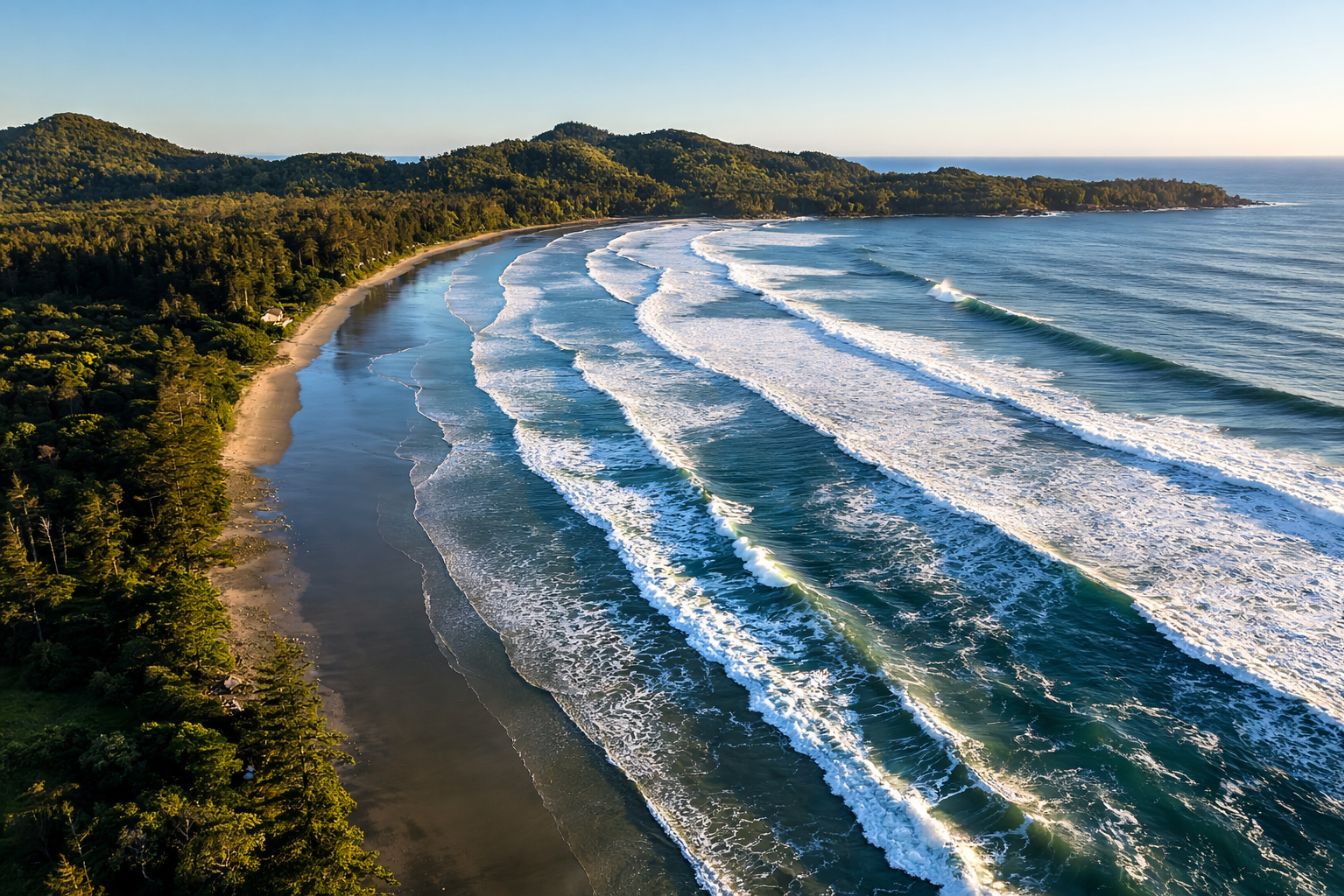
What you actually see from the loop depends entirely on the day. In a big southwesterly the swell detonates against the rock platform and the spray reaches the trail. On a flat morning in August the water is glass and you can pick out sea lions on the outer rocks. During the spring gray whale migration, which peaks through March and April, the benches on the outer headland are a legitimate shore-based watching spot: bring binoculars, sit still, and give it twenty minutes rather than two.
What Is On The Ancient Cedars And Rocky Bluffs Sections?
Ancient Cedars is a one-kilometre loop through genuine old-growth forest at the northern end of the trail, walkable in about fifteen minutes. Two cedars on it are estimated at over 800 years, one measuring more than twelve metres around the base. It connects to Rocky Bluffs, a 1.5 km coastal stretch.
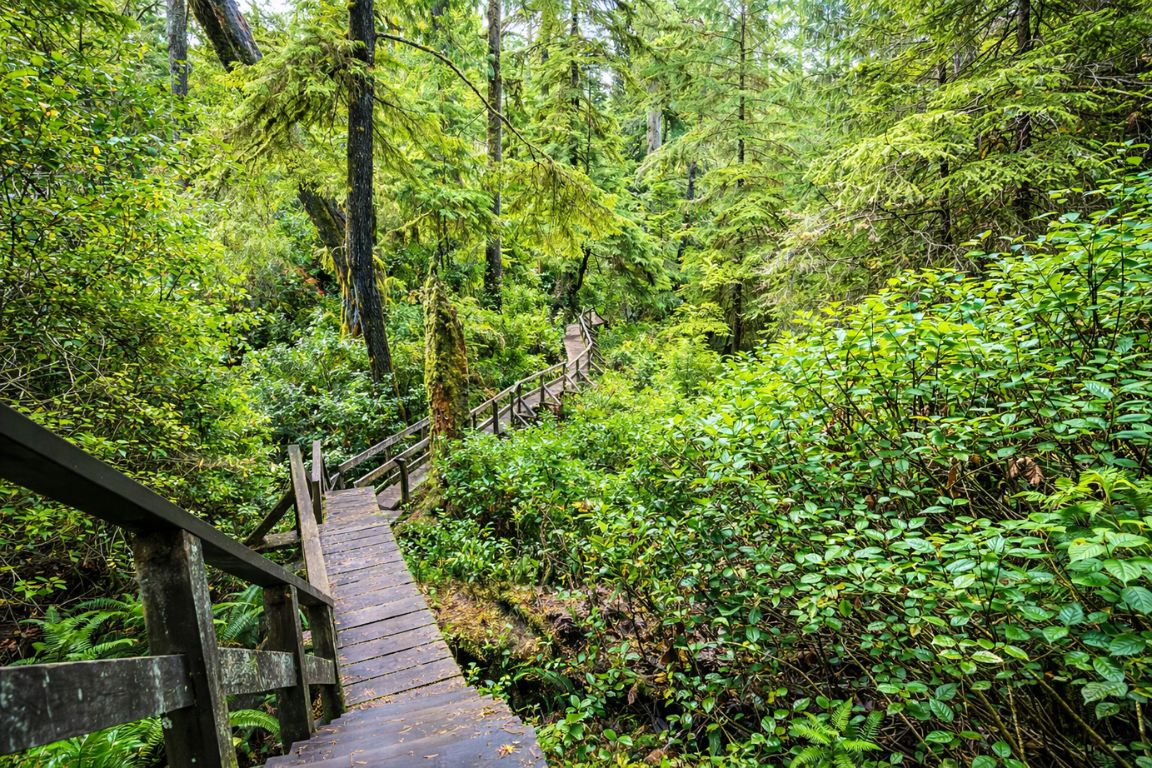
This loop was built in 2013 and rebuilt in 2025 into a Yuułuʔiłʔatḥ interpretive walk, which is the most interesting thing to happen on this trail in a decade. The upgrade added an audio box that plays the correct pronunciation of plant names and concepts in the local language, developed under the direction of Yuułuʔiłʔatḥ elders and knowledge holders. The interpretation covers traditional cedar harvesting and culturally modified trees: cedars stripped of bark for weaving, generations ago, that carry the scar and are legally protected because of it. Once you know what a culturally modified tree looks like, you cannot walk this loop without spotting them.
The forest is Sitka spruce, western hemlock and giant red cedar, and it is the reason to make the drive to the northern trailheads rather than stopping at the lighthouse and calling it done. Rocky Bluffs, the coastal section it branches from, is easy walking until a short hilly stretch out on the bluffs themselves. Fifteen to twenty minutes on top of the loop buys you a completely different view: exposed rock, open water, and none of the shelter of the forest.
Park at the Brown's Beach Frog Lot for the shortest approach. The Raven Lot works as overflow and is about ten minutes away on foot or a couple of minutes on the bike path. A portable toilet sits at the northern trailhead on the highway. If you want to compare this forest with the two better-known old-growth walks on this coast, one inside the national park and one across the water in Clayoquot Sound, the numbers are worth seeing side by side.
| Old-growth walk | Where | Length | Access and cost | Oldest trees |
|---|---|---|---|---|
| Ancient Cedars Loop | Wild Pacific Trail, north Ucluelet | 1 km loop, about 15 min | Free; drive-up parking, no permit | Two cedars estimated at over 800 years |
| Rainforest Trail, loops A and B | Long Beach Unit, between the two towns | Two 1.2 km boardwalk loops | Parks Canada day pass, $12.25 adult | Trees confirmed at over 1,400 years |
| Big Tree Trail | Wanachus-Hilthuuis (Meares Island), off Tofino | 2.4 km boardwalk out and back | Water taxi plus a $35 adult trail fee | The Hanging Garden Tree, estimated at 2,000 years |
| Shorepine Bog Trail | Long Beach Unit, off Wick Road | Under 1 km, wheelchair accessible | Parks Canada day pass | Stunted shore pine, centuries old but only metres tall |
The honest ranking: Meares Island has the single most extraordinary tree, the Rainforest Trail has the oldest confirmed forest, and Ancient Cedars is the only one of the three you can walk for free with a car parked fifty metres away. Two of them charge, and the Parks Canada day pass that covers the park boardwalks does nothing for you here, because this trail sits outside the park boundary entirely. Different jobs, different systems.
What Are The Artist Loops And The Brown'S Beach Section Like?
Brown's Beach is a three-kilometre section that starts beside the road and turns steadily wilder as it goes. The Artist Loops branch off it toward the shoreline, with five small tree-fort viewing platforms called Painter Perches and a storm-watching deck partway along. Expect small hills, stairs and sea spray.
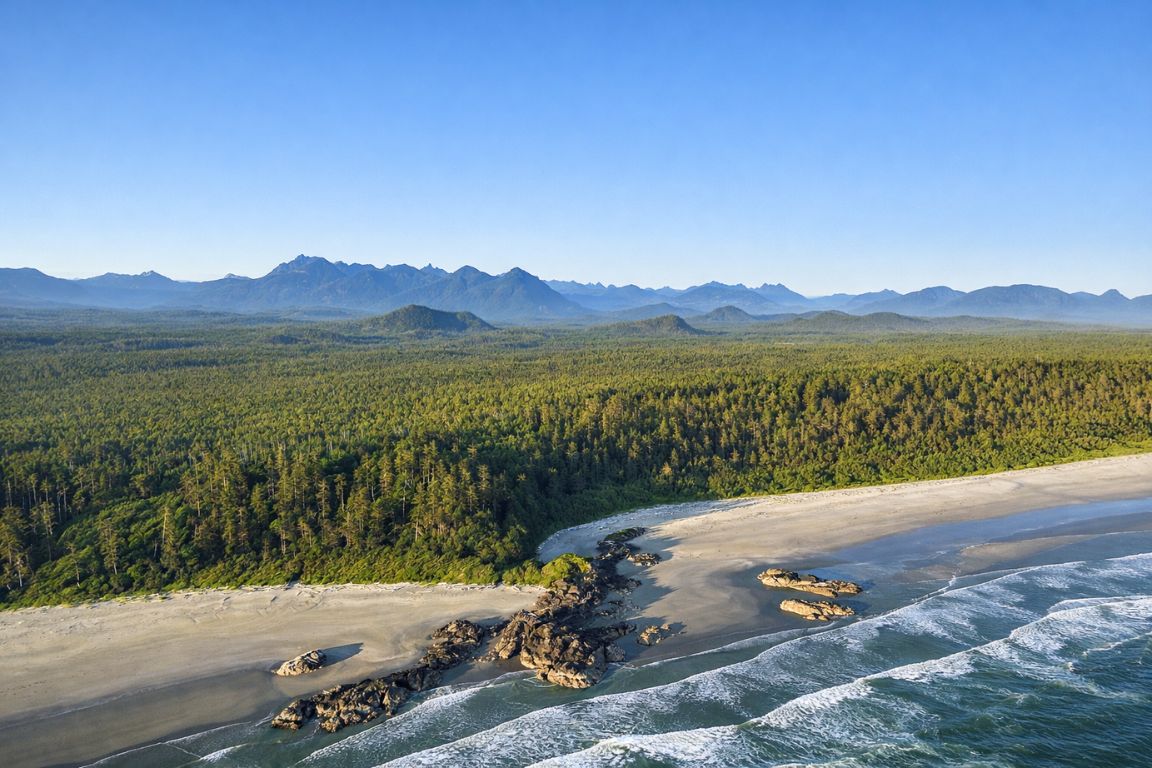
These northern sections are where the trail stops being a promenade. The path narrows, the stairs appear, and the exposure increases to the point where the trail society advises a waterproof layer specifically because of spray rather than rain. The Painter Perches are the signature: small covered platforms set just off the trail, built for people who want to sit and paint or photograph the swell without being blown off a rock. They work just as well for eating a sandwich.
Time-wise, this is the part of the network worth planning around rather than squeezing in. A 45-minute stop gets you the lighthouse. Ninety minutes gets you out to the storm deck and back. Two hours lets you combine the Artist Loops, Rocky Bluffs and the Ancient Cedars Loop into one continuous walk, which is the best single outing on the trail and the one most day-trippers from Tofino never do because they run out of afternoon. If your group includes someone who wants a shorter option, Big Beach at one kilometre has children's interpretive signs and pit toilets and works as a genuine destination rather than a consolation.
Where Do You Park, And Are There Toilets?
There are free lots at Coast Guard Road, He-Tin-Kis Park, Big Beach, Brown's Beach, the Frog Lot, the Raven Lot and Tugwell Field. Portable toilets serve most lots, with pit toilets at the lighthouse and Big Beach. There is no running water anywhere on the trail, so carry hand sanitiser.
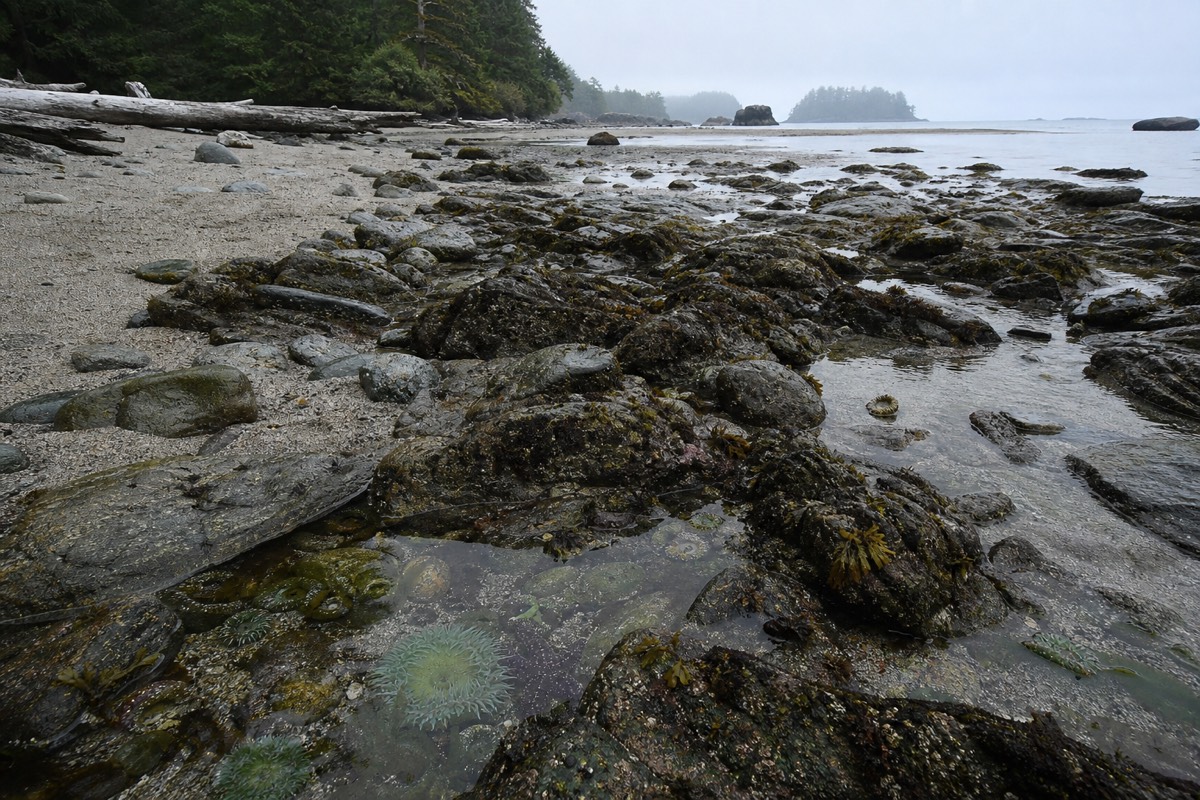
Parking is the single most practical thing to get right here, because the lots are small and the town is not. In July and August the Coast Guard Road lots fill by mid-morning, and the reflex of circling them is a waste of a good hour. The He-Tin-Kis entry on Peninsula Road puts you onto the same Lighthouse Loop from the northern side and is reliably quieter. If you are staying in Ucluelet rather than driving down from Tofino, the bike path between the lots removes the problem entirely.
| Parking lot | Section it serves | Facilities |
|---|---|---|
| Coast Guard Road, main and Whale lots | Lighthouse Loop | Portable toilets at the lots; pit toilet at the lighthouse; paved wheelchair access at the point |
| He-Tin-Kis Otter Lot, Peninsula Road | Lighthouse Loop, northern entry | Portable toilet; usually the quietest summer entry |
| Big Beach, Marine Drive at Matterson Drive | Big Beach section | Pit toilets; children's interpretive signs |
| Brown's Beach, north of the Black Rock Oceanfront Resort | Brown's Beach and the Artist Loops | Portable toilet |
| Brown's Beach Frog Lot | Ancient Cedars and Rocky Bluffs | Portable toilet at the northern highway trailhead |
| Raven Lot | Overflow for Ancient Cedars | None; 10 minutes on foot or a short ride on the bike path |
| Tugwell Field | General overflow | None listed |
None of these lots charge. That is worth stating plainly because visitors arriving from the national park, where every trailhead lot has a pass kiosk, tend to assume they need to buy something and go looking for a machine that does not exist.
Is The Wild Pacific Trail Accessible With A Stroller Or A Wheelchair?
Partly, and more than most coastal trails. The District of Ucluelet describes the trail as accessible to all ages and abilities, with benches at several points, and the lighthouse parking lot has paved wheelchair access to the viewpoint. The seaward half of the Lighthouse Loop is stroller-friendly. The Artist Loops, with stairs and small climbs, are not.
The distinction matters more than a simple yes or no. The Lighthouse Loop's outer arc is wide, firm and gently graded, which is why families push strollers along it and why it is a realistic option for someone using a walking aid, and the District of Ucluelet's own trail page is the source worth checking for current conditions before you commit a wheeled group to it. The inland return climbs and drops enough that most wheeled groups are better off walking the seaward stretch out and back rather than completing the circuit. The paved lighthouse viewpoint is a genuine destination on its own: you can park, roll out to the point, watch the swell hit the rock, and be back in the car in twenty minutes.
For a group with mixed mobility, the pairing that works is the paved lighthouse viewpoint here plus the Shorepine Bog Trail inside the national park, which is a short wheelchair-accessible boardwalk loop through an ecosystem that looks nothing like the rest of the coast. Our guide to Tofino for seniors goes further into which beaches, boardwalks and boat tours suit different mobility levels.
How Does The Wild Pacific Trail Compare To Tofino Hiking Trails?
It is the exposure trail. Tofino's walks are about forest and shelter: boardwalks under 1,400-year-old cedar, a town path to hidden beaches, an island crossing to a 2,000-year-old tree. The Wild Pacific Trail is about open ocean, wind and surf on rock. A trip that includes both is far better than one that picks a side.
This is the comparison the site has been missing, so here it is straight. Our existing Tofino hiking trails guide covers the northern options in depth and does not touch this trail at all, for the simple reason that it is in a different town. The walks inside Pacific Rim National Park Reserve sit between the two towns and form a third category again, since they are the only ones on this list that cost money to set foot on. Put them next to each other and the choice becomes obvious rather than agonising.
| Trail | Where | Length | Cost | What it is actually for |
|---|---|---|---|---|
| Wild Pacific Trail | Ucluelet, 40 min south of Tofino | Roughly 9 km across linked sections | Free; donation boxes on the trail | Exposed headlands, storm watching, shore-based whale spotting |
| Rainforest Trail | Long Beach Unit | Two 1.2 km loops | Parks Canada day pass, $12.25 adult | The best short introduction to old-growth temperate rainforest |
| Tonquin Trail | Tofino town | 3 km plus 800 m of boardwalk | Free; walkable from downtown | Three sheltered beaches and a sunset without a car |
| Big Tree Trail | Meares Island | 2.4 km boardwalk return | Water taxi plus $35 adult trail fee | The single most extraordinary trees on the coast |
| South Beach Trail | Long Beach Unit, behind Kwisitis | 1.6 km out and back | Parks Canada day pass | Rock platforms, tide pools and heavy surf |
| Lone Cone | Meares Island | 2.7 km up, 700 m of gain | Water taxi plus guided access | The one genuine mountain day in the area |
If you only have one afternoon and it is forecast wet and windy, come here. A grey, blowing day ruins a beach afternoon and improves this trail. If the forecast is clear and still, spend it in the forest on the Tofino side, where flat light under a canopy is exactly what you want.
When Is The Best Time To Walk The Wild Pacific Trail?
Winter, if the point is drama. The trail is open year round in daylight hours, and the biggest Pacific swells of the year arrive between November and February, which is what the storm-watching decks were built for. Summer gives warmth, long evenings, full car parks and, some years, weeks of marine fog.
Season changes what this walk is rather than how good it is. From November through February the trail is at its most spectacular and least crowded, with the caveat that the Society closes sections during extreme wind events, because the danger is falling limbs rather than the water. March and April bring the gray whale migration past these headlands. Summer brings the crowds and, in the years locals call "Fogust," a marine layer that can sit over the coast for days. September and October are the quiet sweet spot: the first real swells, thinning visitors, and the best light of the year for photographs. Our month-by-month read on the best time to visit Tofino applies down here too, with one inversion worth holding onto: a forecast bad enough to write off a beach day is often the exact forecast that makes this trail worth the drive.
| Season | On the trail | Watch for |
|---|---|---|
| Winter, November to February | Biggest swell of the year; storm decks earn their keep; near-empty lots | Section closures in extreme wind; short daylight; slick boardwalk |
| Spring, March to May | Gray whales passing offshore; forest at its greenest; fresh growth on the Ancient Cedars loop | Persistent rain; muddy inland stretches |
| Summer, June to August | Warm, long evenings, calm water, clearest sunsets from the lighthouse | Lots full by mid-morning; fog can sit for days; least dramatic surf |
| Autumn, September to October | First serious swells, best light, crowds gone, everything still open | Rain returns in earnest; wet leaves make stairs slippery |
Time of day matters almost as much. The Lighthouse Loop faces the open Pacific, so it is a sunset walk before it is anything else, and the last hour of light in any season is when the benches fill up.
What Should You Bring, And What Are The Rules?
Grip-soled shoes, a waterproof shell and a leash if you have a dog. The trail is free and unstaffed, but it has firm rules: stay on the path, keep dogs leashed at all times, no drones within nine kilometres of the aerodrome, and accept that sections close in severe wind.
The dog rule is the one people ignore and the one the Society is most direct about. Wolves, black bears and cougars all use this coastline. The Society's own guidance notes that no leashed dog has ever come to harm on the trail, and that off-leash dogs have been injured by wolves. That is not a liability disclaimer, it is a description of what happens here. The same logic drives the stay-on-the-trail rule: many of the tempting side paths into the forest or out onto the rocks are wildlife trails, and walking them damages the forest floor as well as putting you where you should not be.
| Item or rule | Detail | Why it matters here |
|---|---|---|
| Grip-soled footwear | Trail runners or light hikers with real lugs | Wet boardwalk and stairs are the main hazard, not the terrain |
| Waterproof shell | Hooded, wind-resistant | Sea spray reaches the Artist Loops even on dry days |
| Binoculars | Any compact pair | Turns the headland benches into a whale and sea lion watch |
| Hand sanitiser | Small bottle | Toilets on the trail have no running water |
| Dogs | Leashed at all times | Off-leash dogs have been injured by wolves on this coast |
| Drones | Prohibited within 9 km of the aerodrome; fines up to $3,000 | The whole trail sits inside that radius |
| Wind closures | Sections close during extreme wind events | Falling limbs and trees, not the surf, are the reason |
| Staying on the trail | Side paths are usually wildlife trails | Protects the forest floor and keeps you off unstable rock |
Cell coverage along the headlands is patchy. The Society posts a bylaw enforcement line for vandalism and asks that emergencies go to 911, which on this coast means a response from Ucluelet rather than from anywhere fast.
How Does The Wild Pacific Trail Fit Into A Tofino Trip?
As a half day, not a whole one. Ucluelet is 40 minutes south of Tofino on the same highway, so the pattern that works is a morning drive down, the Lighthouse Loop and one northern section, lunch in Ucluelet, then either the drive home through the park or a booked afternoon on the water from the Ucluelet side.
The mistake we see most often is treating Ucluelet as a whole-day commitment and then not going at all. It is not. Leave Tofino at nine, and you can walk the Lighthouse Loop, drive five minutes north, do the Artist Loops with Rocky Bluffs and the Ancient Cedars Loop, and still be eating lunch by half past twelve. Stopping at the Rainforest Trail on the drive back adds barely an hour and turns the day into a proper cross-section of the coast. Anyone still working out how many days you need in Tofino should count this as half of one, not a whole.
The afternoon is where a booking earns its place, because the trail itself needs no guide and no ticket. Ucluelet Harbour and Barkley Sound sit immediately behind these headlands, and the half-day paddle out of the Small Craft Harbour, run by Hello Nature at $110 for about three hours, has taken more than 920 bookings at a 4.8 rating, which for a small-group activity in a town this size is a lot of people. If you want the full-day version, the eight-hour run out to the Broken Group Islands leaves from the same harbour, includes the water taxi and a catered lunch, and is the only practical way for most visitors to reach that part of Barkley Sound. On the Tofino side, the three-hour bike and hike from 390 Main Street pairs a beach cruiser with a guided walk out to Penniger Point, which is the closest thing in Tofino to what you get here for free.
Whichever way you build the day, do not let the trail be the thing you meant to do and did not. When you want the boat, the bikes and the timing handled while you keep the walking for yourself, the guided half-days listed at Tofino Tour Packages slot around a morning on the headlands without swallowing the rest of the afternoon.