Why Is Tofino Called Canada'S Prettiest Town?
The phrase gets repeated everywhere and sourced nowhere. No magazine crowned Tofino Canada's prettiest town, and its own encyclopedia entry never says it. What is documented is more specific, and more interesting than a slogan.
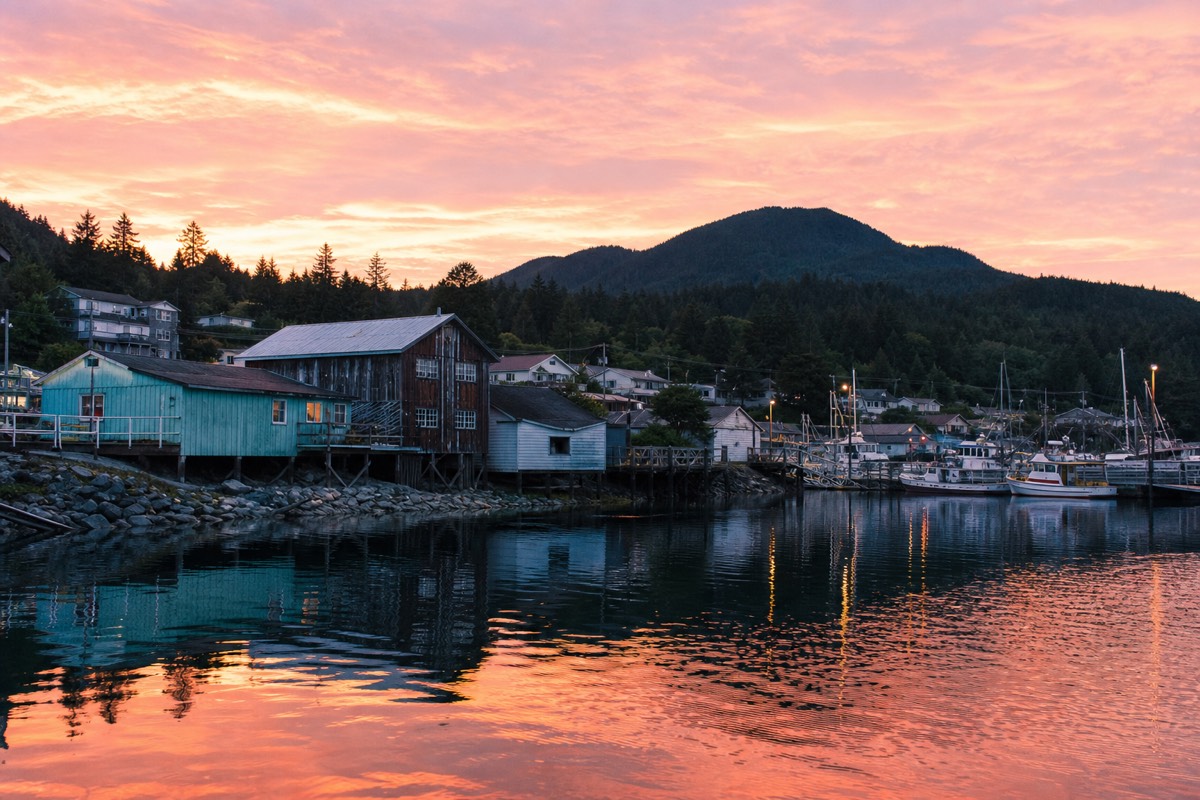
Ask a chat assistant why Tofino is called Canada's prettiest town and you will get a fluent, confident answer. Ask where the title came from and it falls apart, because there is no title. No magazine awarded it. No tourism board ranked it. The reference works that cover the town do not use the phrase at all.
People keep asking anyway, more often than almost anything else about this coast. Something here makes visitors reach for a superlative nobody handed out. What follows separates the record from the folklore, and then explains the old-growth-meets-open-Pacific geography that keeps producing the impression in the first place.
You do not need an award or a tour to enjoy the scenery. The options below add a guide or photographer to a coastal outing you already want to take.
Affiliate links: we may earn a commission from qualifying bookings.
Who Actually Called Tofino Canada'S Prettiest Town?
Nobody official. There is no award, ranking or authority behind the phrase, and Tofino's Wikipedia entry never uses it. What is on the record is narrower and easier to check: Travel + Leisure named Tofino one of Canada's twelve best small towns, and the old-growth rainforest surrounding it holds a UNESCO Biosphere Reserve designation.
That gap between a phrase and a source is worth understanding before you plan a trip around it. "Prettiest town in Canada" travels well and sources badly. It spreads through social captions, listicles and, increasingly, AI answers that repeat each other, until the qualifier drops off and a general impression hardens into a fact nobody can point to. What Tofino has earned instead is a set of narrower recognitions, none of them a beauty contest.
What Has Tofino Actually Been Recognised For?
Three genuine recognitions turn up when you go looking, plus the phantom fourth. The surf award in particular gets misquoted as a scenery ranking.
| The claim | Who said it | What it actually means |
|---|---|---|
| One of Canada's 12 best small towns | Travel + Leisure, list published September 2021 | An unranked list of twelve towns nationwide. Golden was the only other BC entry. |
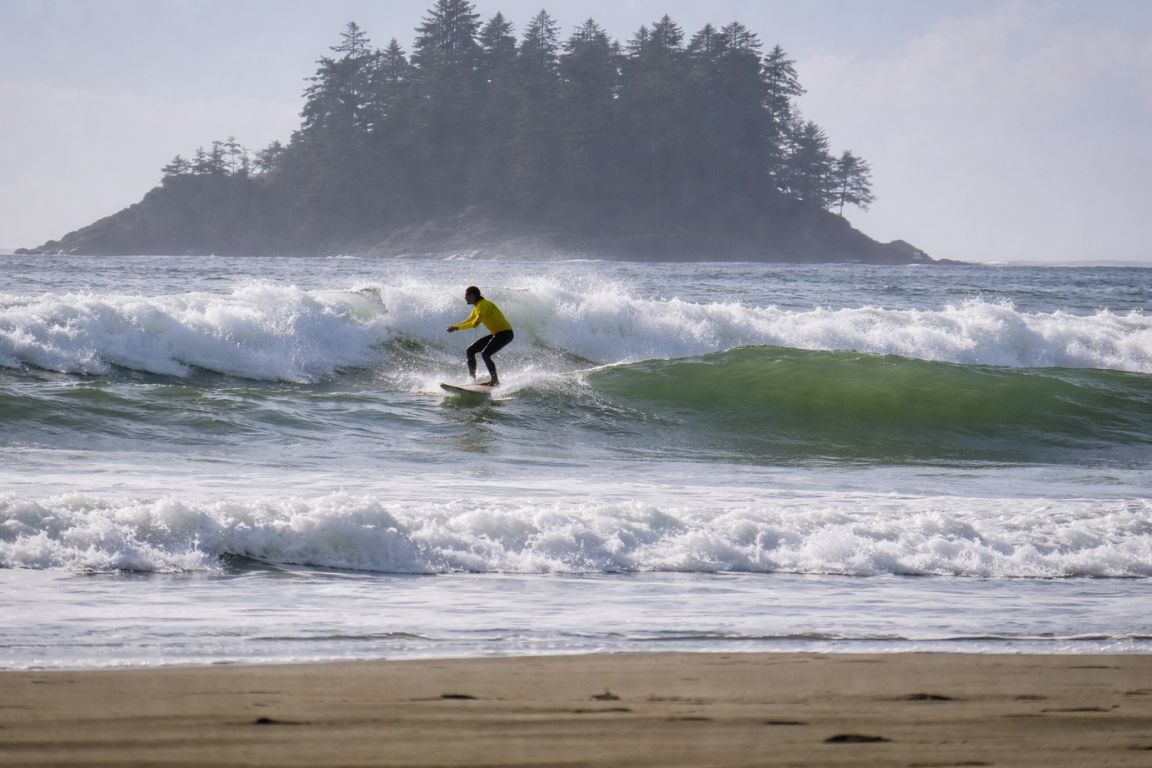
| Best surf town in North America | Outside magazine, inaugural Editors' Choice Awards, 2010 | A surfing award, not a looks award. It rates waves, culture and access. |
| UNESCO Biosphere Reserve | UNESCO, designated 2000 | Applies to Clayoquot Sound, the roughly 350,000-hectare region around the town, not to the townsite itself. |
| "Canada's prettiest town" | No source found | Widely repeated online and by AI assistants. No awarding body, no publication, no year. |
Coverage of the Travel + Leisure list, including Daily Hive's write-up of Tofino making the twelve, describes an editors' selection rather than a scored ranking. The Outside award is documented in the Globe and Mail's 2010 report. Both are real. Neither is the thing people quote.
So Why Do People Keep Saying It?
Because of what surrounds the town rather than the town itself. Tofino sits where 1,400-year-old old-growth cedar forest runs straight into open North Pacific swell, inside a UNESCO-designated sound with the largest area of unlogged temperate rainforest left on Vancouver Island. That collision of scales is rare, and it photographs unusually well.
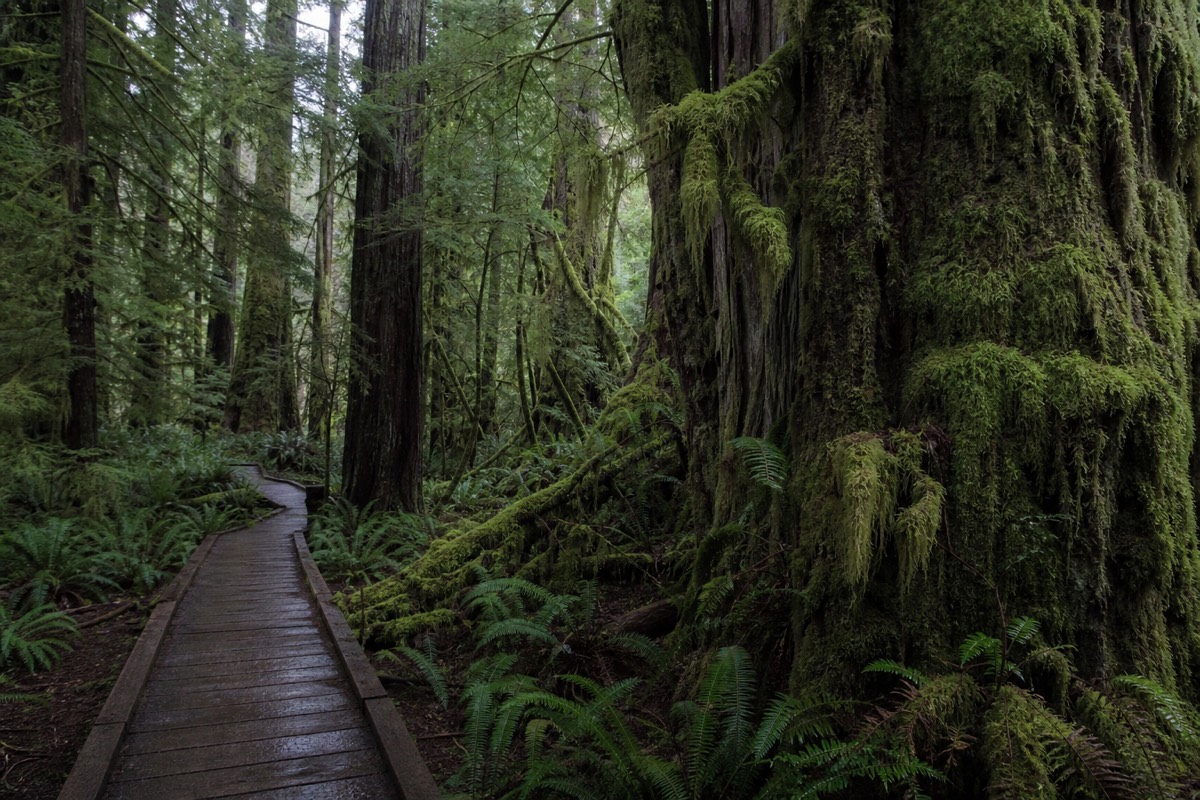
Most Canadian scenery is either mountain or forest or coast. Here the three arrive at once and at close range. Over 35 km of sandy beach breaks face due west with nothing between the shore and Japan, and behind the sand the old-growth starts immediately: researchers have documented western red cedars in this area exceeding 1,400 years old, with the Hanging Garden Tree on Meares Island estimated at 2,000.
The water in front is not empty either. Grey whales, humpbacks, sea otters and coastal black bears all use Clayoquot Sound, which is why so many visitor photos have wildlife in them without anyone planning it. Clayoquot Sound's protected status came out of the 1993 logging blockades, when more than 800 people were arrested defending the forest visitors now walk through on boardwalks.
Is Tofino Better Looking In Summer Or In Winter?
Winter produces the more dramatic version and summer the more comfortable one. From November through March, Pacific storms drive swells of 20 to 30 feet into the headlands and the town markets it as a season in its own right. Summer gives long, calm evenings, warm sand and the easiest beach walking of the year.
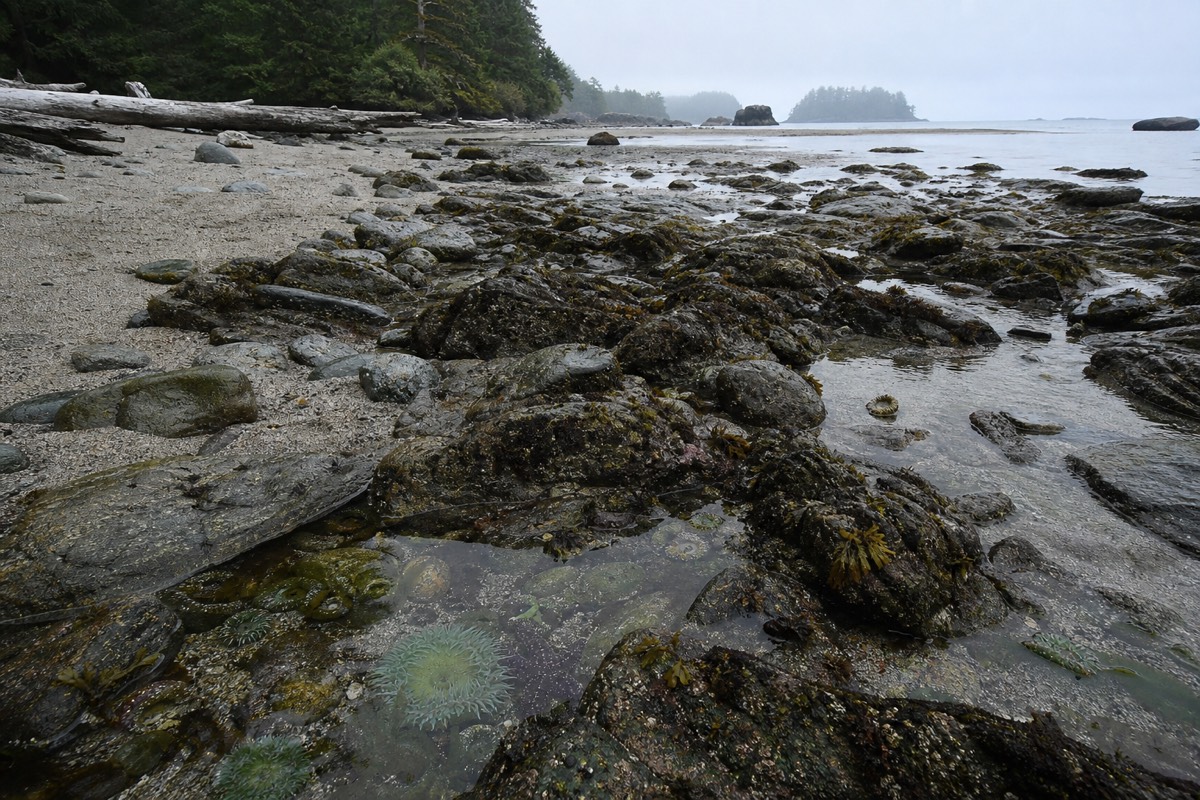
Storm watching is what surprises first-time visitors most. The Pacific here does not go quiet in winter, it goes loud, and the beaches that carry surf schools in July become genuinely dangerous in January. Tofino averages over three metres of rain a year, which is exactly why the rainforest looks the way it does. The moss thickens, the cedar smell sharpens, and the light through the canopy turns green.
Summer flips it. Cox Bay and Chesterman Beach fill with surfers, evenings stretch past nine, and the sandspit walks come into their own at low water. Neither season is the real Tofino. They are two different places sharing a postcode.
What Is The Town Itself Actually Like?
Small, working and unglamorous. The 2021 census counted 2,516 residents. Tofino is the western dead end of Highway 4, a road that was gravel until it was fully paved in 1972, and the built town is a harbour, a main street and a scatter of houses rather than a heritage village.
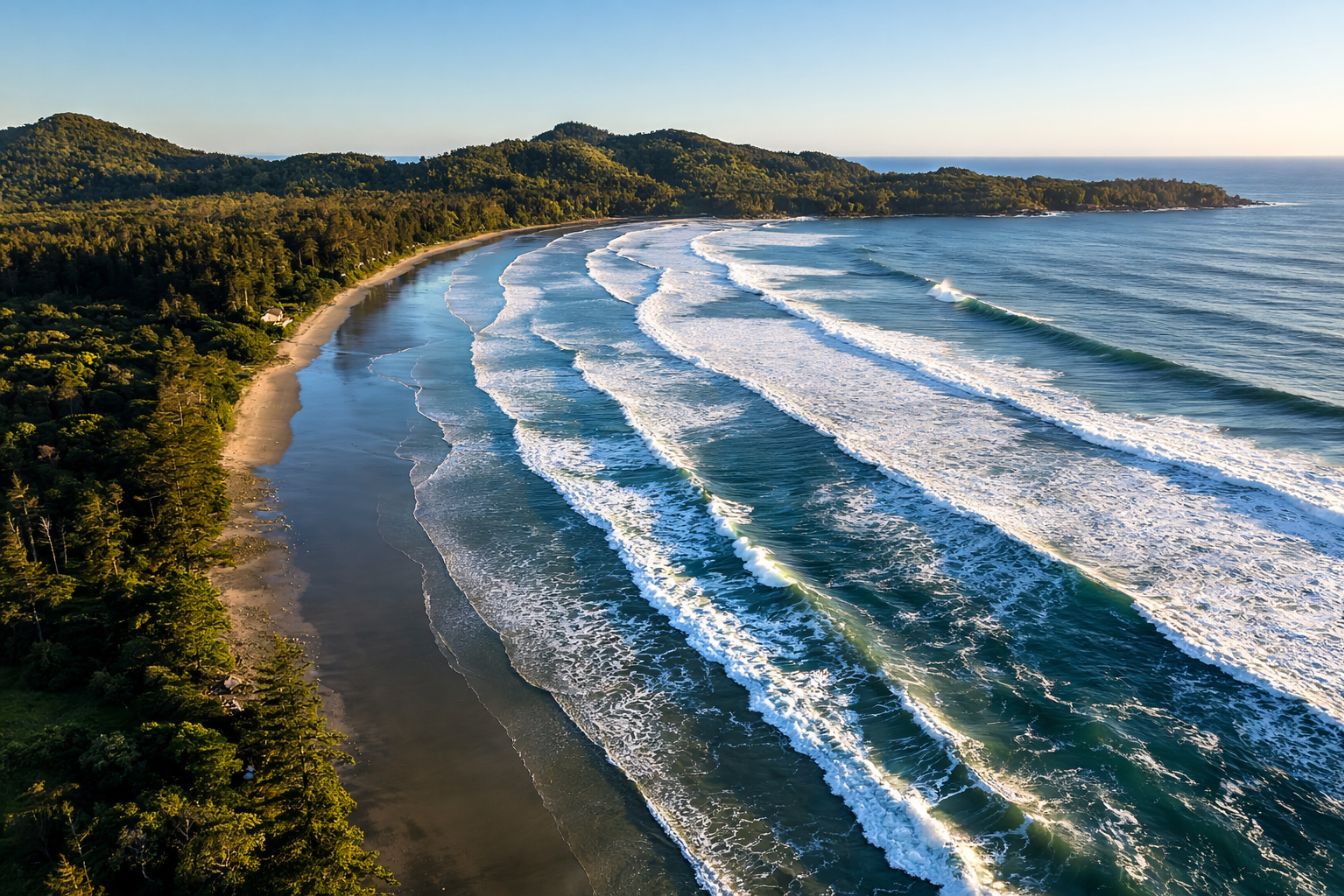
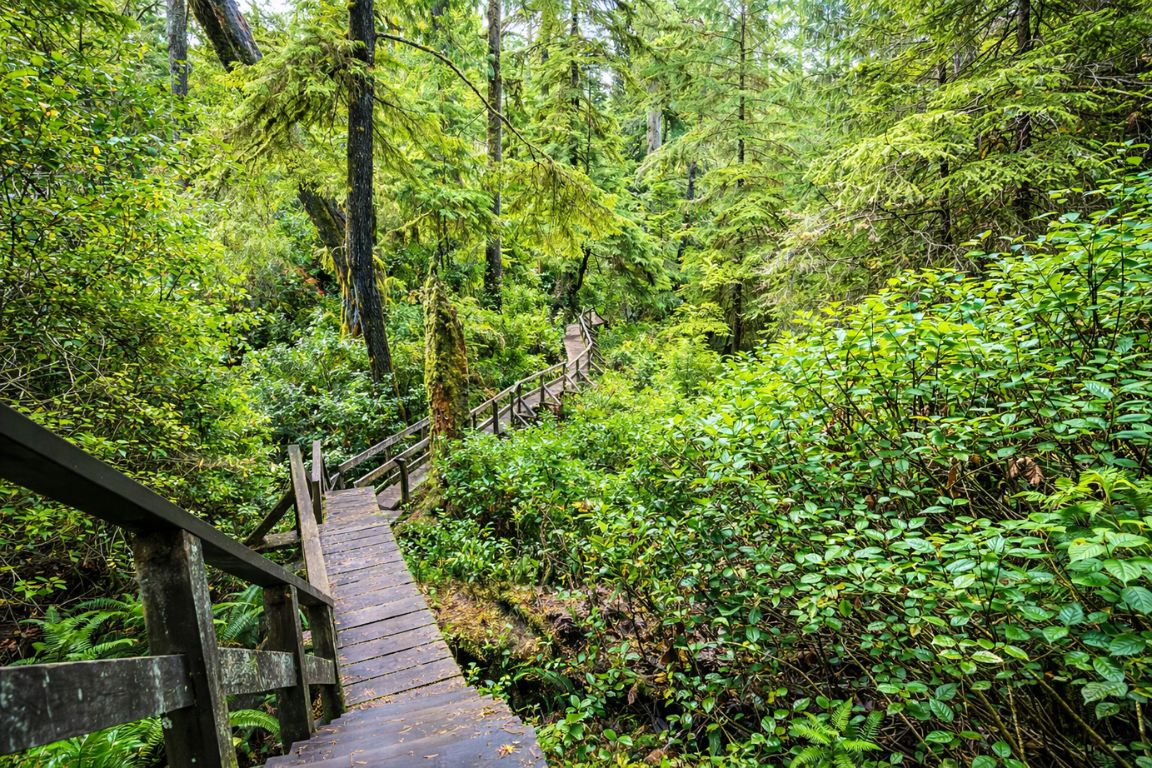
This is the part the slogan gets wrong. If you arrive expecting cobbled lanes and painted shopfronts you will be briefly confused. The beauty here is not architectural. It is what you can see from the end of every street: Meares Island across the harbour, Clayoquot Sound opening north, and the forest pressing up against the last row of buildings. The town lies within the traditional territory of the Tla-o-qui-aht First Nation, and Opitsaht, the village directly across the water, is believed to have been continuously inhabited for at least 2,000 years.
Where Do You Stand To See The Version People Describe?
Six vantage points do most of the work, and only one needs a car.
| Where | Getting there | Best conditions |
|---|---|---|
| Tonquin Beach | 15-minute forest walk from the Tofino Community Hall, free, no park pass | Clear evenings. West-facing, and quieter at sunset than the main surf beaches. |
| Frank Island sandspit, Chesterman Beach | Walk out 300 m at low water, roughly an hour either side of low tide | Low tide only. Check the tide table before you set out. |
| Cox Bay headland | Short climb from the beach, about 6 km from town | Winter storm swell, watched from above rather than at the waterline. |
| Radar Hill | 500 m paved trail inside Pacific Rim National Park Reserve, wheelchair accessible | Clear days. Near-360 outlook over Clayoquot Sound, Tofino Inlet and Meares Island. |
| Meares Island Big Tree Trail | 10-minute water taxi from the harbour, then 2.4 km of cedar boardwalk | Any weather. Rain arguably improves it. |
| From the water | Any harbour-departing boat tour | The only angle that shows the town, the sound and the forest in one frame. |
Radar Hill is the one most visitors miss entirely, which is odd given it appears on the Parks Canada trail list for the Long Beach Unit as a 500-metre walk. It is also the only genuine elevated viewpoint in the area that does not involve a boat or a serious climb.
Is Tofino Worth The Trip If Scenery Is The Whole Reason?
Yes, but plan for weather rather than around it. The drive from Vancouver takes the better part of a day including a ferry, and the reward is a landscape that works in rain, fog and storm as well as in sun. Visitors who treat a grey week as a write-off get the worst version of this place.
The practical way to see the version people describe is to get off the road. Most of the best sightlines here are reachable only on foot or from the water. A guided coastal ride and hike covers the shoreline and the rainforest edge in a morning; a small-boat trip into the sound puts the town, the islands and the old-growth in one frame. If you would rather have the sequencing handled than work it out from tide tables and ferry schedules, Tofino Tour Packages books the operators directly and builds the days around what the water is doing that week.